
With their third EP, The Greatest Battle, Big Ocean, K-pop’s first hearing-disabled group (they sign in three languages!) turns the tide, leveling up on concept and choreo. The New York stop on their Second U.S. world tour was filled with loads of filming, fandom, fashion and even a little… Martha Stewart.
From back home in Seoul, PJ, Jiseok and Chanyeon weigh in on their whirlwind month stateside and why they are ready for a fourth member. And always eager to please their fandom, PADO, they leave little downtime upon their return, releasing the heartfelt ballad “Make It Up to You” this week. Its video was filmed during their stay in the City.
Photos / Lauren Nakao Winn
Assist / Tai Hirooka
Story / Christine Terrisse
Shot at DWNTWN Studio
Congratulations on the successful conclusion of your second North American tour. For each of you, how did this tour compare to the first time coming to the U.S.?
PJ: The first time, everything was new, the venues, the crowds, and honestly we couldn’t even picture what it would actually feel like to be in a room with our American PADOs. It was overwhelming in the best way, a little surreal even. This time felt so different. Coming back with THE GREATEST BATTLE, it’s like we’d turned a page. We had so much more to share, and the music carried all of it. The battles, the growth, the emotions we’ve been through. So this tour felt less like performing and more like inviting everyone into a journey we’re still on together.
Jiseok: At the start, the biggest difference was the album we brought with us. THE GREATEST BATTLE is the most fully realized version of who we are, and performing it live in city after city, you could feel that it landed differently. There’s something that just lights up in me knowing PADO can feel the story right there in the room with us. And beyond the stage, this tour opened so many doors we didn’t expect. We got to meet and connect with so many remarkable, inspiring people along the way. That was something we didn’t quite anticipate, and honestly it left me more driven than ever.
Chanyeon: I think we came back having grown so much this time, in the music, in the performances, in every way. And when we got there and performed, these people knew our songs, they knew our signs, they showed up for us. That was so touching, every single time. Beyond that, we got to do so much more as well. From a private event with our PADOs to being part of fashion and culture spaces, to performing for Martha Stewart, who is genuinely a touchstone of American culture. All of that together made this trip feel like something we’ll be talking about for a long time. I’m really, truly grateful for every part of it.
Connecting with your fans in person must be meaningful. Do you have a particular moment on this tour that stands out — where a reaction or interaction was particularly emotional or made you laugh?
Jiseok: There was a moment during one of the shows where a fan standing right up front knew every single sign and fully performed it at the same time as PJ. I caught it from the side of the stage and it just stopped me for a second, it looked like the two of them were doing it together. Honestly, every single day on this tour was full of little moments like that, things we can’t plan for, but that end up very meaningful.
You’ve expanded your reach into fashion and were special guests at the Fashion Institute of Technology’s Future of Fashion Show. How was that? You looked amazing. What were your favorite moments from that experience?
PJ: Being there was genuinely one of the most memorable moments of our entire trip. Getting to sit in the front row and watch students present their work, knowing every single piece was something they’d poured everything into felt really familiar to us. And the designs were stunning. So much thought about the body, about identity, about what clothing can actually say. The moment that really stayed with us was when Ms. Fern Mallis, the founder of New York Fashion Week, spoke about the initiative to have two students eventually design stage costumes for us. And then she called us “the next BTS.” I don’t think any of us were ready for that. It was an enormous honor, and honestly, it just made us want to work even harder to be worthy of something like that.
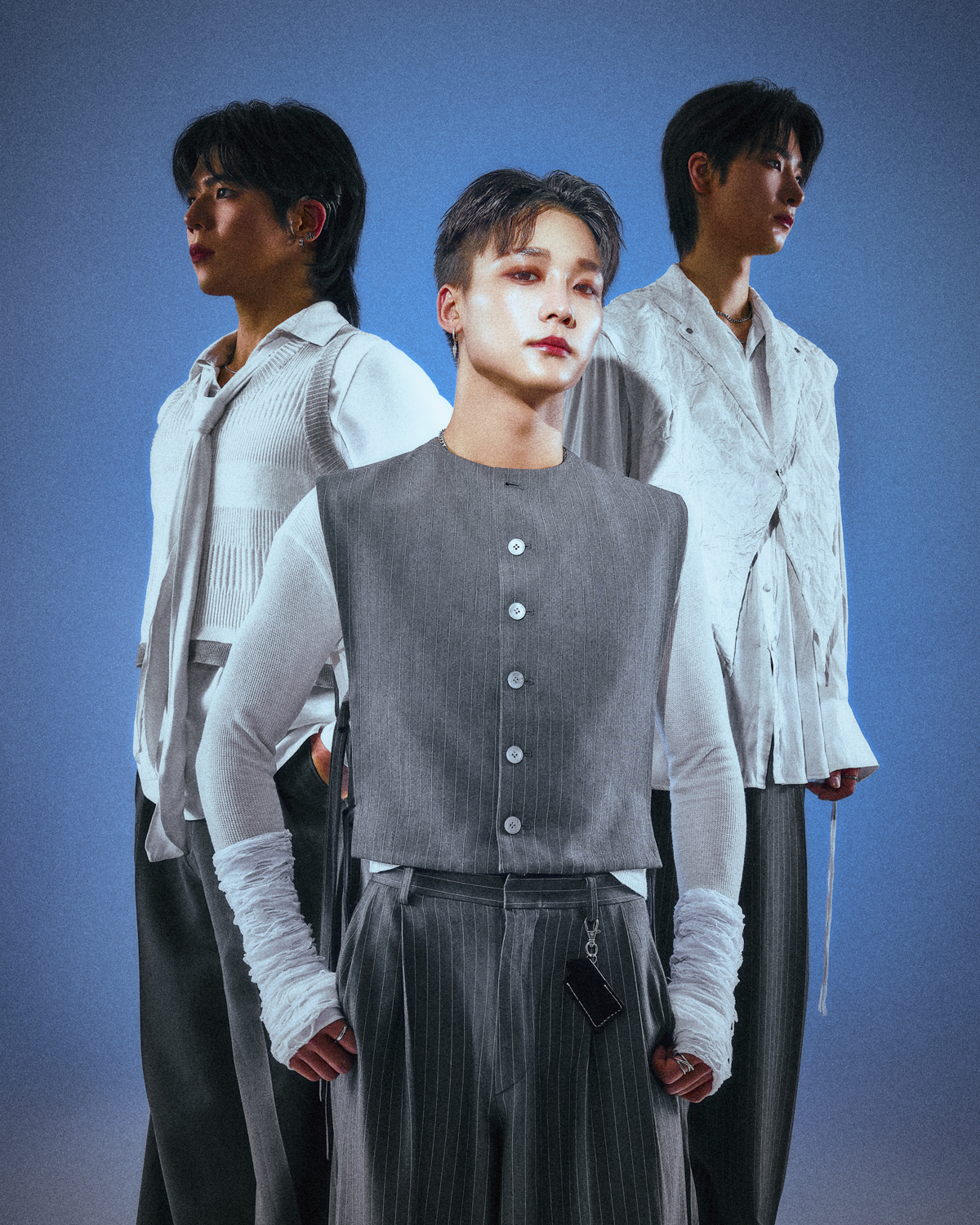
PJ
Can you tell me about how visual style is important to your overall storytelling? I know you work with stylists, but is there one or more of you who likes to have something to say in that creative aspect?
Jiseok: Visual style is something we care deeply about because it’s part of how we tell our story. We each have our own history, our own personality, and those things shaped who we are today so what we wear and how we look on stage has to reflect that, protect it, and keep pushing it further so people can recognize us and remember us. With THE GREATEST BATTLE, every visual choice had to earn its place in the story. The black and white, the blue bleeding in toward the end. It was all part of what we were trying to say.
You also performed for Martha Stewart, at an intimate setting at one of her residences. What was that like?
Chanyeon: This was such a random and surprising collaboration we still can’t quite believe it happened. We felt truly honored to be able to sit down with her and perform in such an intimate setting. And she was remarkably present, not just politely watching but genuinely engaged, asking questions, really taking it all in. It was one of those moments we’re really grateful for.
At first glance, it might seem like such a contrast: a young South Korean pop group and an icon of interior design. But Martha Stewart has become a touchstone of American culture both at an elite and pop culture level. Were you able to talk about music with her at all?
Chanyeon: More than we expected, actually. We didn’t know what to anticipate going in, but one thing she proudly brought up was that she’d recently shot a Netflix commercial connected to K-drama, turns out she’s genuinely a K-culture fan. That immediately opened up so much to talk about, from favorite actors to singers. The whole atmosphere was just really warm and fun.
All three of you had non-traditional “idol” backgrounds. What is something you brought from your previous experience to your work as an artist? Chanyeon, did your experience as an audiologist inform the group’s approach to working with technology?
Jiseok: Being a ski athlete before this actually helps me a lot. As an athlete I built habits around staying physically healthy and active, and that carries over directly into this life. When the schedule gets intense, like being on tour, my body needs to be able to handle that. And I find that habit really beneficial.
Chanyeon: Yes, that’s definitely part of how we work with technology. Because each of us hears at different pitches and frequencies, it turns out we actually complement each other in the studio. I personally can pick up more frequencies than the other two, so we’re always checking in with each other, asking if a certain part sounds right, if something feels off. That is how we make music together. So our backgrounds before this aren’t just things we carry with us, they actively help each other in ways we didn’t fully anticipate.
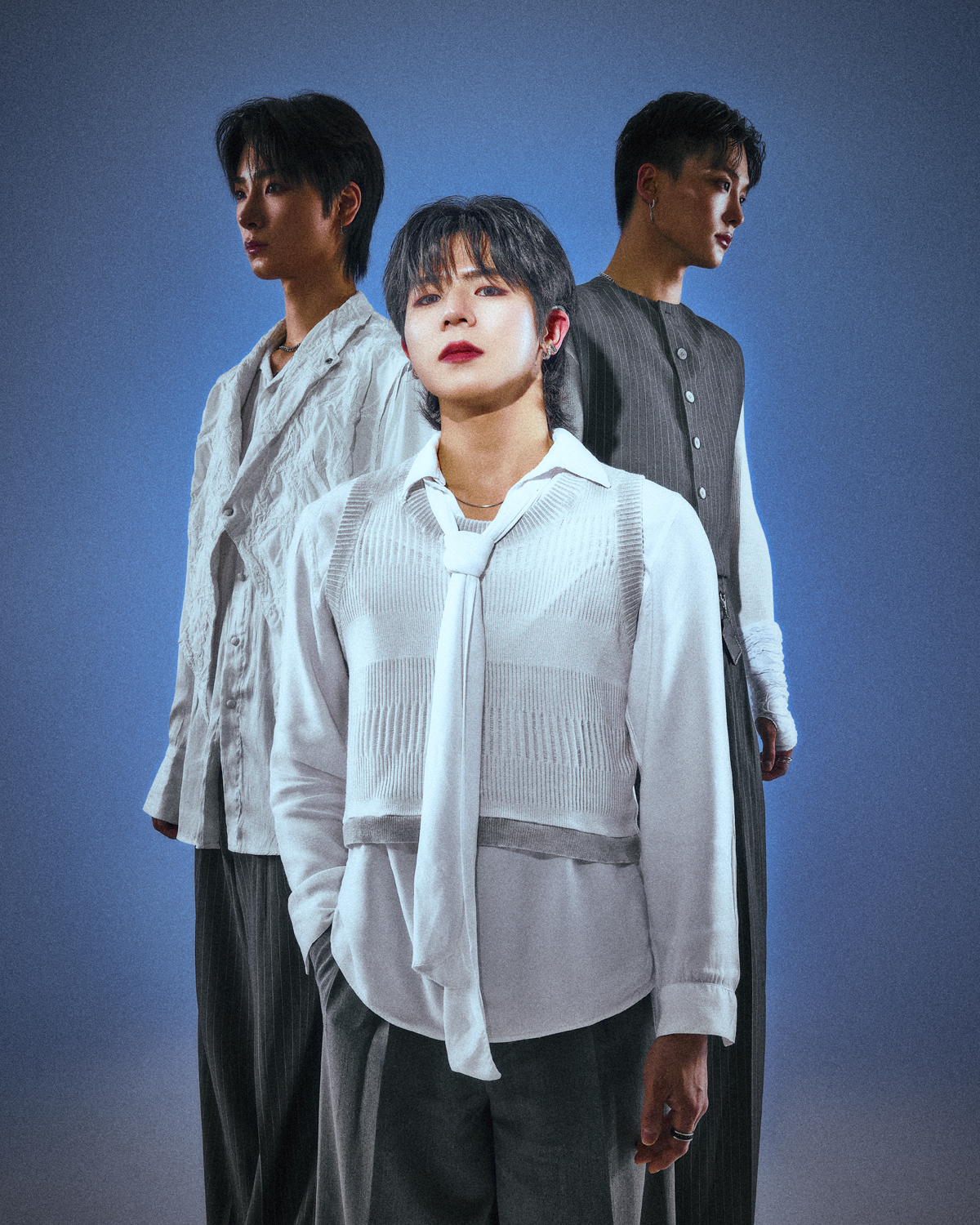
Chanyeon
On the subject of technology — you’ve been pioneers in AI-assisted tech, vibrating smartwatches, and other methods. There’s a general fear surrounding AI use in music lately. Do you have concerns about regulation having an unintentional negative effect — making it harder for artists with disabilities to use it as an assistive tool?
PJ: It’s a conversation worth having carefully. For us, AI assistance has been one tool among many, we don’t lean on it heavily, and our performances are built on months of physical practice and genuine feel. But for artists with disabilities more broadly, assistive technology can be the difference between access and exclusion. We hope future regulations can make room for accessibility tools and recognize that for disabled artists, technology can sometimes be the bridge that allows them to participate in the industry. But only when it’s honest, and when artists are genuinely putting in the real effort behind it. That’s why we also think artists need to be strategic and transparent about how they use it.
The choreography for “The Greatest Battle” showcases tutting and voguing, which have had a resurgence from New York Ballroom culture, adding another layer of inclusivity to what you do. Is there a dance piece, choreographer, or movement concept you think would be interesting to rework incorporating sign language?
PJ: Honestly, tutting and voguing themselves still feel like there’s so much left to explore. What we’ve done so far is just the beginning, the precision, the geometry, the way each shape can carry actual meaning when it becomes sign language. There’s a whole world of possibility in pushing that further, making the signs and the movement completely inseparable so you can’t tell where the dance ends and the language begins. That’s the direction that excites me most.
Your latest album, THE GREATEST BATTLE, sounds like a leap forward. What element are you each most proud of about your contributions to this EP?
Chanyeon: “One Man Army” was the first track where all three of us were involved in the composition process. That experience really inspired me to keep writing and composing more and more.
Jiseok: “Back” is my first solo track. Every sign in that choreography is a complete sentence from a story that actually happened to me. I’m proud that I didn’t hold back.
PJ: “One Man Army” captures who we are more clearly than anything we’ve made before. There’s a moment in the performance where we reinterpret the crane wing formation through sign language, letting it unfold outward across the stage. And I’m proud we finally made it happen, no matter how complex the execution was.
Late last year, you posted about looking for a fourth member. What do you think a fourth member could add to your already tight trio? What is the most important trait a new person should have?
Jiseok: Over the past year, our message has grown bigger than just the three of us, and opening this audition globally felt like the right moment to reflect that. What excites me about a fourth member isn’t filling a gap, it’s expanding what we already have. Someone from a different background, a different way of signing, maybe even a new bridge to fans we haven’t been able to reach as directly. And more than anything though, we need someone resilient. This journey is demanding, and we’ve already built something tight over more than a year together. Whoever joins has to be able to handle that pressure, catch up fast, and push themselves hard enough to truly stand alongside us.
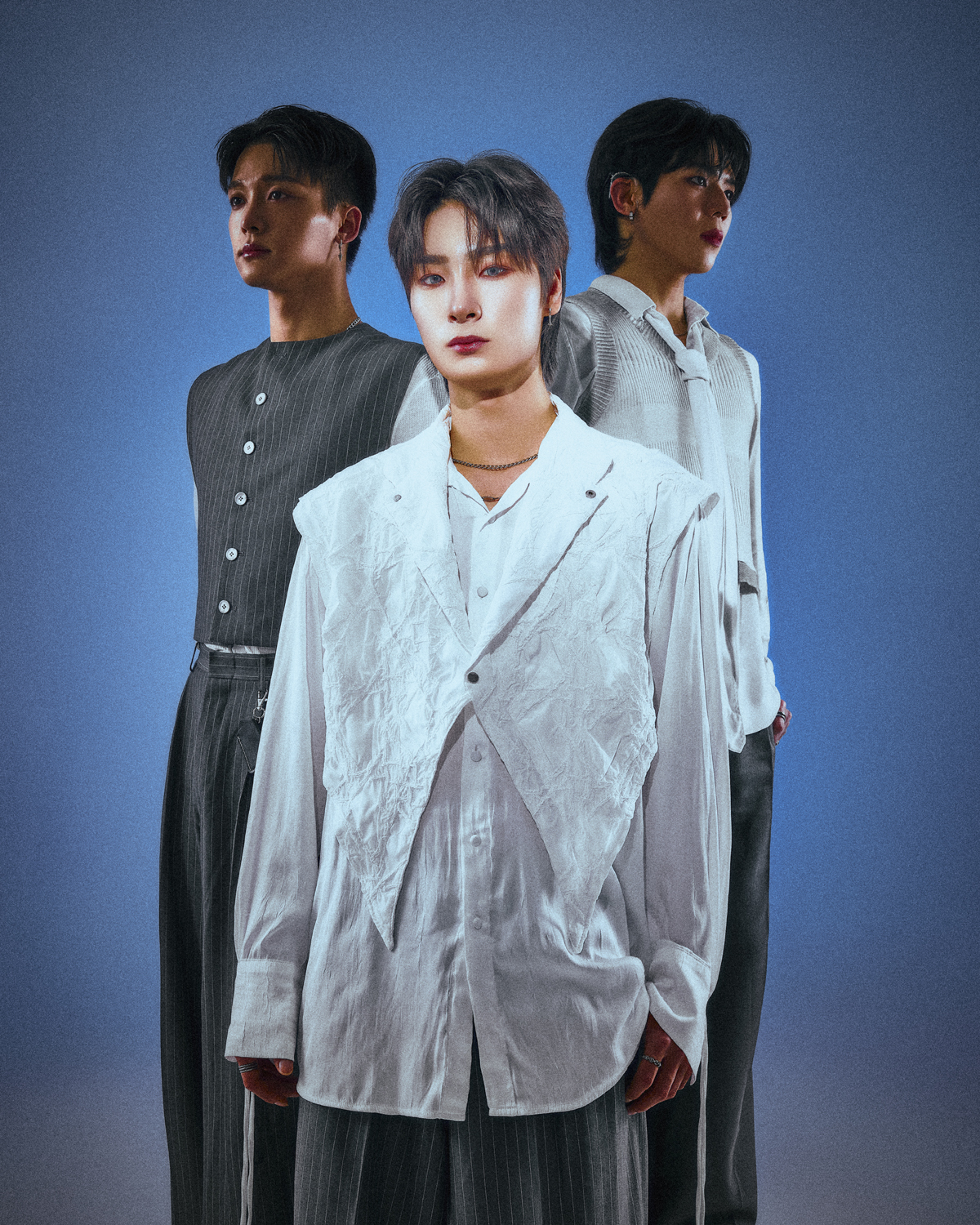
Jiseok
I’m dying to know which one of you is the big Prince fan. Your music selections and covers are pretty eclectic. How do you discover new music and inspiration?
Chanyeon: Not really, haha. Actually, while looking for ideas to connect with fans during our tour, we found out how iconic Prince is in Minneapolis, so we decided to dance to his music as a little shout-out to the local fans there.
We always try to choose a wide variety of music because our PADOs are all around the world, and we want as many fans as possible to feel connected to what we do. Using songs that are signature or especially loved in certain regions is one way we show love back to the fans and create that connection. We also constantly research new music trends and discover songs through everyday moments, social media, recommendations from fans, and even artists or public figures we get the chance to meet. So our inspiration can really come from anywhere.
Finally, in the rare downtime that each of you has, how do you recharge both energy and inspiration-wise?
Jiseok: Working out and café-hopping, those are my two things. The gym gives me back a sense of control over my own body and energy, and then finding a new café somewhere in the city, trying whatever they’re known for.
PJ: Playing the piano and just listening to music, not for work, just for myself. And sometimes those quiet moments end up being where new ideas for songs actually come from.
Chanyeon: Drawing and spending time alone. My mind gets clearer and I always feel more ready to pour back into the work after.