
The boundaries between reality, technology, and systems of power are central to multidisciplinary artist Lucia Shuyu Li‘s practice. Drawing from oil painting, installation, performance, and sound, her work examines perception, identity, and cultural experience through layered, interdisciplinary forms. Based in the United States and grounded in her Chinese heritage, Li constructs immersive environments where the body, material, and digital processes converge and destabilize one another.
Born out of a teenage act of pure rebellion against traditional expectations, her practice has evolved into a multidisciplinary exploration of perception, identity, and systems of power. Working across painting, installation, performance, and sound, Li uses the body as both subject and medium, constructing immersive environments where material, technology, and space intersect to reflect the complexities of contemporary experience.
Fresh off her MFA from the Maryland Institute College of Art (MICA), Lucia Shuyu Li creates immersive gallery experiences that feel less like static exhibitions and more like living, mutating psychological entities. Working with suspended fabrics, motorized mechanisms, projection mapping, and sound, her practice explores perception, embodiment, and systems of power through constantly shifting material and technological interactions. For the multidisciplinary artist, that instability is the point, and the conversation that follows makes clear it always has been.
Your work often explores identity, perception, and systems of power. Were these questions already present in your early relationship with art, or did they emerge later through experience and experimentation?
They emerge later through experience and experimentation.
My early relationship with art was mainly about dreams and subconsciousness because I dream every night, and they’re always the most beautiful and crazy dreams. I wanted to visualize them in real life. My attention then led to Sigmund Freud and the subconscious and psychological aspects. Later in my exploration, I started to look into the aesthetic and how performance art uses the body as the medium in philosophical interpretation. As for my practice and study, I investigate the philosophical foundations of performance art by positioning the artist’s body—my own included—as both the site and medium of aesthetic inquiry. Drawing on the phenomenological thought of Merleau-Ponty and Arthur Schopenhauer’s metaphysics of the Will, I argue that performance art enables a direct embodiment of philosophical concepts, wherein the body materializes thought, perception, and existential condition.
Before installation, performance, and multimedia became central to your practice, what first drew you toward making art, and when did you begin to see it as your future?
It’s funny to say that the first intention that drew me toward making art was rebellion. I loved drawing and painting since I was a kid, but my family did not wish me to pursue art, and I wanted to fight for my own freedom of choice. I saw art as my future when I was 16. I started making paintings mainly.
In projects like Painting Sickness & Far Gone, you combine oil painting with motorized mechanisms and 3D-printed elements, bringing together physical materials and technological interventions. How do you navigate that tension between the handmade and the technological, and what does it mean to make art in an increasingly digitalized world?
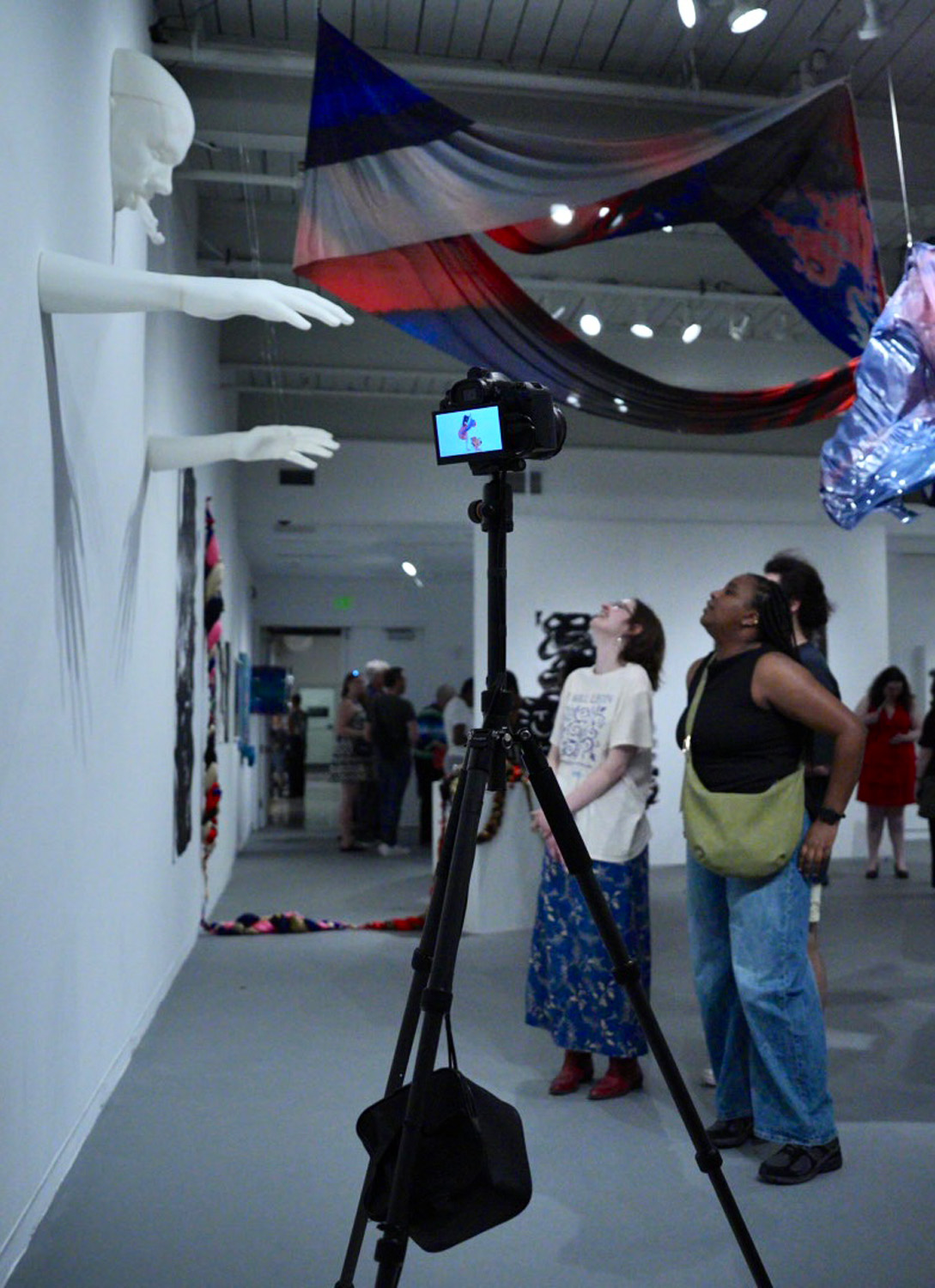
I was super anti-technology when I first got into art school, actually. My intention was mainly based on handmade mediums; later, I realized how limited handmade mediums could be, and also the exploration with multimedia was so much fun and efficient. Integrating technology into my work was not about replacing the handmade but about expanding it. Motors, sound systems, projections, and 3D-printed elements allow me to create movement, instability, repetition, and psychological tension in ways that traditional painting alone could not fully achieve. I still see the body, touch, and materiality as central to my practice, but technology has become another material language rather than an opposing force.
In an increasingly digitalized world, I think art has the responsibility not only to use technology but also to question it. I am interested in how technology affects perception, memory, intimacy, and the body itself. Many of my works intentionally create a space where the organic and the mechanical coexist uneasily, reflecting the contradictions of contemporary life—where human emotion, identity, and physical presence are constantly mediated through technological systems.
When you collaborated with Young Jun Lee for Synesthesia, what interested you most about bringing sound into your work, and how did that change the way you thought about space and performance?
All of my previous performance art pieces had sound in them while performing. I am also a sound artist and bass player, so sound has always been deeply connected to the way I experience space, rhythm, and emotion. I used to make the soundtrack for the whole performance as my “timer” while I performed as well.
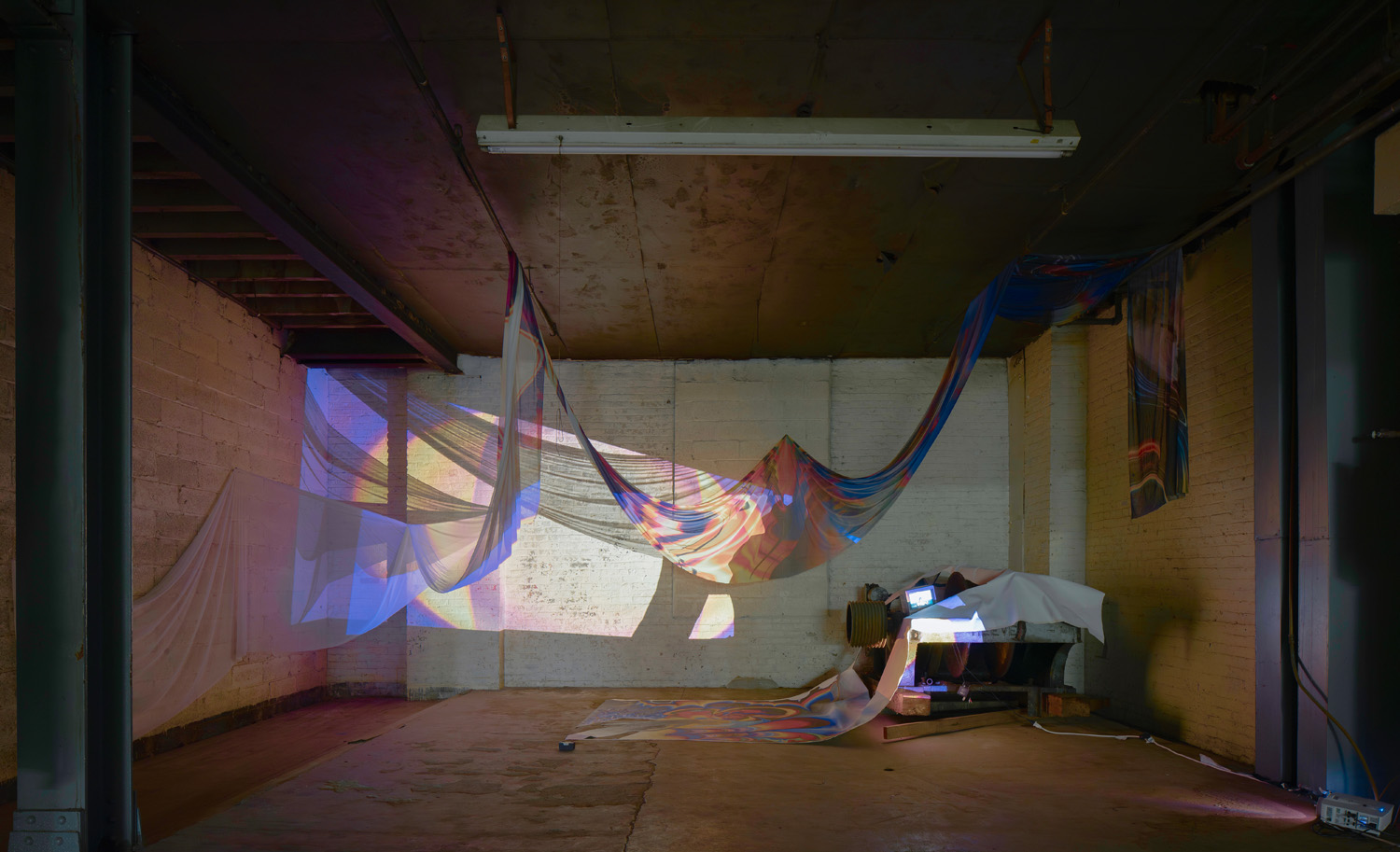
My collaboration with Young Jun Lee for Synesthesia allowed me to think about sound not simply as background or accompaniment, but as a physical and spatial element that could shape the audience’s perception of the work itself. Sound can create tension, intimacy, discomfort, or immersion before a viewer even fully processes the visual components of an installation or performance. Working more closely with live sound also changed the way I approached performance and installation as temporal experiences rather than static objects. I became increasingly interested in how vibrations, repetition, noise, and silence could activate a space psychologically and physically. In many ways, sound allowed the work to extend beyond visual boundaries and become something audiences could feel bodily, not just observe visually.
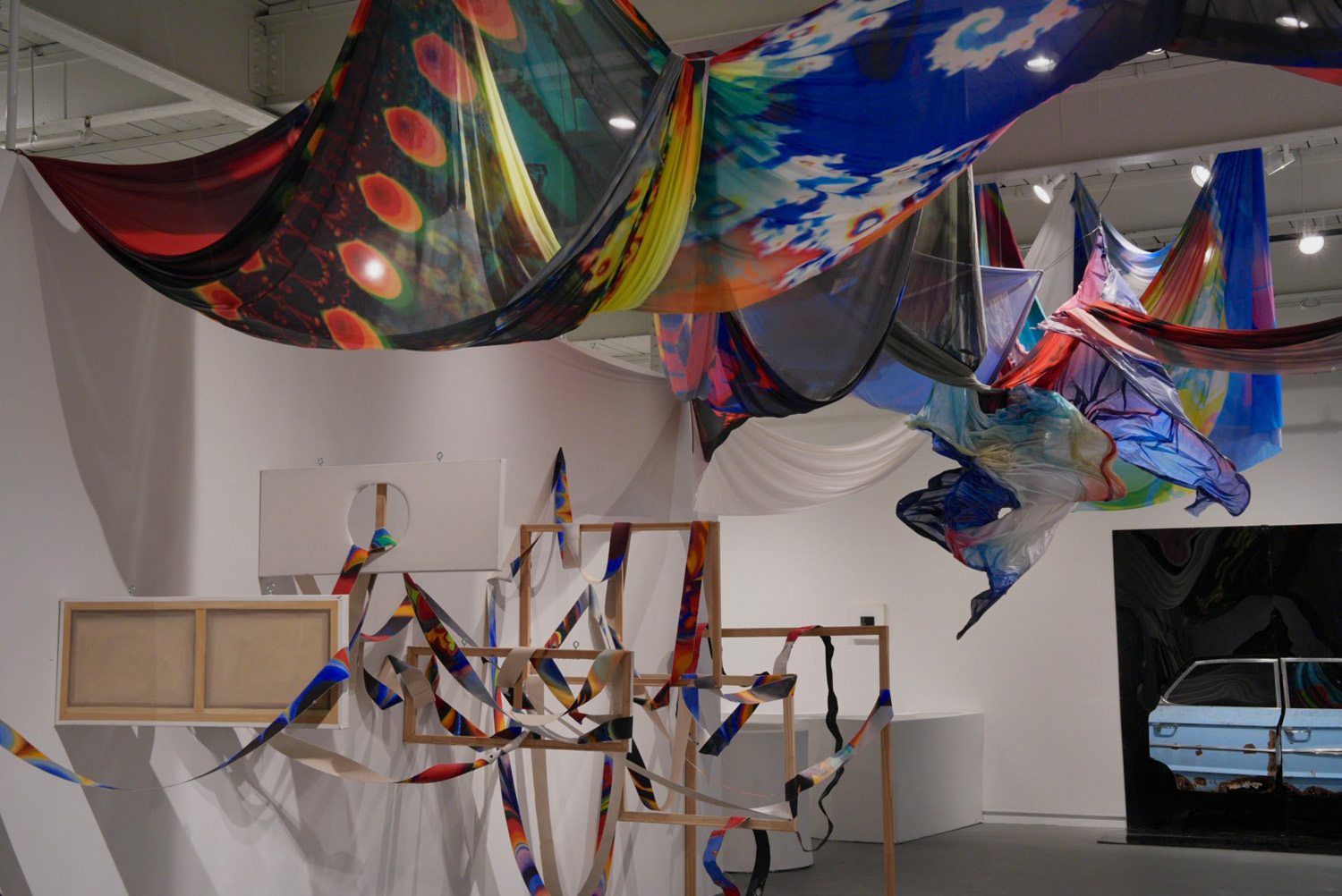
Looking at your textured and mutable pieces, one gets the impression that your works are never truly finished but rather keep mutating. When does Lucia decide that an installation or painting is ready to be shown to the world?
It’s never ready, or let’s say it’s always ready. I don’t really see my artworks as fixed or fully resolved objects. Especially in my installation and interdisciplinary practice, the work often continues evolving through different spaces, audiences, performances, and emotional states. What interests me is not perfection or completion, but the moment when a work begins to generate its own psychological or spatial presence. Sometimes that moment arrives through visual balance, sometimes through tension, discomfort, or even instability. I often feel that the work tells me when it has developed enough autonomy to exist outside my private studio process.
Your practice already moves across installation, performance, painting, and sound. As your work continues to evolve beyond your MFA, what new directions or mediums are you most interested in exploring?
I am currently working extensively with ceramics, especially as I am also teaching ceramic hand-building at Montgomery College. What fascinates me about ceramics is that it is both one of the oldest continuously transmitted artistic mediums in human history and also something deeply connected to everyday life and human touch.
I am also very interested in the inherent musicality of ceramics itself. Many instruments—especially wind instruments and resonant sound structures—are historically connected to ceramic forms and acoustic principles. Because of this, I have become increasingly interested in combining handmade ceramic objects with technology, sound, and performance. My current project explores the relationship between ceramics and sound art, extending into collaborative performances with sound artists as well as future gallery installations and exhibitions. I want to continue pushing ceramics beyond its traditional sculptural role and transform it into something performative, spatial, and psychologically immersive. In many ways, I see ceramics as a bridge between ancient material traditions and contemporary interdisciplinary practice.
We could talk about your work forever, but we want to know the person behind it, too. A few quick questions to close:
– Team dog or team cat? CAT
– A favorite dessert you could never get bored with: Tres Leches Cake
If you had to eat only one dish every single day for the rest of your life, what would it be? Noodles, noodles, and noodles (I almost have noodles for every meal already, lol)
– What is your guilty pleasure in music? Honestly, I don’t really have a guilty pleasure in music. I genuinely listen to what I love without feeling embarrassed about it. Most of the time, I listen to jazz, metal, and indie music, and they all influence the emotional structure of my work in different ways. Maybe some pop music like Billie Eilish?
– If you could have a superpower, what would it be? Fly
– Favorite TV series: Better Call Saul
An artist working today whose work you love right now: Katharina Grosse
– Your favorite artist of all time: Katharina Grosse
– What are you obsessed with right now? An album by Geese: Getting Killed
Lucia Shuyu Li continues to prove that contemporary art is at its best when it refuses to play by institutional rules. Her ability to merge the deeply personal—like the wild dreams she visualizes from her sleep—with sharp, tech-driven social commentary makes her a compelling voice in her generation. As she steps into her next creative chapter, hacking new mediums and blurring sensory lines, Lucia’s world is constantly mutating, and we are more than ready to watch it evolve.
CONNECT WITH LUCIA LI