
Story Karla Solarte Photos by Lamia Karic
The Australian-born, London-based producer returns to the dance floor with a rave-charged new album exploring collaboration, creative resistance, AI, and the irreplaceable power of human connection.
Over the past few years, Australian-born, London-based artist HAAi has expanded her universe far beyond the dance floor. With HUMANiSE, she embraced songwriting, live performance, organic instrumentation, and a more intimate form of electronic music. Now, with the title track from her forthcoming album DIGITiSE, she is stepping back into the club—bringing everything she discovered along with her.
Rather than rejecting the emotional world of its predecessor, DIGITiSE amplifies it. The album bridges the vulnerability of HUMANiSE with the physical intensity of HAAi’s marathon DJ sets, transforming reflection into movement and human feeling into collective release.
Speaking with HAAi, no matter where a question begins, the conversation inevitably returns to the people behind the music. Collaboration, community, and the connection between artist and audience run through everything she creates. Even when discussing artificial intelligence and the accelerating pace of technology, her perspective remains grounded in something deeply analog: the desire to make work that moves another person.
That instinct sits at the center of DIGITiSE, arriving this October—and it shaped our conversation, too.
“I want to create something where everyone is inside the same world together… That’s the North Star for me.” — HAAi
The title track of your upcoming album, “DIGITiSE” appears to function as its conceptual center, tying together its themes of belonging and the dancefloor. Why did this specific track become the center of gravity for the project?
Actually, I changed the name to “DIGITiSE” really late in the process, the name of this particular track, I mean. It was really important to me that the album lead with this single because there are parts of it that are very connected to “Humanize,” the previous album. There are these tiny little nods to that record, and I think the more people get to know this new album, and as more of the singles come out, those connections will reveal themselves a little more.
I think I really wanted to make a bridge because Humanize was so intentionally designed to take me out of the orbit of circuit DJing in a lot of ways. It was about showing the breadth of who I am as an artist and allowing me to write songs that I could perform live, which I got to do throughout the Courtyard Theater and Royal Albert Hall shows. Those experiences were amazing, and it introduced me to a whole other side of my audience.
“DIGITiSE” is the bigger, ravey sibling to “HUMANiSE.” When did it become clear that the project had outgrown a remix idea and needed to exist as its own album?
It happened pretty organically. At one point, I was working on a bunch of club tracks that weren’t connected to Humanize at all, and I realized, “Oh, these actually make sense as part of this project.” Then I started removing the parts that were directly built from stems because it was feeling a little too much like a remix record.
I spoke to Daniel Miller at Mute, along with Joss and everyone who was doing the A&R with me, and I said, “I actually feel like this project has really changed.” Originally, we were calling it Re: “HUMANiSE,” but by that point, it had become so much more than that.
I think the tagline I came up with was that it kind of “holds the hand of Humanize,” or maybe that it walks alongside it. But somewhere in the middle of making the record, I just started treating it as a completely new body of work.
That also gave me a lot more creative freedom because I could write music that served the album itself, rather than constantly thinking about how it related to the previous record or which pieces I was reworking.
I think there are still enough little Easter eggs from Humanize that people who loved that album will really appreciate, but this record definitely has a life of its own.
What shifted in your creative language between the two of them?
I think the biggest thing was that I’m primarily a touring artist and DJ. During the “HUMANiSE” era, I wasn’t really able to play a lot of those songs in my DJ sets. I knew people coming to my shows wanted to hear music from that album, but I couldn’t exactly drop a ballad in the middle of a club set; it just doesn’t work in that environment.
That was really what started this whole process.
As time went on, I just became really excited about writing music for the dance floor again. I genuinely love doing that, and it’s been such an incredible experience being able to travel and test these tracks live.
“DIGITiSE” was probably the track that got the biggest reaction whenever I played it. At first, I wondered whether people were responding because they recognized the samples or whether they simply loved the song. But every time I played it, it kept getting a really amazing response.
That’s actually one of the lucky parts of the process; you get to road-test the music and figure it out while you’re touring.
“HUMANiSE” leaned heavily into organic textures and voices, and “DIGITiSE” also features choral elements, including a children’s choir from Medellín. What does that contrast between innocence and technology bring to your sound? What is it about working with voices like this that keeps drawing you back?
Working with choirs has become really meaningful to me. With “HUMANiSE,” it felt like a very obvious creative choice because the whole record was centered around humanity. I worked with two different choirs on that album, a trans voices choir and a gospel choir, and they both became an important part of telling that story.
With the choir in Medellín, it happened because I was there playing at a festival. I had a few extra days in the city, and ever since my very first visit, I’ve felt a real connection with Colombia.
As soon as I got there, I thought, “Maybe while I’m here, I should see if I can connect with a local children’s choir.”
So I reached out to someone who was working on the festival and asked what must have sounded like a completely random question: “Do you happen to know a local children’s choir?”
She said, “Actually, my boss used to be in one, and her child is in that same choir.”
Literally within about forty-five minutes, I was talking to the principal of the school.
You know those moments when everything just falls perfectly into place, and you think, “This was meant to happen”?
The song “Talking Walls” features the choir re-singing a melody and some lyrics from “Voices,” which was on “HUMANiSE.” Having those children sing those words gave the song an entirely new emotional storyline.
Especially after everything I’ve learned through returning to Medellín, it just took on a completely different meaning.
We documented the entire process as well. Honestly, I just burst into tears the first time they started singing.
When you hear a group of children singing your lyrics in harmony, putting absolutely everything they have into it… They’re so tiny, and they’re singing with so much heart…
For me, it was just such a special moment. It just felt really connected to the part of our humanity that I think is incredibly important and something that deserves to be really visible right now.
The album was designed with your all-night DJ sets in mind. Did that change how you approached structure, tension, or pacing in the studio?
Not so much in the studio itself, because I was really just writing whatever naturally came out of me, but always with the dance floor in mind.For example, a track like “Thank You” is, for me, a really driving, peak-time techno track. While I was writing it, I was imagining that exact moment in the night and thinking about the kind of music I’d want to be playing then. I probably thought about the overall flow much more when I was sequencing the album and deciding the order of the tracks. But honestly, the writing process itself was very instinctive.I also make a real effort to lean into the things that I think make me stand out as an artist. We live in this internet culture where people often expect artists to stay in one lane, and for a lot of people, that works really well. But that’s never really been who I am—as a songwriter, as a producer, or as a DJ. I think there’s plenty of room for artists who have a lot of range and who can’t easily be put into a single box. So making an album that genuinely reflects who I am and embraces that breadth felt really important.
You’ve been previewing new material before release. How have crowds responded to early versions of “DIGITiSE”?
Yeah. There have been a few really memorable moments.One was when I played this very special festival back home in Australia called Meredith. It was something I’d wanted to do for a really long time. That was also where I debuted a lot of the visuals we’d been creating for this project. So that performance was really important to me, especially because it happened at a festival that means so much personally. My mom was there, too, which made it even more special. And beyond that, it’s always rewarding to see how people respond. Sometimes I wonder whether people actually like the music itself or whether they can recognize that it’s my production.
When you’ve worked so hard on something, and then you watch people experience exactly the feeling you hoped to create… You really can’t ask for much more than that.
Can you recall a moment where the crowd literally changed a track’s direction?
As for audiences actually changing a track through the way they respond to it, there was one particular song on the album that really evolved because of that. It’s called “I Wanna Feel Like Someone.” I kept playing it out, and it just wasn’t landing the way I thought it would. In my head, when I was making it, it had this huge energy, but every time I played it, something just wasn’t connecting.
The visual world with Martin Falck feels glitchy, surreal, and slightly uncanny. How closely do you work with visuals when shaping the music?
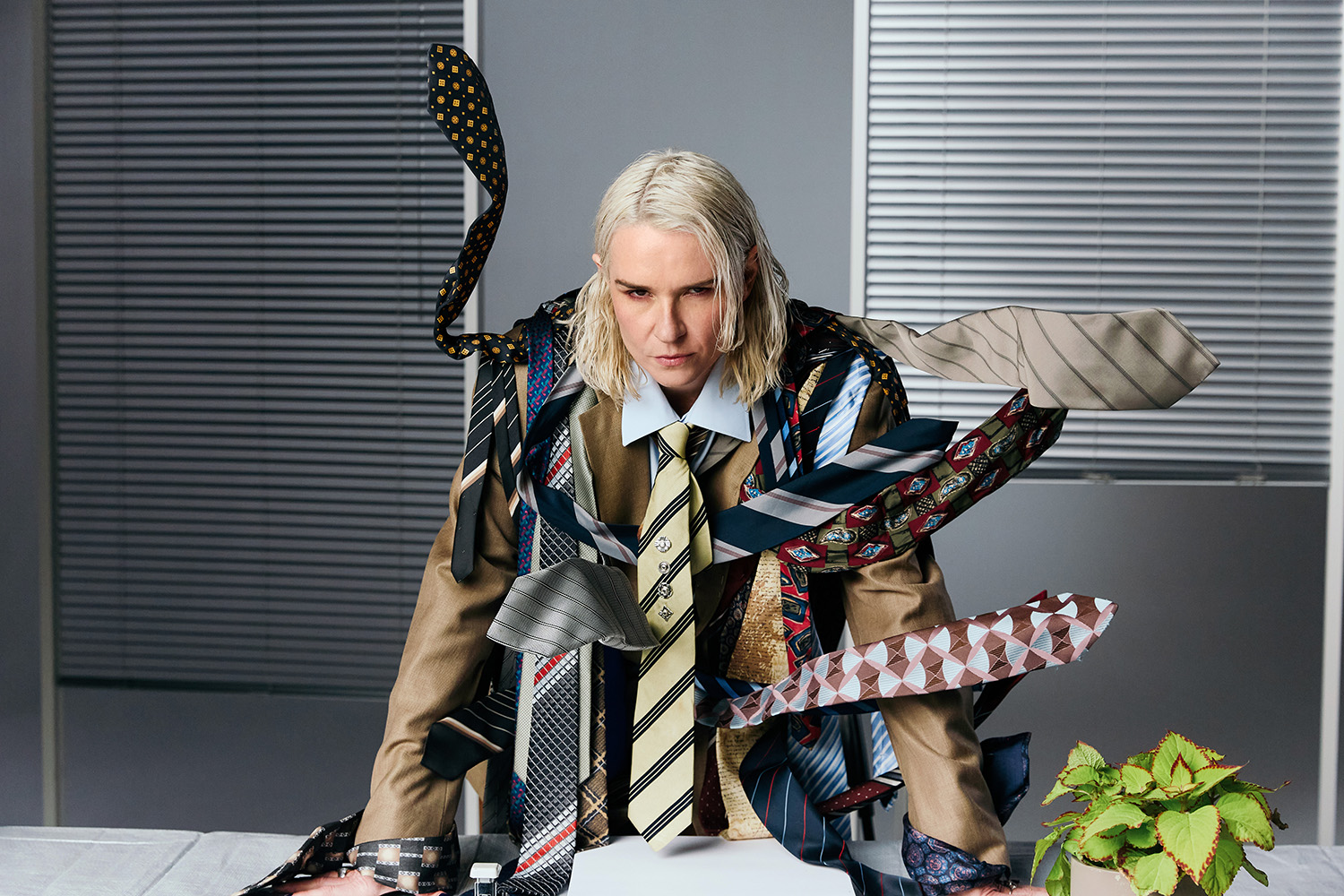
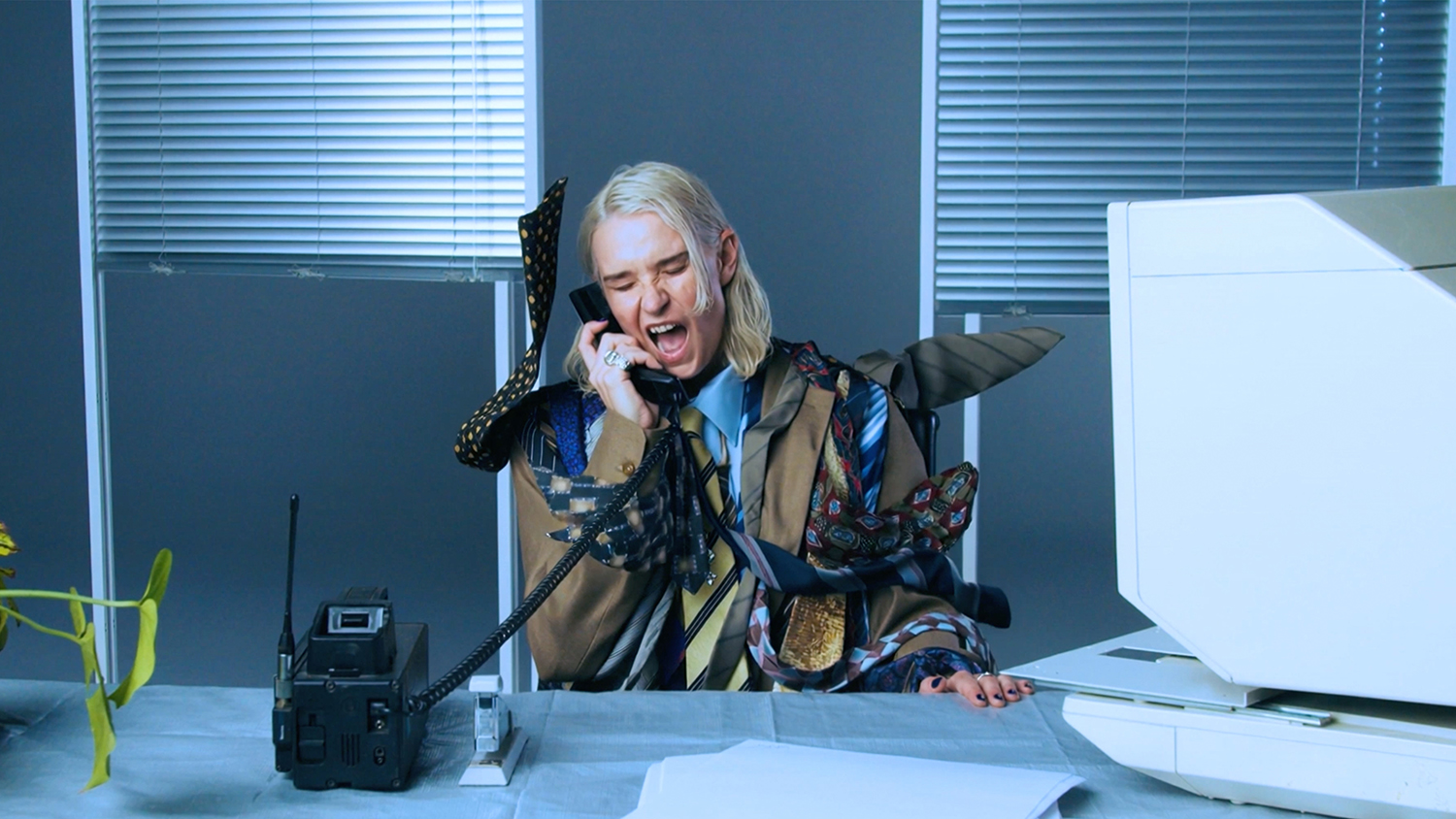
What’s been really interesting with Martin is that “HUMANiSE” already had a very established visual world. Then there was Intertidal, and that project also developed its own visual language. With this record, I wanted to carry some of that world forward, but make it queerer, brighter, and much more playful.
There was a very intentional bleakness to the visuals of the last album, or maybe “moody” is a better word, but this time I wanted it to feel like the payoff. Like, this is where everything opens up. I’d actually been a fan of Martin’s work for a really long time, and then, completely out of the blue, around this time last year, he sent me a message on Instagram.
It was during a period when I was going through a lot of changes professionally, and he simply wrote something like, “I don’t know if we’ve ever worked together, but I think we should.”
So the visual concepts were developing alongside the songs?
Yeah, absolutely.There were definitely moments where the visuals and the music were informing each other.
For me, making music is a very visual process. I’m constantly imagining how something might look onstage, how it might exist in a live show, and all of those connections naturally become part of the creative process.
AI and accelerating technology sit in the background of this record. What excites you most and what concerns you most about that future?
I think what excites me is that there are aspects of AI that genuinely free up time. As an artist, there are ways it helps me optimize how I work, not creatively, but in terms of communication and organizing things. In that sense, it’s been helpful.What terrifies me is something very different. I’ll speak specifically about music first because the broader conversation around AI is a whole other discussion. Personally, as an artist, I feel very strongly opposed to these AI music-generation platforms because they rely on people’s work being exploited to teach machines how to create.
It’s a really strange time. And I actually think the same applies to a lot of what’s happening in music right now.
Can you tell us a little bit about them? Just a tiny hint?
Yeah, I actually mentioned it a little earlier.
I’m working on a project with the Royal Ballet and Abbey Road.
That’s coming up in about a month, and it’s designed to be a fully immersive experience.
I really want to break down the hierarchy between the performer and the audience, and even the hierarchy that often exists within audiences themselves, with things like VIP areas.
There’s absolutely a place for those experiences in certain contexts, but what really excites me is creating something where everyone is inside the same world together.
That’s what I’m looking forward to the most.
A completely immersive experience where people can hear the music, experience the visuals, and really feel like they’re inside this world we’ve created.
That’s the North Star for me.
CONNECT WITH HAAI
INSTAGRAM // TIKTOK // YOUTUBE