Words / Bri Ng Schwartz
Photos / Diego Urbina
Styling / Phil Gomez
Glam / Rory Alvarez
Styling Assistant / Mariano Garcia
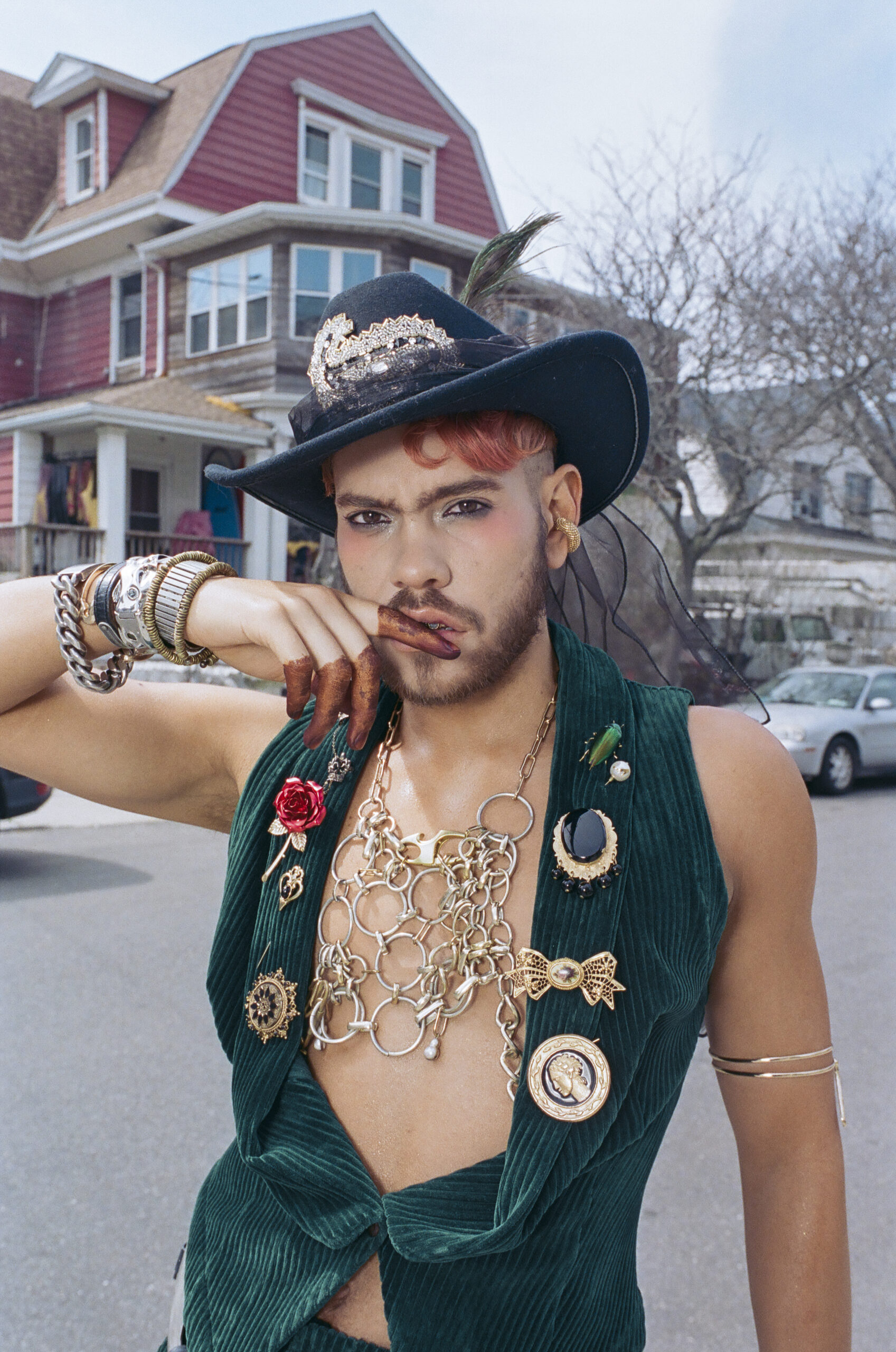
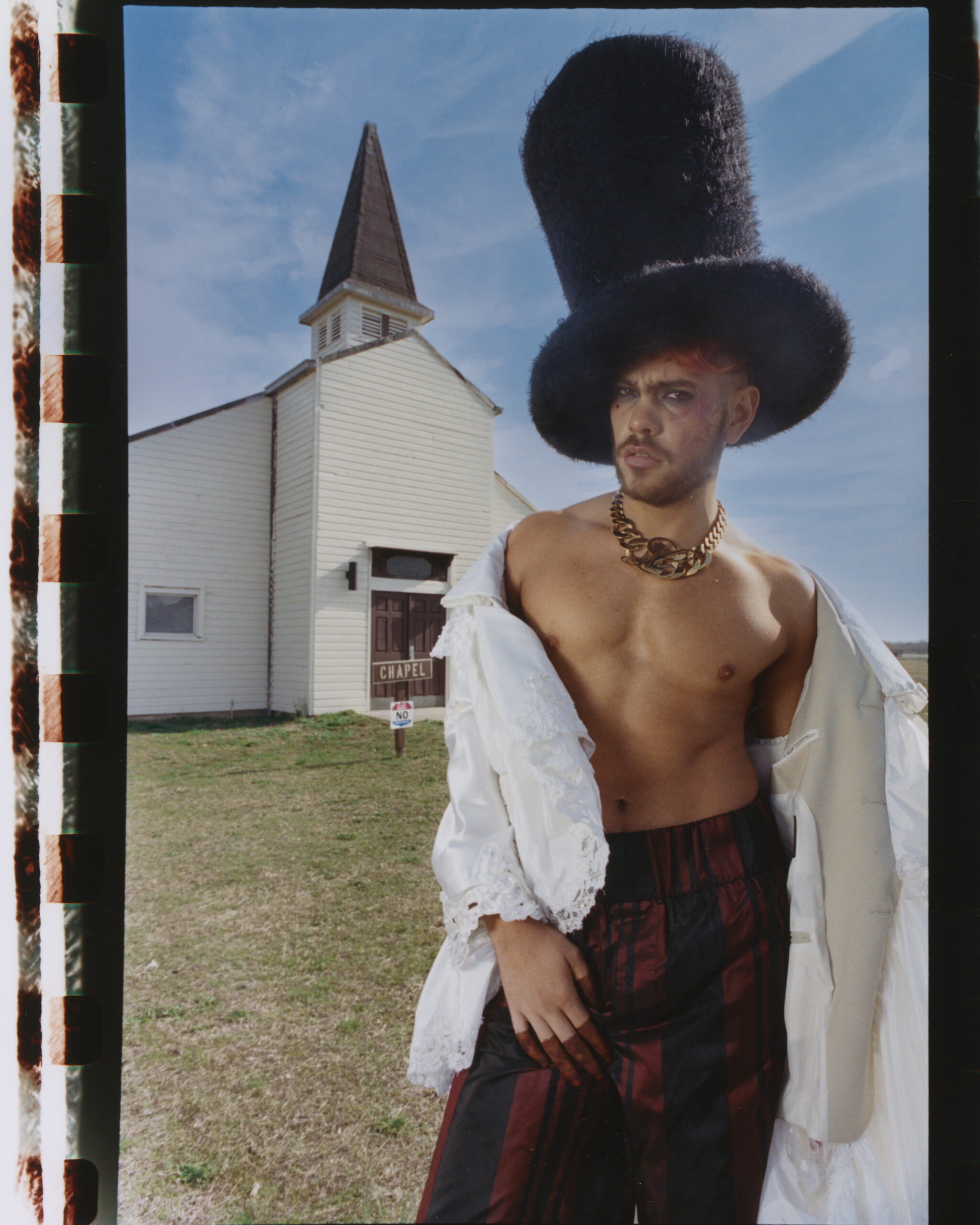
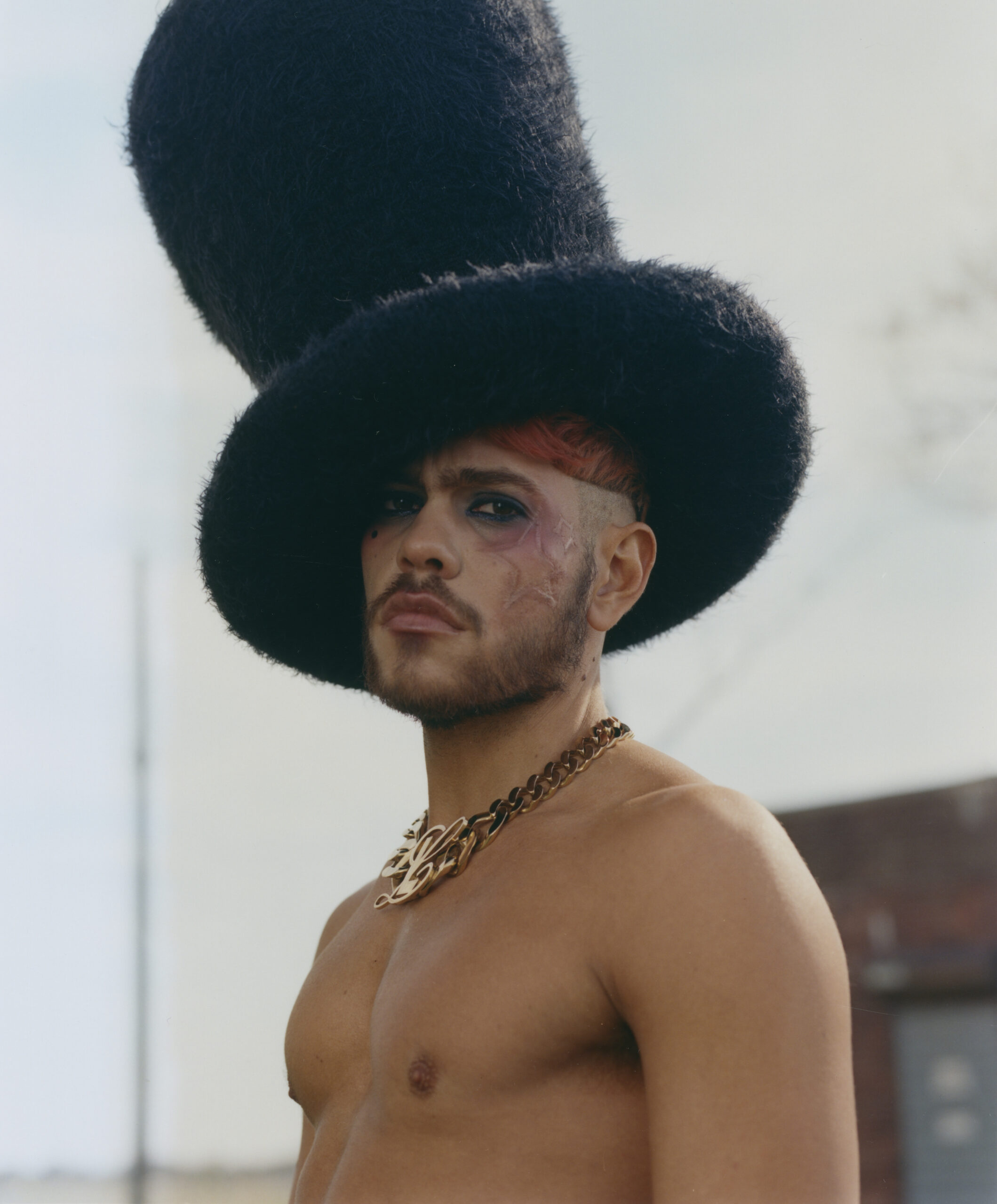
What do a Kentucky and Florida native, a child of Colombian and Nicaraguan immigrants, a former Evangelical worship pastor, and former member of an indie Christian worship band have in common? They all make up the multifaceted identity that is artist Cain Culto. Culto’s body of work is a stark counterculture to his southern and religious roots, with queerness often at the center of his work. With quippy, clever verses come real commentary around current events and global injustices. His recent release, “¡BASTA YA!” has become a mixed-media, anti-ICE anthem. His 2025 single, “KFC Santería”, features a fiddle accompaniment from Culto himself, adding Kentucky style flair to his sharp rap lyrics. With arts school as a grounding force in finding his creative voice, he has built a colorful, theatrical world around his Latin-pop soundscape
His latest single “BIM BAM BAU” is a summer anthem set on the beach with tons of elote eating and ass shaking. An ensemble of femmes of all shapes and sizes bring out the signature fiddles accompanying Culto on this celebratory single. The release sets the stage for a stacked summer filled with Pride performances and more releases, with an album release under way that is multifaceted in theme. We met the morning after a concert of his that took place in a lucha libre ring, an incredibly on-brand venue for this untraditional artist. We discuss these new releases, along with all that encompasses Culto’s creative DNA.
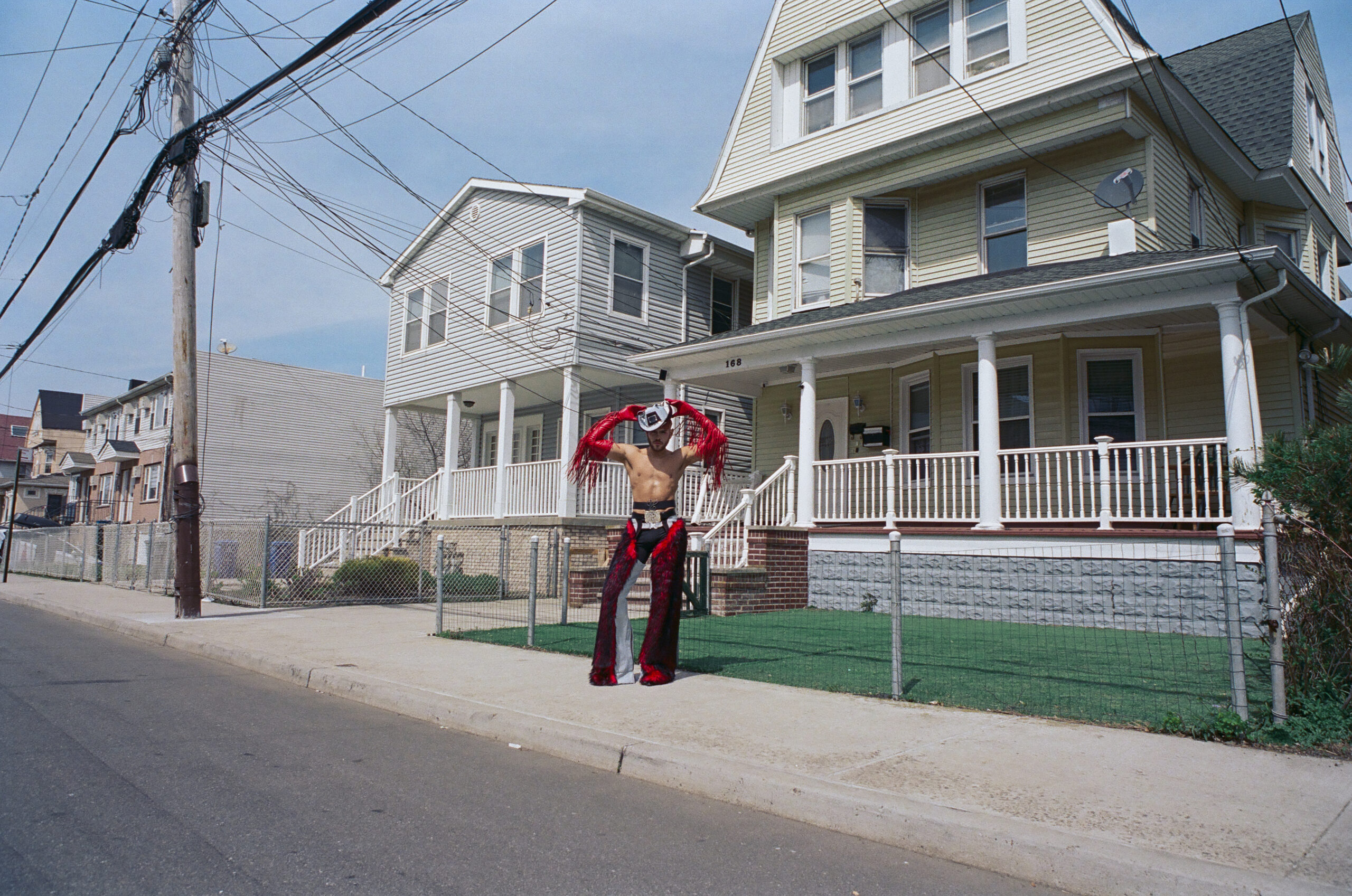
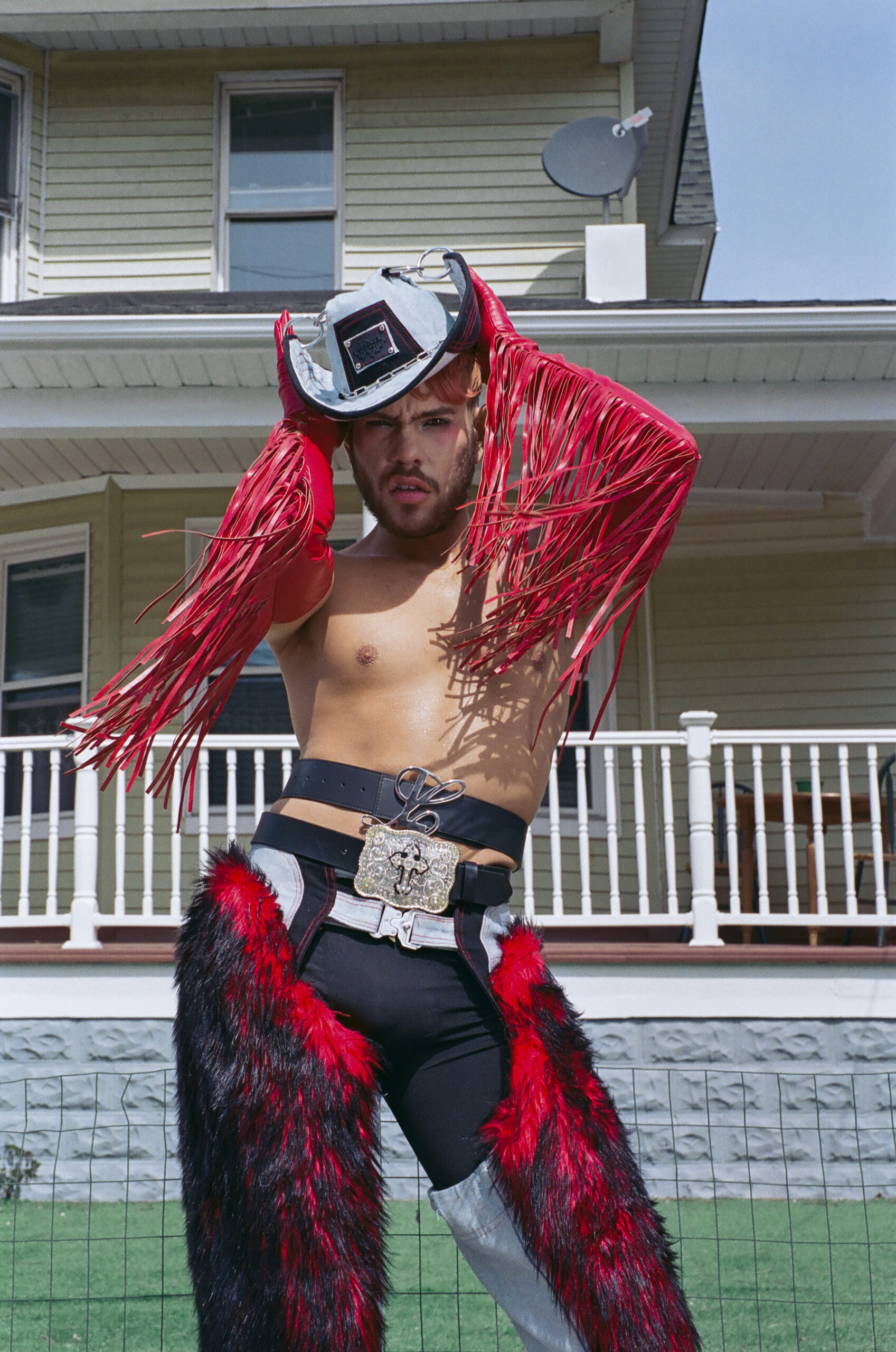
Hat + Chaps, HESTA. Belt, LUAR. Cross Belt, Vintage. Gloves, Stylist Own.
How is 2026 treating you spiritually, physically, mentally?
I have a lot of excited energy around 2026. I’m releasing my album this year, and really stoked to finally have this body of work that I’ve been working on for more than two years out in the world. It feels just aligned in a lot of ways. 2026 feels aligned for me on all levels, spiritually, artistically.
Do you have any springtime practices that feel grounding?
I’m in my tea phase right now. I can’t do coffee because it makes me fully insane. So I have a really subtle tea. It’s not even highly caffeinated, but I’m just drinking that all day. It’s giving me a lot of energy. I’m noticing people are like, “You’re posting on your stories a lot more than usual.” And I’m like, “Yeah, it makes me chatty and yappy when I’m caffeinated.” But that’s my spring routine. My ritual.
I’m really excited to talk to you, not only because I’m a huge fan of the music, but I love multi-hyphenate artists. Those are my favorite people to talk to. Before music, what artistic medium found you first?
My parents said that I was always compulsively drawing as a kid. I even have memories of feeling super frustrated that my fine motor skills could not keep up with what I wanted to create and draw. And my dad was into cartooning a little bit, so I would always ask him to draw for me. Shortly after that, my parents put me into a magnet art school and I was in the arts program, so visual arts, painting, sculpture. Later in life, my focus was more in wearable sculpture, fashion stuff and photography and then music.
You grew up in Kentucky, are a child of immigrants, and have religious roots. What did your community and arts ecosystem look like growing up?
I was homeschooled when I was really young, and then I had a year or two in public school, but I think my parents always noticed I was a weirdo. So they were like, “We need to put this kid somewhere safe because they’re going to eat him alive.” I was sensitive. They noticed that I was different. I think my whole life trajectory and my journey would be completely different had I not been in such a safe environment like art school from a young age. It was an open-minded school, even though I wasn’t. I was trying to convert people to Christianity. At the same time, the safetiness in that school was a good container for me to eventually blossom and feel safe to exist as I truly am.
How did music find you in all of that?
I grew up in a very musical family. My dad plays and makes guitar. I started learning to play the fiddle in school. I minored in the violin, and then I took private fiddle lessons. So that was my gateway into actually playing and considering myself a musician. I always wanted to sing and write songs. I was making YouTube covers in middle school and high school. That’s when I began to dip my toes into songwriting.
Eventually that blossomed into leading worship in my church communities. I started a Christian pop band that’s still on Spotify, so cringe and cheesy. Honestly, it helped me move out to LA, the funds from the royalties of that band. I consider taking it down so often, but I’m like, I’m literally funneling that money into my little gay household here. That’s what allowed me to live before this new project took off.
Having that paper trail of your before and after is an interesting way for your fans to be able to look back at in the grand scheme of your journey.
It’s sweet. I cringe because I hear the sincerity in the lyrics that I’m saying. But I think you can see how that had to happen to develop where I am now. Different subject matter, but sonically and you can hear me wrestling with fundamentalism and Christianity. There’s frustration even in those lyrics, and then you can see where it led.
How has your relationship to your own spirituality on your journey evolved from growing up, making that music to where you are now, especially in your queerness?
I think what defined the way I’ve engaged with spirituality as a young adult and as a kid was the fear that clouded everything. Everything was demonic, or in some way a departure from godliness. Even other spiritual paths, if it wasn’t White Evangelical Christianity, it was, in one way, tainted by the devil. There’s a lot of cultural shaming, a lot of demonization of beautiful cultural traditions just because it’s not in this small framework that’s really defined by colonialism and how they’ve demonized other traditions. Now, I think what has happened is that my fear turned into curiosity, and then turned into real appreciation and wanting to immerse in and understand.
I think you see that in my work, there is this cross-cultural aspect in everything I do. I’m pulling from different parts of the globe, and it’s coming from an authentic place. A lot of art culture is tied to historic traditional practices and beliefs that have developed throughout history. It’s hard to say, does the art pull me in first? or is it my nerding out on this spiritual tradition? It’s usually both. And then I just allow that to flow through in my art in the way that comes out naturally.
With ¡BASTA YA! you said that you wanted to energize people into action. What do you think the role of music and entertainment is in 2026?
Everyone has a different role to play. I’m learning to embrace everyone on their own timeline and journey. In my writing, it’s about packing a punchy statement around humor or sex appeal. That’s pop music. It’s packaging storytelling in a way that captivates a mass audience. As I present my work and roll out my album, how are we using these staple pop tools and methodology while the activist part of me wants to speak to things of more substance? How do we make this hodgepodge that reach people that don’t give a fuck about causes that I care about? I think it is the role of the artist in this moment to do both. There’s nothing wrong with entertainment for pure entertainment’s sake, but I think it’s not enough if we aren’t speaking about the current moment.
Something I loved about ¡BASTA YA! were the Marionette puppets you made. Can you talk to me more about the creative world that you built around those visuals?
It started with the original version of ¡BASTA YA! and the first idea was creating jackets out of pinatas. My partner and I thrifted these jackets and used wrapping paper to make them look like an actual piñata. This idea of making puppets came to mind, specifically creating ICE puppets to poke at their power, bring them down, and to show how they’re really pawns for this administration.
Then last month the opportunity to do the remix with Snow The Product came around and my creative director was like, “What if we make miniature puppets of you three?” because we weren’t able to get us all together in the same room to shoot visuals. I bought some folk puppets, repainted them, attached new hair and customized them in the same jackets that we had in the original video.
I love the Dora The Explorer reference in “chismosa.” You and Jarina looked great. Do you have any other media that you grew up with that you feel imprinted on your creative voice?
One foundational show for me as a kid was Avatar: The Last Airbender. Something about Avatar that was important to me even as a kid was the overt spiritual themes. It wasn’t Western Christianity, even though the show is written by Western writers. They’re really packaging a lot of Eastern thought for Western audiences, and maybe that’s the first time they’re even learning about these topics. It serves a purpose. It was spoonfeeding me a lot of these ideas as a kid that I was able to go in my own path and study for myself. I love the idea of the Avatar and bringing balance and things. I think I always bring up in my own work, my Libra nature is always wanting to hold multiple realities at once.
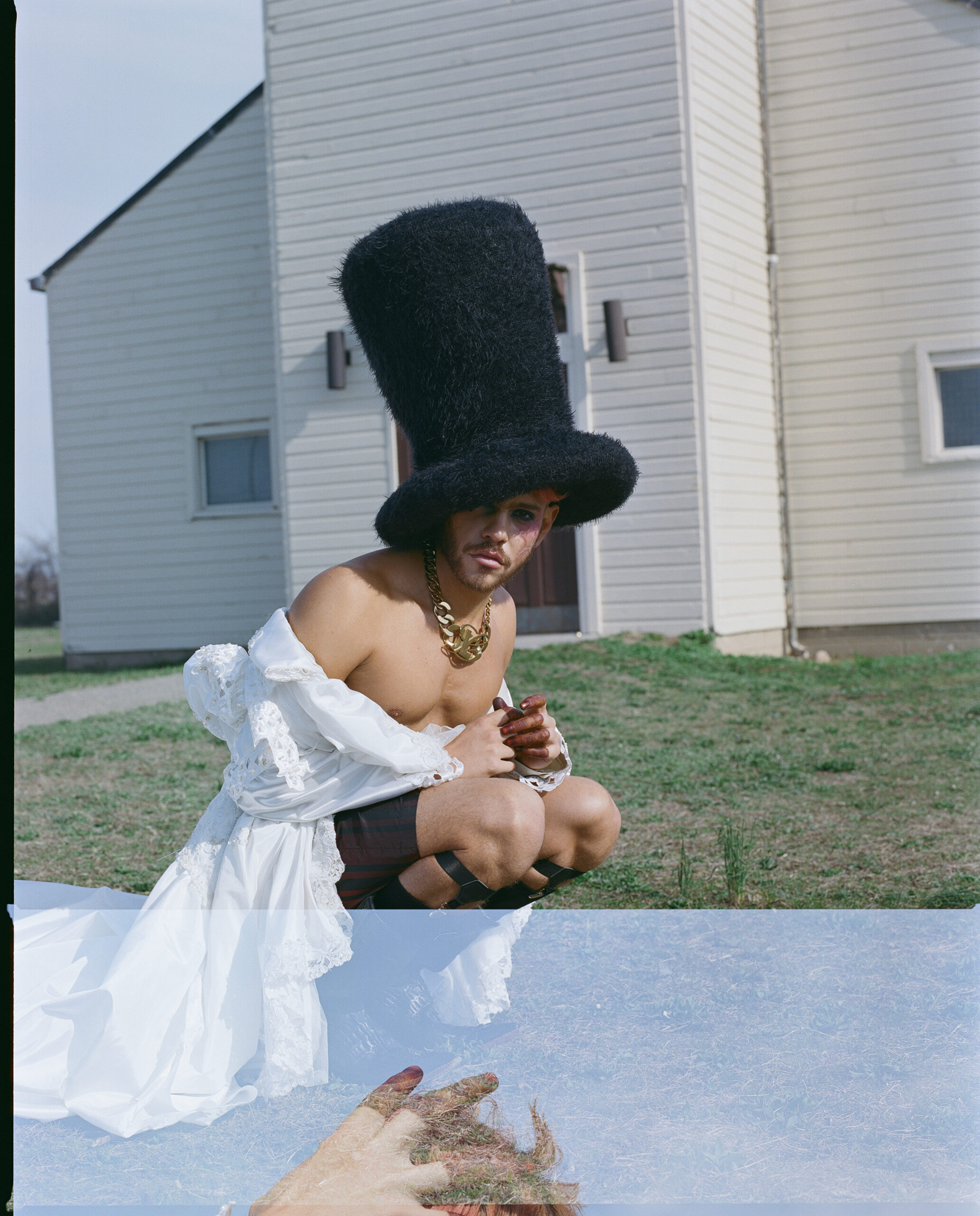
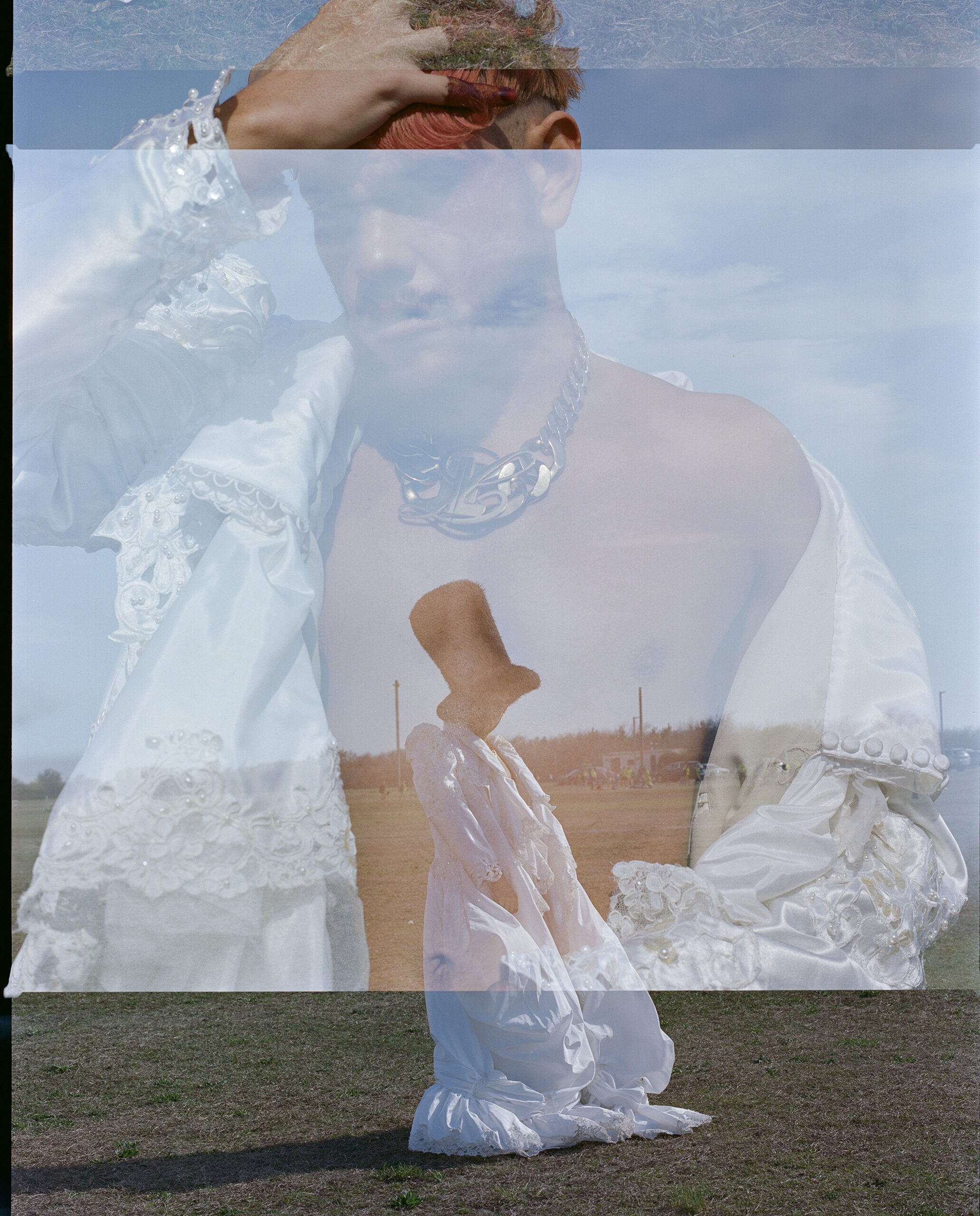
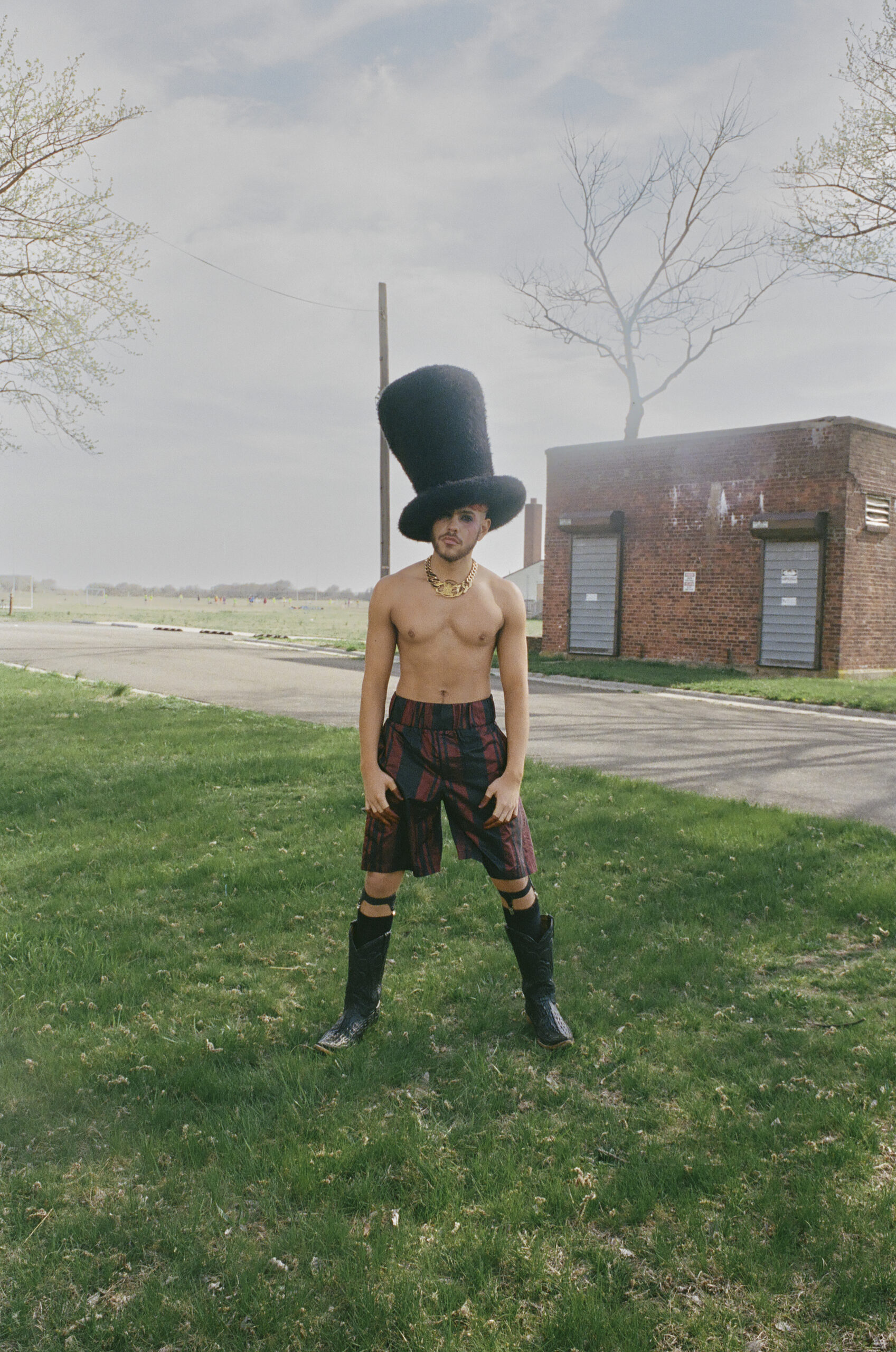
Hat + Coat, PIPENCO. Necklace, LUAR x VITALY. Shorts, LEVI CAMPELLO. Boots, Vintage.
What can you share about your latest single, “BIM BAM BAU?”
“BIM BAM BAU” is my summer anthem. I really wanted something that felt like the beach. We filmed it on one of those hot, sweaty days. The song is about twerking. It’s my most simple and relatable song. I wanted to create something that felt celebratory. It’s funny, because I don’t go out partying that much. I think people think I’m more crazy than I am, but I had this one experience where we’re out at the club and this random girl was just dancing with us. Spiritually, it was so powerful. I was twerking with this girl and it impacted me so much. I was like “I need to write a song about how powerful I felt dancing.” It interpolates Gloria Estefan’s “Conga” and it’s my own kind of Kentucky bluegrass flip on this clearly Miami-based track. It was drawing from both of my growing up in Kentucky and in South Florida close to Miami.
How do you think the song is in conversation with the album?
The album is much more abstract, experimental and darker. This is one of the more happy, lighthearted moments. The record really dives into the shadow, anger, frustration, sorrow and loss. But I want everything with balance, so I wanted a really bright, playful song that could relate to a lot of people. I wanted kids to hear the beat and feel really energized to dance.
Where it is similar to the album is, that more than my previous work, this is such an embrace of my own raw sexuality. It’s reclaiming one’s power through embracing your sensuality. Just knowing where I came from, how much opposition and fear and repression there was of that aspect of myself, to now have a song where there’s two giant butts next to me on the cover art just feels like me conquering that fear.
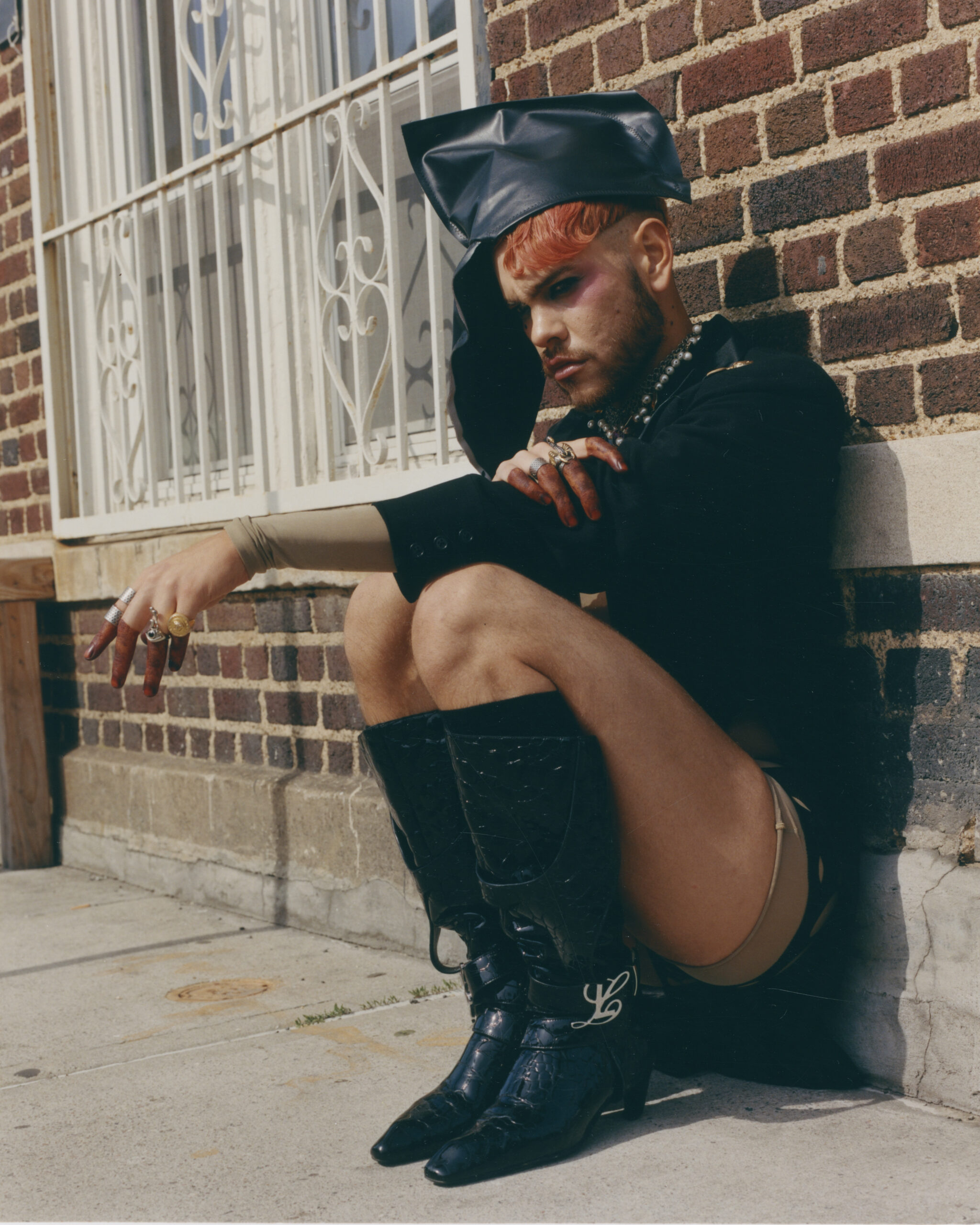
Hat + Coat, MENYELEK. Bodysuit, TAOTAO. Brief, LEAK NYC. Boots, LUAR. Jewelry, Stylist own.
What else does the summer and the rest of the year have in store for you?
We’re doing a Pride run, and I’m finishing the record. I’m working on a couple collaborations right now, and I want to get back into pitching singles. I love writing and producing for other artists. So I definitely want to put a lot of my time and effort into also just pitching songs for pop artists that I love. So my main manifestation this year is to collaborate with the main pop girl.
What do you look for in a collaborator, and what do you think makes a good collaborator?
I always look for people with a clear visual identity. That’s important to me. People have to be baddies. Whatever that is, I just know when someone’s a baddie I love to enter other people’s worlds, too. I love to be a chameleon. Cain Culto as a project is really me exploring heightened versions of myself through this character. So if I see someone else that has really charged energy and a really clear perspective, I love to enter that world and then bring my energy and create something special.
It’s safe to say that there is no artist out there with a voice in pop culture quite like Cain Culto. His explosive, celebratory presence is a needed one in a climate that often villainizes LGBTQ+ and Latinx communities. He is a ray of sunshine that brings the heat to every project he creates. He is sure to sizzle and steam this summer with his upcoming projects. “BIM BAM BAU” has us sweating in the meantime!
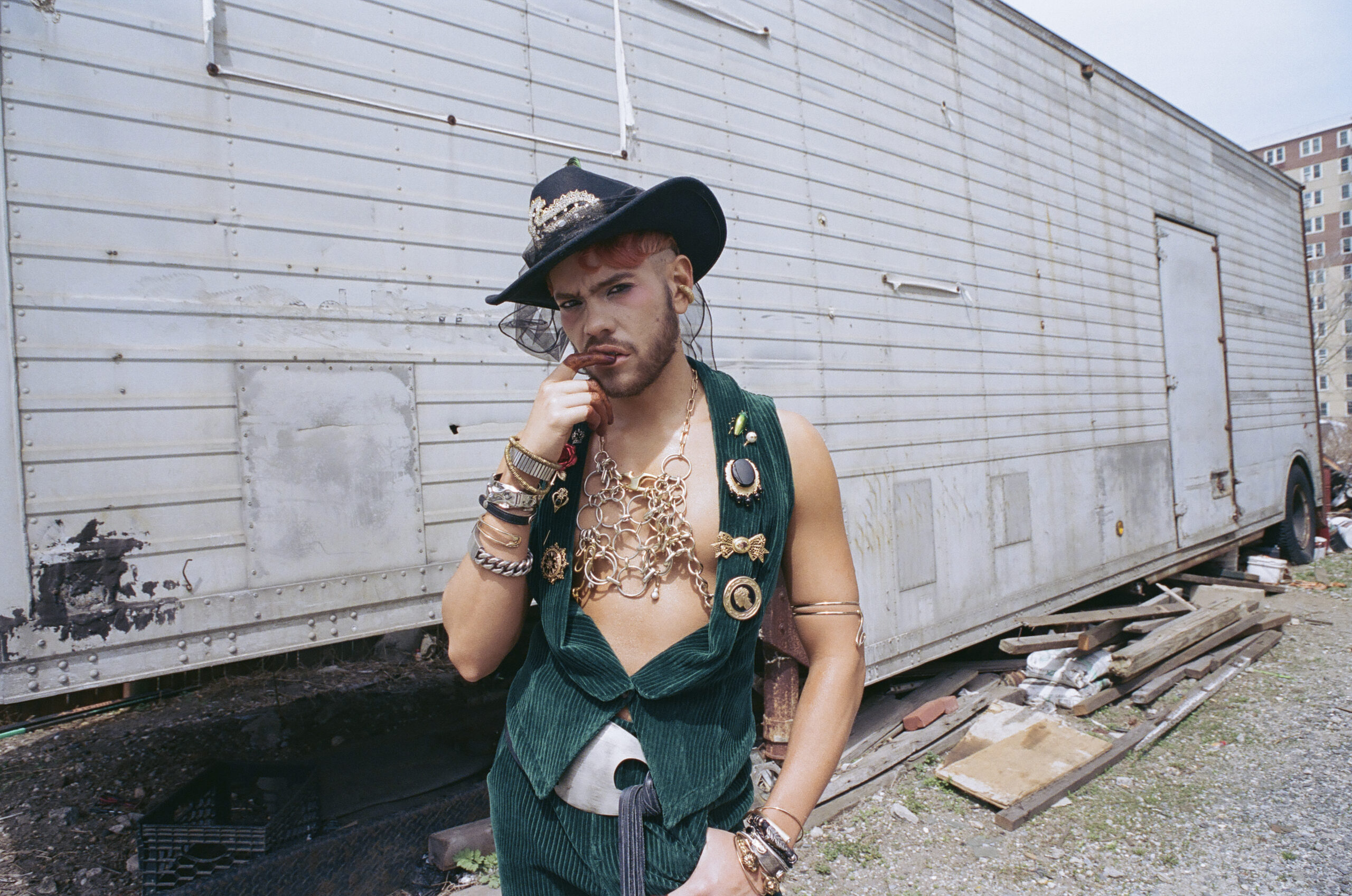
Suit, BECCA FLOOD. Chest piece, HESTA. Hat, ESQUE.BY. Jewelry, Stylist own.