
story / Jesse Roth
photos/ Juan Flores
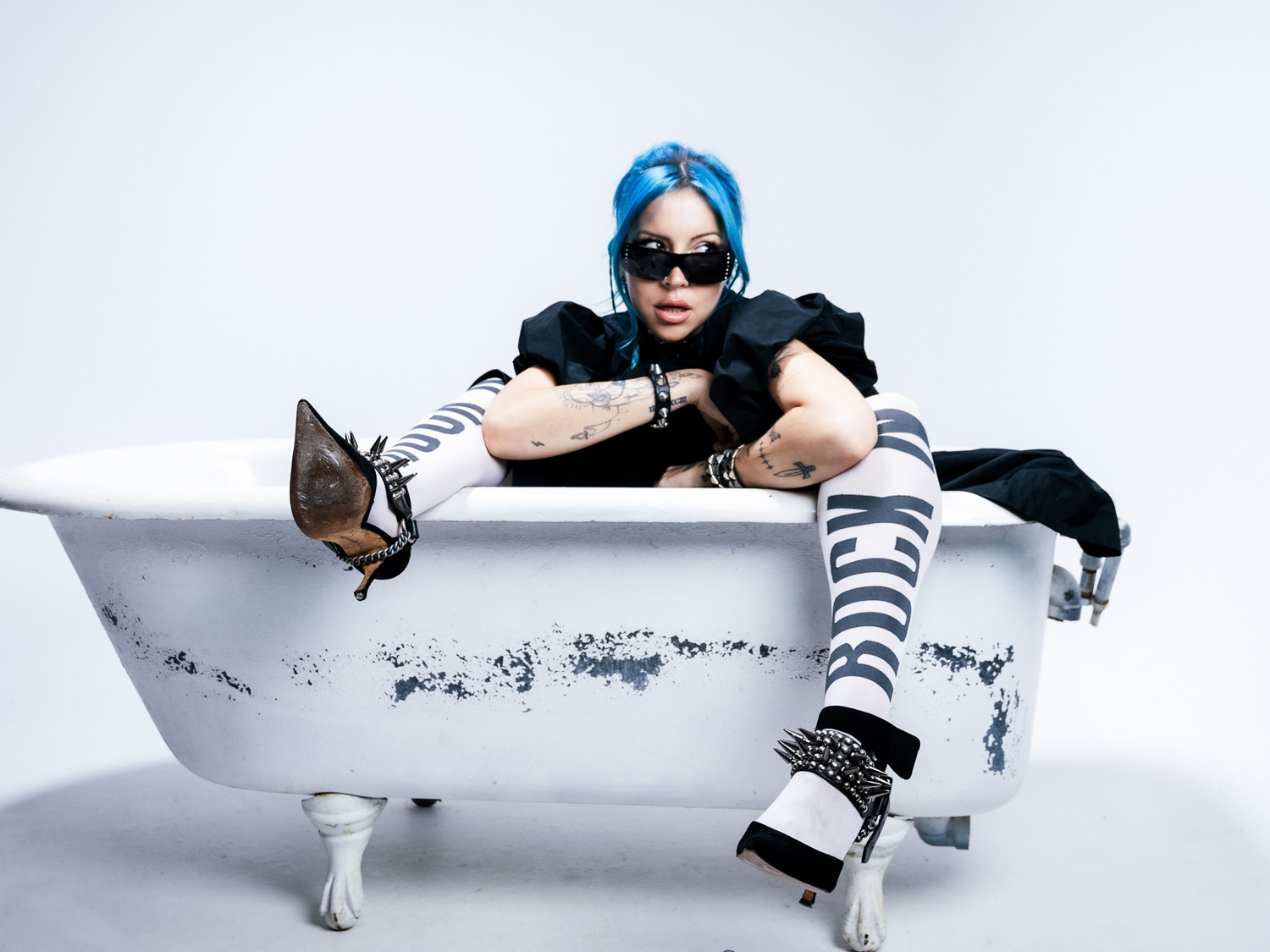
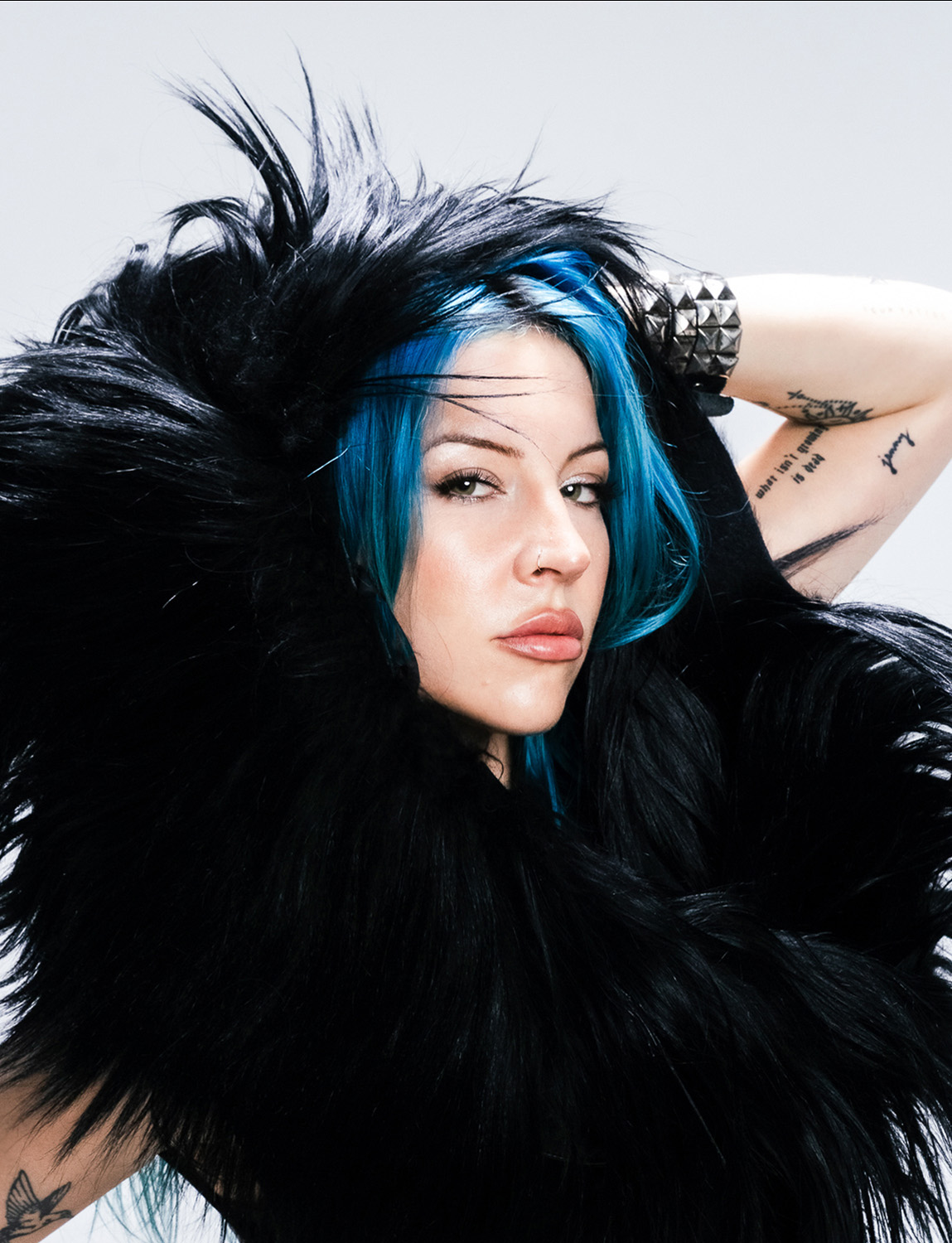
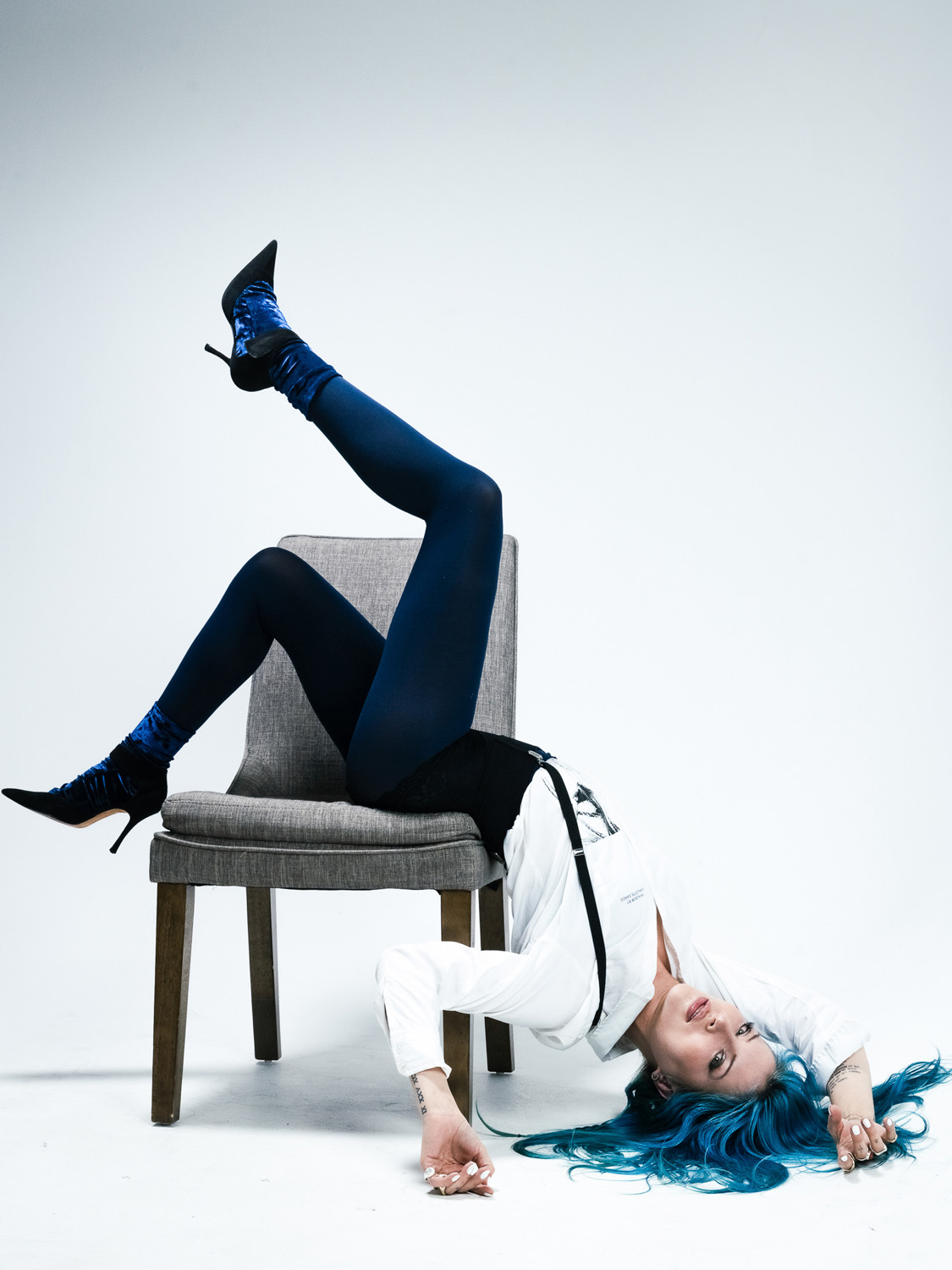
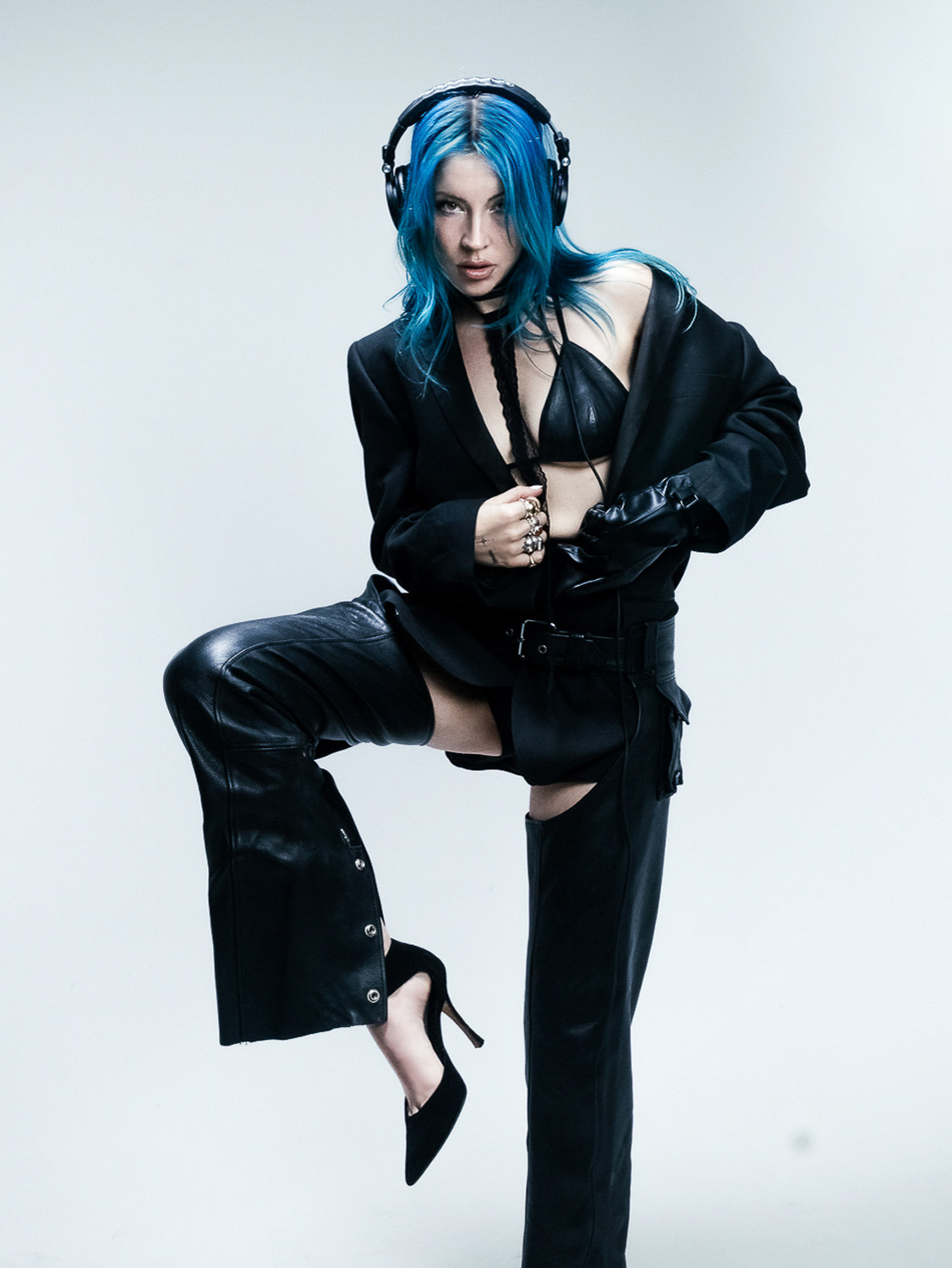
Charlotte Sands is striking. The electric blue hair might be the first thing you notice, but it is the way she speaks, thoughtful, self-aware, and completely unfiltered, that keeps you hanging on every word. Sands has built her career in the world of alternative rock while never quite fitting neatly into one box, something that feels reflected in both her music and her personality. As someone who occasionally dyes the tips of my hair bright colors for a month each summer before inevitably chopping it back into a blunt bob, I went into our conversation already a little enamored with how effortlessly cool she seems. Any intimidation quickly disappeared once we started talking, beginning with a shared appreciation for the oddly quaint suburban pockets of Los Angeles’ San Fernando Valley. Charlotte laughed, admitting, “I never thought I’d be a suburbs girl.”
That mix of confidence and self-reflection runs through Satellite, her new album, which finds the alternative rock artist expanding both sonically and emotionally. Originally from just outside Boston, Massachusetts, Sands spent much of her twenties building her career in Nashville before relocating to Los Angeles at the end of 2024. Written after years of constant touring and the release of her first full-length album “can we start over?,” “Satellite” captures a different chapter for Sands: one defined by stability, experimentation, and a growing trust in her own instincts. When we spoke, we covered everything from meticulous promotion strategies and genre fluidity to Pinterest vision boards and the quiet confidence that comes with finally creating music on her own terms.
Would you say you’re more Type A or Type B when it comes to promoting your album?
I think I’ve definitely become more Type A over the last few years. I genuinely don’t think I was ever like that before, but it became necessary in my career to learn those skills. Now I love a strategy. I love an Excel sheet. If I could have a slideshow or a Venn diagram of every possible thing, that’s heaven to me. I have pretty intense ADHD, and sometimes the only way I can function is by being overly organized. Everything is like a yarn map in my head. There’s a switch between my creative brain and my business brain, and I’ve learned how to use both.
You wrote “Satellite” after putting out your first full-length album and doing a lot of touring. How much of the aftermath of that period made its way into the process of making this album?
It was interesting because it was the first time I had ever taken real time off from touring. While writing this album, I was actually stable in my normal life and not traveling constantly. I was in a consistent environment, which I had never really had in the last five years.
I also had to learn a new skill. When you’re used to being busy and overstimulated all the time, your body almost stays in reaction mode. You’re constantly thinking, “What’s today going to bring?” Sometimes it’s easier to create from that state of panic than from peace and calm. I had to relearn how to be a writer and figure out how to find inspiration without the chaos. I think it’s just part of getting older.
Your last album title was a question — “can we start over?” — whereas “Satellite” feels very strong and declarative. What’s something you used to question that now you feel more solid about?
During the last project and that phase of my life, I felt like I constantly had to prove myself. As a woman in rock music especially, people are always looking for ways to discredit you — your skills, your work, even your character.
I felt like I needed to prove that I deserved to be here, that I could actually sing, that people should take me seriously. I was always thinking about whether other people would like something or respect it.
Now I feel much more confident experimenting and making different choices. Ironically, I feel more comfortable collaborating with different people and trying different genres because I’m not constantly worried about proving myself anymore.
I remind myself that I can’t create something meaningful for other people unless I’m doing right by myself first. The best music comes from giving myself the freedom to trust my instincts. I owe that to the fans who have been here since day one — the people buying the tickets and the merch. The best way I can give back to them is by making the best music I possibly can, and that only happens when I stop listening to everyone else all the time.
Fluidity of genre is something that consistently appears in your work. Is that something you’re consciously thinking about when you’re making music? For example, did you go into “HUSH” thinking, “I’m going to make a dance song”?
That song is actually funny because I fully wrote it thinking it would be a pitch song. We had been writing heavier, more emotional songs for the album and I was honestly burnt out from digging so deep into myself.
So I said, “Let’s just write something fun. I have this random chorus and it would be fun to write a dance song.” Immediately the guys I was working with were like, “You have to cut this. It’s so catchy.”
But I couldn’t see it at first. I genuinely thought I would never put it out because it didn’t feel like it made sense for me. Then my producer Keith, who worked on most of the album, recorded live drums over the track and sent it back to me. The second I heard it I knew exactly what the song should be.
Sometimes in a session you know immediately what a song is going to be. Other times you have to sit with it. A lot of the time I’m also thinking about the live show. Where does this song fit in the set? What energy does the show need in that moment? Will I feel excited when I hear the cue for that song in my in-ears? Thinking about the live experience really helps guide the production and the energy of the songs.
Your songs move between confident, almost audacious moments and darker, more vulnerable ones. Which lane are you more comfortable writing in?
Honestly, it’s much easier for me to write sad or emotional songs. This is actually the first album where I feel like there are multiple happy songs.
When I’m writing in my journal, it’s usually about the things I don’t want to carry around inside my body anymore. Writing a song about those feelings lets me create a place for them to live outside of myself. That feels very natural.
Trying to explain happiness can be harder. Sometimes those feelings feel more private, like something I want to hold onto instead of dissecting.
With this album, though, I wanted it to feel like the full human experience. I wanted every emotion to exist somewhere in the project so that hopefully everyone can find at least one song that speaks to them on any given day.
Which song came together the fastest?
Probably “Sunday.” That was another moment where we just completely let go in the session. I knew I wanted an acoustic song, and I had been listening to artists like Sheryl Crow, Michelle Branch, Bonnie Raitt, and Dido.
We started playing around with some guitar chords, and I went into the vocal booth and basically made up sounds and phrases on the spot. Most of the lyrics came from those first takes. We kept them because the whole point of the song was capturing a feeling instead of overanalyzing it. It was very low pressure. It felt like the first thing we said was the right thing.
Which song required the most care to get right?
“Water Me Down.” That was one I felt like I had to be very careful with because I wanted it to be accurate to my experiences. It’s something I’ve wanted to write about for a long time.
I think a lot of women can relate to being in relationships where someone slowly tries to make you smaller. You see it happen with friends, you see it happen to yourself, and it’s strange how the things people first love about you can eventually become the things they resent.
It’s a complicated emotion, but I felt like if I didn’t include that song I would be doing a disservice to people who might hear it and recognize that experience in themselves. I’m really glad it ended up on the album.
How do you choose which songs to release as singles?
I try to choose songs that represent different sides of the album. “Push” shows the more electronic pop side. “Afterlife” leans into the acoustic, songwriter part of me, which is the kind of music I grew up listening to.
Even when I’m writing rock music, I never feel like I’m only one thing. I’m always both of those sides at once.
Then there’s “Neck Deep,” which has the heavier rock elements mixed with electronics. I wanted the singles to give people a small preview of all the different directions the album goes in.
I know you’re a Pinterest person, and so am I. What did the vision board for this album look like?
This process was really different from the first album. With that record, everything fell into place immediately. We wrote the first five singles in five days. I had been waiting so long to make my first album that everything just felt obvious.
This time it was much harder. I had all the music finished but couldn’t settle on visuals or artwork. Every song felt like it lived in a completely different universe.
Eventually I thought maybe I should start at the end of the process instead of the beginning. So I went to the place where we normally customize vinyl and started looking at colors. I found this dark olive green vinyl with black in it and immediately thought, “That’s the album.”
Green is grounding for me and it’s also my favorite color. From there I worked backwards, connecting visuals and references for each song like one of those detective boards with string connecting everything.
It was a really valuable lesson. Just because you feel stuck doesn’t mean you are. Sometimes you just have to find a different pathway to your creativity.
When during this process did you move from Nashville to Los Angeles?
That was in 2024. At the end of that year we had written a few songs, including “Satellite,” which always ends up becoming the title track somehow.
I went back to Nashville for a while and felt really stuck creatively. I was doing the same things every day and going to the same places every weekend. I realized I didn’t feel inspired there anymore.
So I moved to LA because I needed to be somewhere that felt constantly changing. I’m so used to touring and meeting new people and having new conversations every day. I thrive on that energy.
It was also a challenge to myself — starting over in a new city, building a new friend group, turning my relationship into long distance by choice. I wanted to take a risk on myself while I still felt hungry in my career.
That experience gave me a lot of confidence while making the album. I felt proud of myself for making that leap, and it pushed me to create exactly what I wanted.
What do you hope listeners take away after hearing “Satellite” for the first time?
I hope people realize that human beings have so much depth and that we’re never just one feeling. Even when you feel stuck in something, there are always other parts of you existing at the same time.
Feeling deeply is a superpower. Feeling empathy for other people is a superpower.
If someone listens to the album and realizes they can experience all these emotions and still end up somewhere peaceful — like the feeling at the end of “Sunday” — that would mean a lot to me.
More than anything, I hope listeners feel like they have a friend in the music. Even if they don’t know me personally, maybe the songs help them put words to something they’ve felt before. We’re all trying to figure life out, making mistakes and getting better along the way. Even when we feel far apart from each other, we’re still orbiting in the same space. That’s the whole idea behind “Satellite.”
Talking with Charlotte Sands made it clear that “Satellite” represents more than just a new collection of songs. It reflects an artist learning how to balance ambition with self-trust, structure with instinct, and vulnerability with confidence. Sands approaches her work with both the meticulous organization of someone who loves a spreadsheet and the emotional openness of someone unafraid to write about the messy, complicated parts of being human. That duality runs throughout “Satellite,” an album that moves between cathartic rock, glossy pop moments, and softer reflections without ever losing its center. If Sands’ goal was to capture the full spectrum of feeling and remind listeners that we are all navigating life’s orbit together, “Satellite” succeeds beautifully.

CONNECT WITH CHARLOTTE SANDS