
Photos / Paige Strabala
Story Luna Bacce
Violet Days, the Swedish artist, returns with her most personal body of work yet, exploring escapism, desire, heartbreak, grief, and self-awareness. Created over two years, the songs gradually revealed themselves to Hansson as parts of the same story, moving from hitting rock bottom to finding the strength to get back up, only to become caught in some ordinary piece of everyday drama all over again. “Everything’s Coming Up Roses” makes room for those contradictions because, to her, life is never just one emotion.
That same freedom shapes the sound of the project. Hansson stopped trying to force her songs in a particular direction, experimented more with her voice, and reconnected with the power rooted in her rock background while bringing folk influences into the mix. With the EP now complete, Hansson can look back at the experiences that shaped it with a clearer sense of what they changed in her. We spoke with her about the making of “Everything’s Coming Up Roses” and the perspective she gained along the way, as she continues to define what comes next for Violet Days.
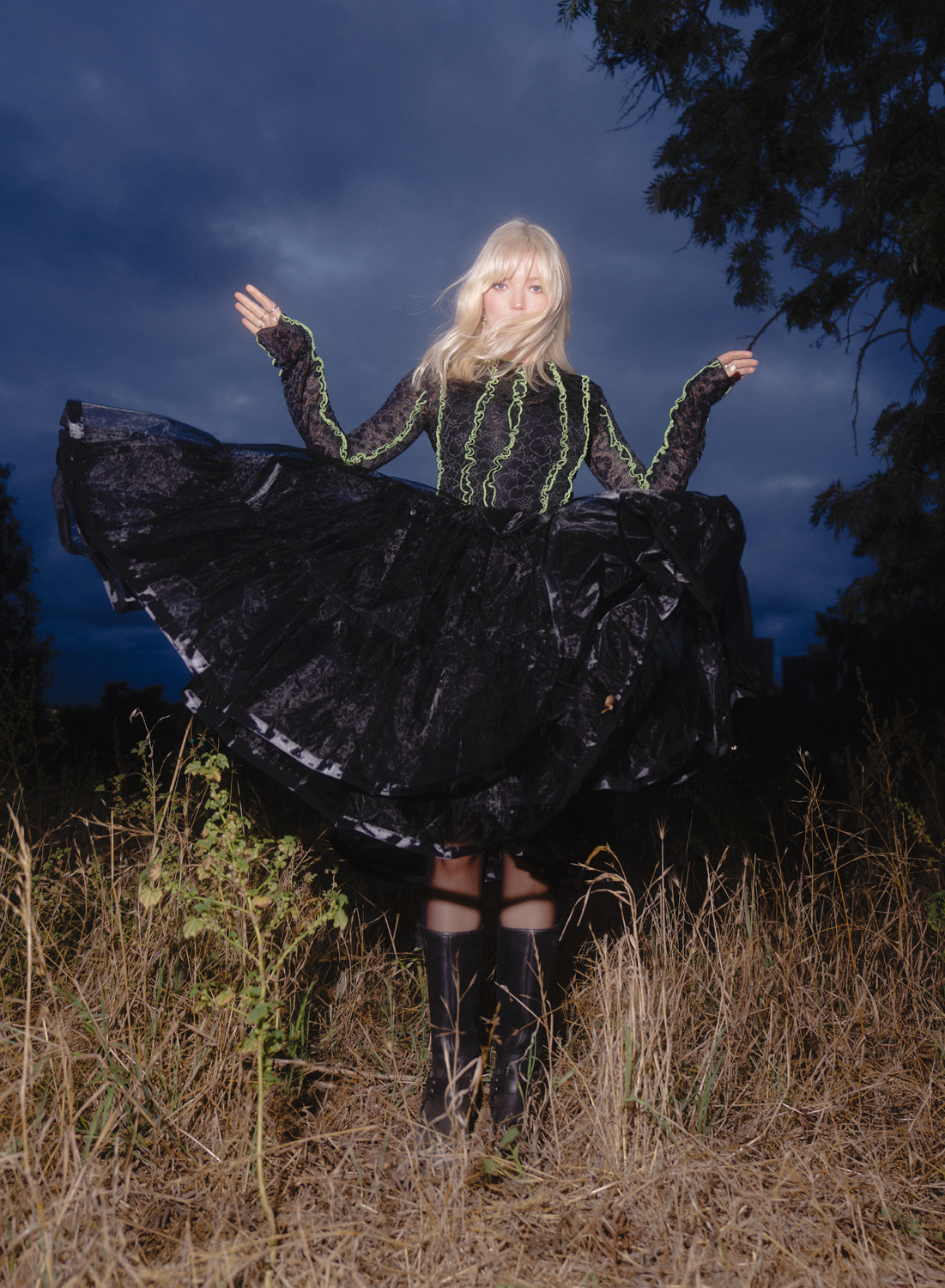
“Everything’s Coming Up Roses” explores escapism, desire, heartbreak, grief, and self-awareness. When did you realize that all these experiences belonged within the same body of work?
After writing these songs over the past two years, I realized they were naturally telling the story of everything I’d been moving through during that time. It felt important to me to show the humanity in that—how life is never just one thing. You can be at rock bottom one day, wake up the next feeling like maybe you can get back on your feet, and then the day after that you’re caught up in some completely ordinary drama. I wanted the EP to hold all of those contradictions, because that’s what life actually feels like to me. When I finally heard the songs together as a whole, it just made sense.
The title doesn’t suggest that everything has suddenly become perfect. Instead, it captures the moment when hope begins to return while the more difficult emotions are still present. How did you balance those two forces throughout the EP?
It really reflected how I was feeling from day to day. I think I had to surrender to both sides of it and let those emotions guide the songs. If I had only leaned into the more difficult feelings, the EP could have gone to a much darker place, and I knew I didn’t want to stay there. I needed to leave room for hope too—almost as a way of manifesting it, even when I wasn’t fully feeling it yet. That balance between heaviness and hope became a really important part of the record.
You’ve described the project as an exploration of the stories we tell ourselves about love and the people we turn into myths. What did you discover about your own tendency to idealize others while writing these songs?
I’ve been very self-critical when looking back at some of the relationships I’ve had and lost, and I started realizing that I can be a little too naive when it comes to believing in people. I really want to believe someone when they tell me something or make me a promise, and I think that can make me idealize them or hold on to the version of them I want to believe in. Sadly, I’ve learned that this has been my downfall more than once. Writing these songs made me see that pattern much more clearly.
Loss plays an important role in “Everything’s Coming Up Roses.” Was there a particular song that proved especially difficult to finish because of the emotional honesty it required?
Definitely “I Know Better.” This was a tough one. I didn’t know if I was ready to write that song the day we did, but it was one of those songs that just needed to come out. It almost poured out of me like water.
I wrote it about a year after a really significant loss, when I’d had a little more time to come down from the chaos of it all and understand what the experience had actually done to me. I realized it had changed me completely and, in some ways, made me into a different person – but not necessarily in a bad way. Somehow, I feel stronger and healthier today because of what I had to move through.
Violet Days has developed a distinct identity shaped by pop melodies, electronic soundscapes, and emotionally driven lyrics. How did that musical language evolve during the making of this project?
There was a bit of a gap between my releases before this EP, and I think I needed that time to step away and reconnect with the sounds I genuinely love and want to listen to myself. This time, I really let my emotions lead the way.
I felt inspired by both older music and new music, and I experimented a lot more with my voice. On this record, I feel like I actually get to sing more than I have in the past few years—using more power, drawing from my background in rock, but also bringing in some folk influences. I stopped trying to force the music into a specific direction and just let each song become what it wanted to become.
Your career also includes writing for other artists. Does your approach change when you’re writing for Violet Days and you know that you’ll be the one interpreting and emotionally carrying every word?
Yes, it’s very different for me. Honestly, I wish writing for myself came a little easier. When I’m writing for other artists, I get to put on a different hat, step into their stories, and help them tell them without it getting too tangled up in my own head—and I really love that.
When I’m writing for myself, there’s a lot more overthinking, doubt, and perfectionism involved, haha. I’m much harder on myself because every word has to feel completely authentic to me. If it doesn’t, I just can’t live with it.
After evolving as an artist over the years, which parts of the songwriter who first created Violet Days can you still recognize in this EP, and which parts represent a completely new chapter?
The part that never gives up, haha. I’ve definitely evolved stylistically and, hopefully, matured along the way, but I still recognize that same slightly delusional part of me that keeps choosing this, keeps loving it, and somehow keeps making it work.
I think my melodic language is still very connected to the songwriter I was when Violet Days first started. The new chapter is more about who I am now—I’m letting myself tell a deeper, more personal side of my story, and I think there’s a different kind of honesty in that.
“Everything’s Coming Up Roses” is about creating something beautiful from painful experiences and choosing to believe that blooming is still possible. Where do you hope that sense of renewal takes Violet Days next?
I think this new chapter is about trusting myself more, taking more risks, and continuing to tell the truth even when it feels uncomfortable. I want to keep evolving sonically too, but without losing the emotional core of what Violet Days has alwTays been. Hopefully, the renewal is really just me giving myself permission to keep becoming whoever I’m supposed to become next.
Hansson still chooses to make music, even when writing for herself means confronting doubt, perfectionism, loss, and the parts of her life she would rather understand differently. “Everything’s Coming Up Roses” captures that persistence without turning it into a neat conclusion. Violet Days continues from there, carried by an artist who is still changing, still questioning, and still choosing to keep going.
CONNECT WITH VIOLET:
INSTA // TIKTOK