Story / Joshua Colón
Photos / Joshua Colón, Alex Parker
From sunset Pilates in Bel Air to the release of Divine Intervention, LADYGUNN steps
inside the rituals of techno’s reigning goddess.
Before the bass drops, there’s Pilates.
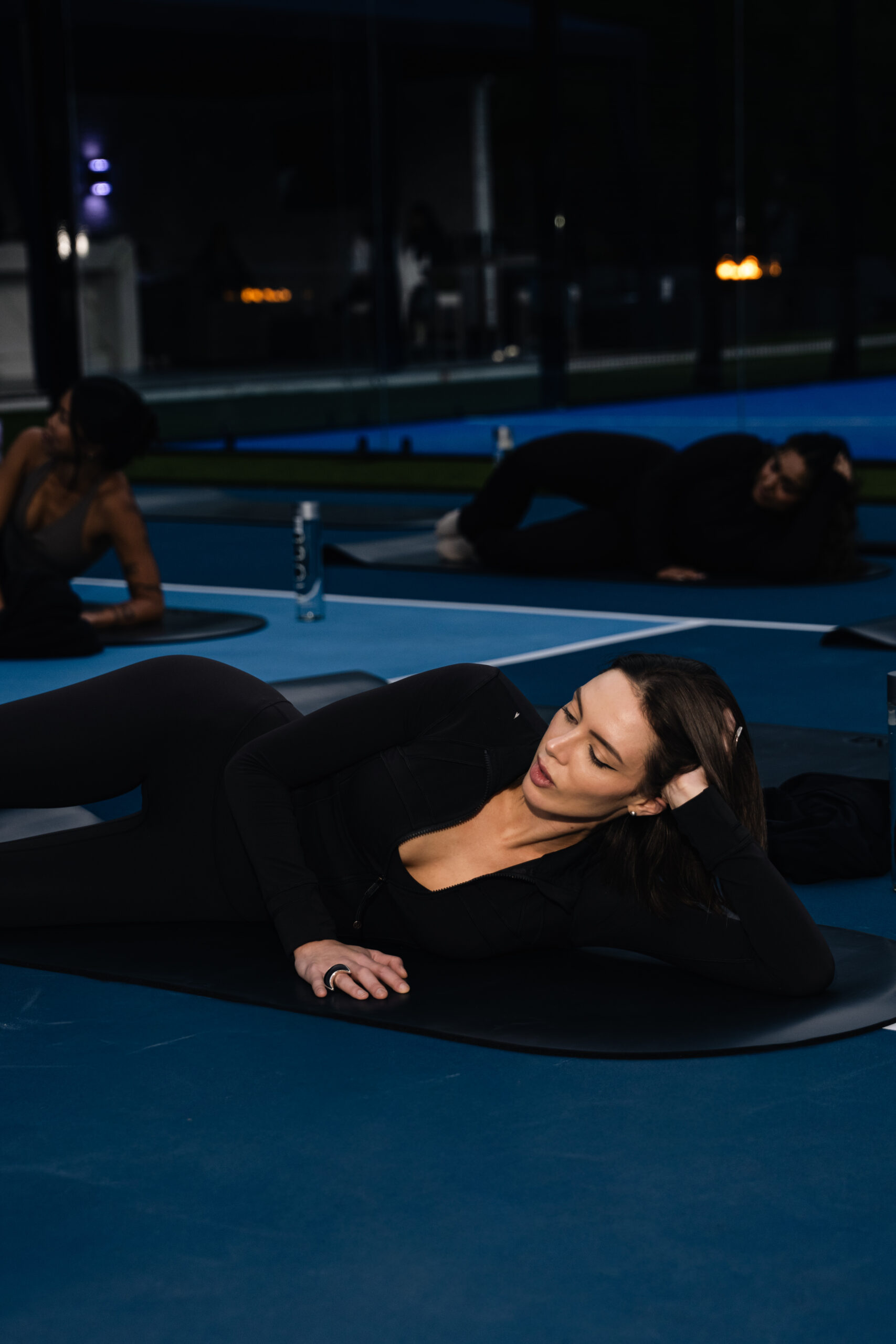
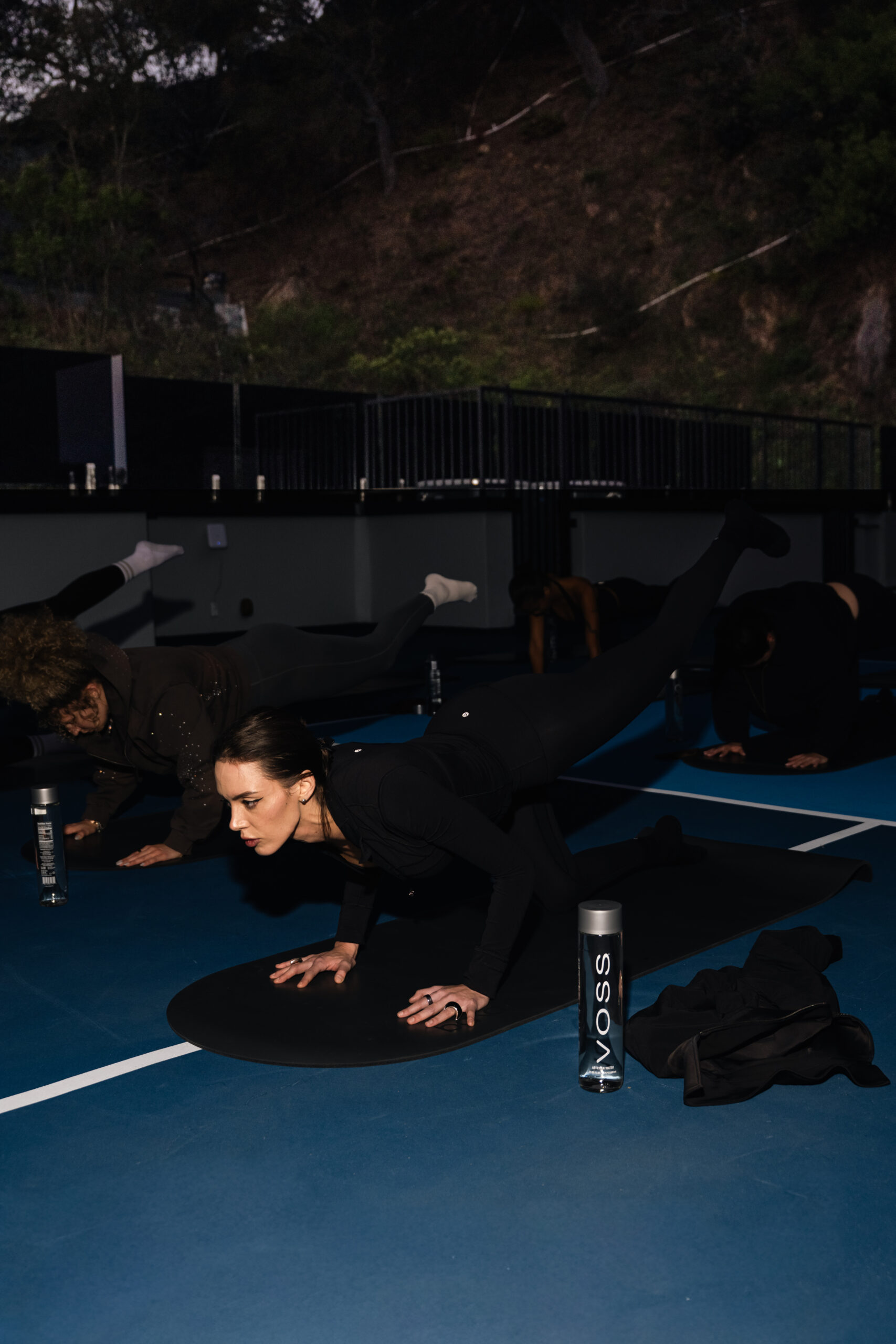
Ahead of the release of her highly anticipated album Divine Intervention, LADYGUNN joins Sara Landry for a private Pilates session in the hills of Bel Air, offering a glimpse into the quieter rituals of techno’s reigning goddess.
There are two sides to Sara Landry. One commands dance floors like a modern-day deity, turning industrial percussion into something bordering on a religious experience. The other? She’s in Los Angeles, finding a moment of stillness before the divine intervention begins.
For an artist whose sonic universe is built on intensity, the juxtaposition is almost delicious.
Los Angeles has a peculiar way of making even the most ordinary routines feel ceremonial. As the evening sun begins its descent over Bel Air, Landry joins a private session hosted by pilatesLY, founded by Lana Yarian. She’s quiet and focused, moving through each exercise with a sense of calm and intention. Here, the emphasis shifts from commanding a crowd to simply being present.
For Landry, whose career has taken her across the globe, maintaining a sense of normalcy isn’t always straightforward. International touring makes consistency something of a luxury, turning even the smallest personal routines into valuable anchors.
At home, however, it’s another story.
“I’m extremely regimented,” she admits, reflecting on the structure she maintains when she’s not traveling. It’s a revealing distinction for someone whose professional life unfolds across time zones, festival stages, and seemingly endless stretches of movement.
But perhaps the most interesting thing about Sara Landry isn’t the intensity she can summon. It’s the person who exists beyond it. “I’m a normal person which is crazy,” she jokes during our conversation.
It’s a wonderfully unceremonious admission from an artist whose public identity is wrapped in mythology, power, and near-divine reverence. While audiences know the commanding figure behind the decks, there’s another dimension to Landry that doesn’t necessarily announce itself through pounding kick drums or theatrical stage production. And perhaps that distinction is part of what makes her so compelling. In an industry where artists are increasingly expected to exist as fully realized brands, maintaining a relationship with the person underneath the persona becomes its own quiet act of preservation.
Here, the body isn’t simply an instrument of performance. It’s something to protect, nurture, and return to.
There’s an interesting parallel between the discipline of Pilates and the precision of electronic music. Both demand rhythm, control, and an awareness of the body, even if one unfolds in relative stillness and the other beneath a sea of flashing lights.
In Landry’s world, these seemingly opposing environments might not be so different after all.
As the last of the California sunlight fades over Bel Air, the evening offers a rare opportunity to witness the artist outside the spectacle, without suggesting that one version of Sara is any more authentic than the other.
And perhaps that’s the real ritual: finding a little ordinary in an increasingly extraordinary life.
A few days later, the atmosphere has shifted. The golden hues of Bel Air have given way to something darker, louder, and considerably more divine.
It’s the release celebration of Divine Intervention, and Sara Landry has traded her Pilates attire for a
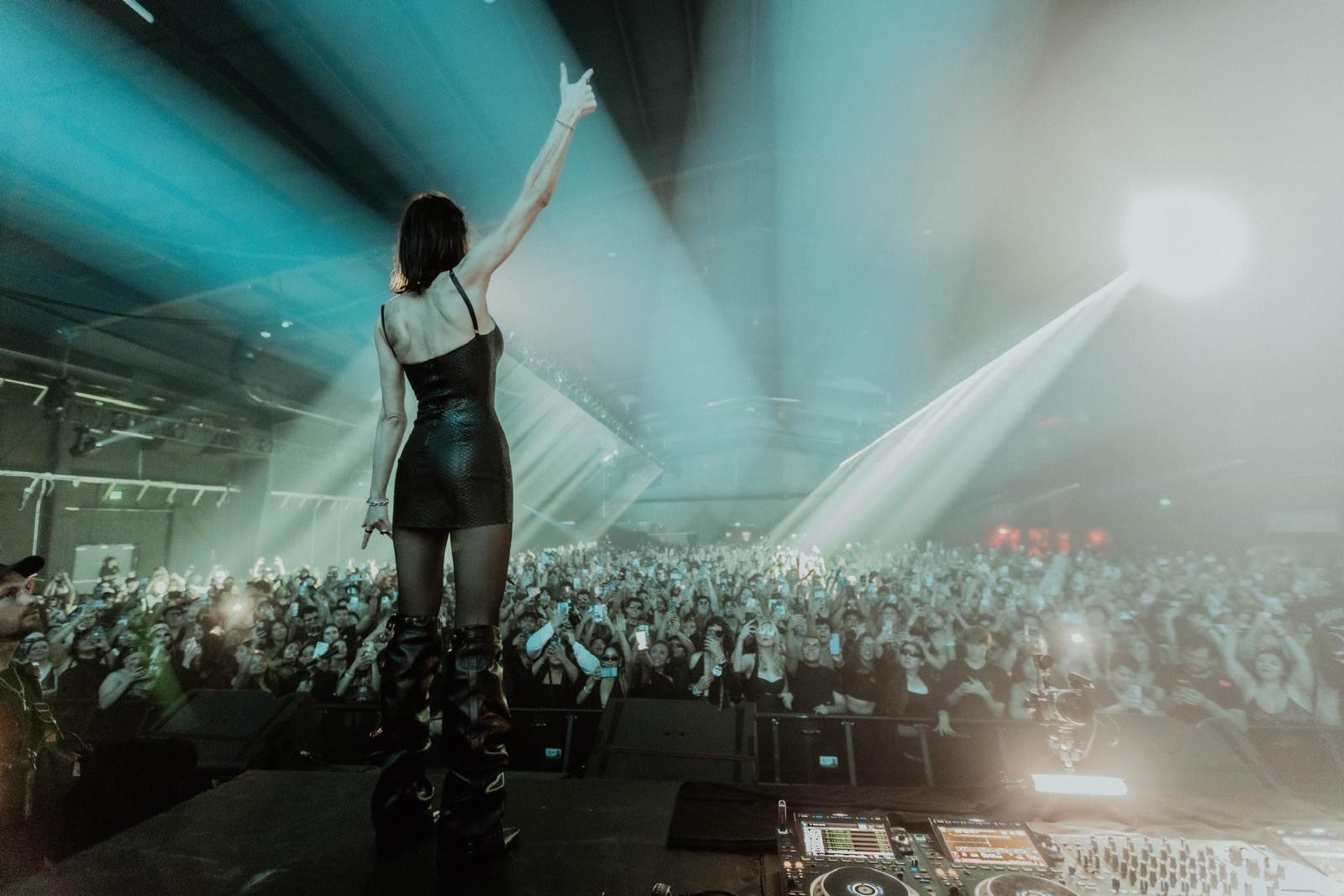
sculptural black ensemble styled by Elizabeth Margulis. The techno goddess has entered her nocturnal era, and naturally, she looks the part.
But beneath the theatrics, the rituals remain.
As we reconnect ahead of the evening’s festivities, Landry offers a glimpse into the practices that accompany her into the club. Gratitude, affirmations, and a few personal talismans are all part of her universe.
“I always keep a bunch of crystals in my purse,” she reveals.
It’s a charmingly practical detail from an artist whose relationship with spirituality extends well beyond stage imagery and album titles. Though not every night calls for an elaborate pre-show ceremony. Sometimes, preparation is as uncomplicated as getting out of bed and heading straight to the venue.
Even goddesses have schedules.
And nowhere is Landry’s fascination with intention more apparent than in Divine Intervention itself.
“The making of this album really was a spell,” Landry reflects.
It’s an intriguing description for a record whose very title suggests that some forces are better surrendered to than controlled.
Rather than following a predetermined creative blueprint, the project evolved through changing circumstances, instinct, and an openness to possibilities she hadn’t initially imagined. For Landry, the magic appears to lie not only in what she creates, but in what she’s willing to let unfold.
Inside the release celebration, that creative philosophy takes on a more physical form.
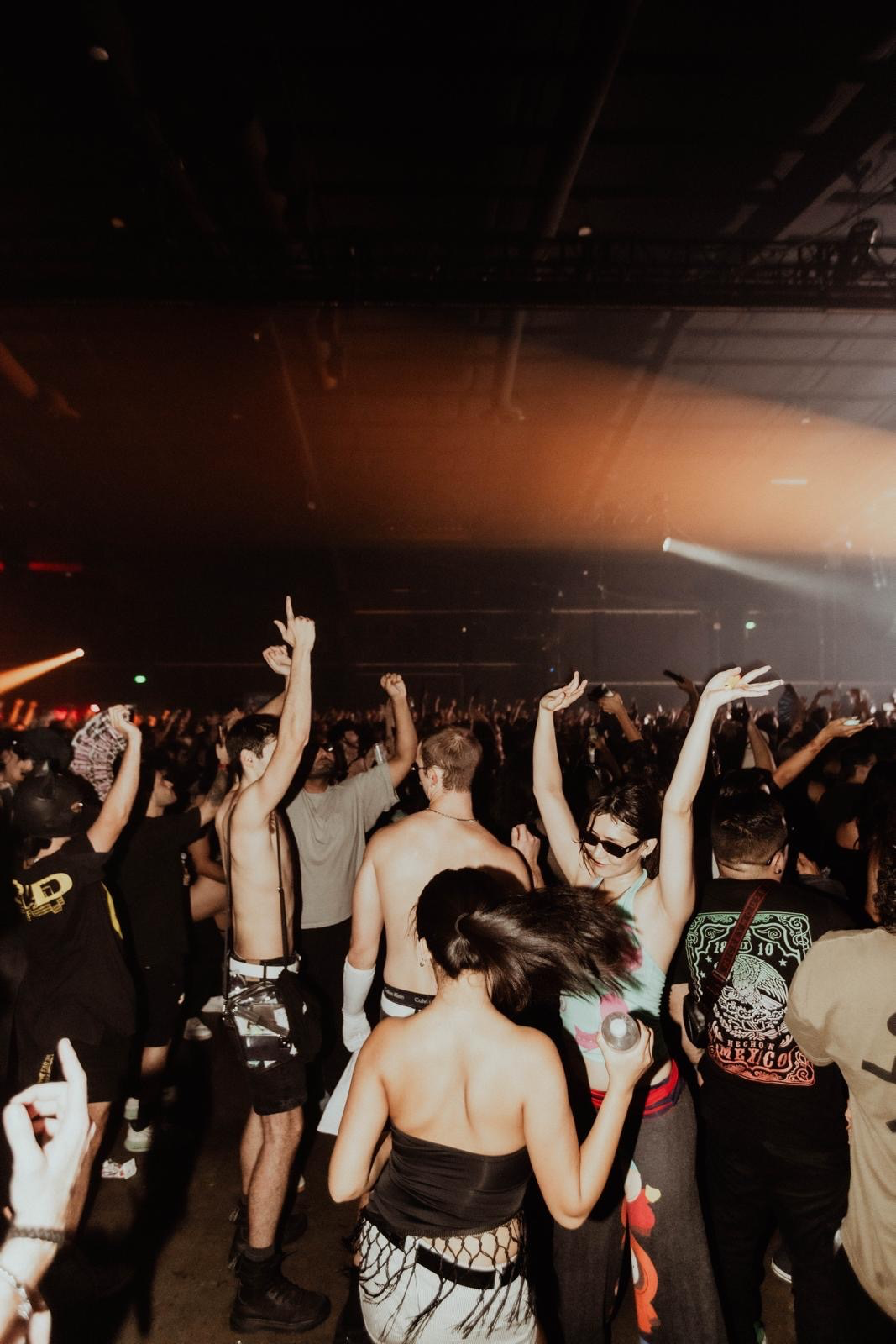
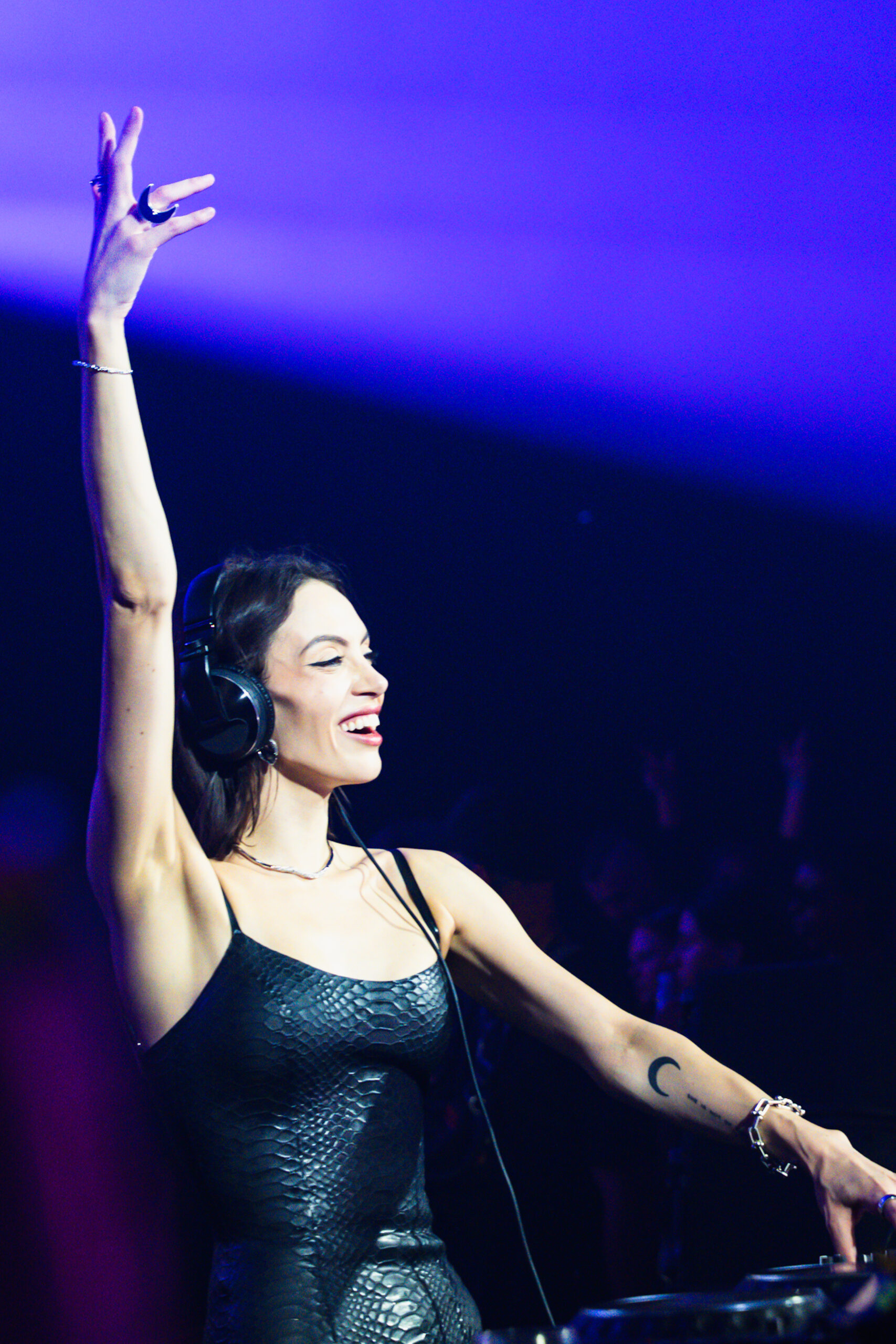
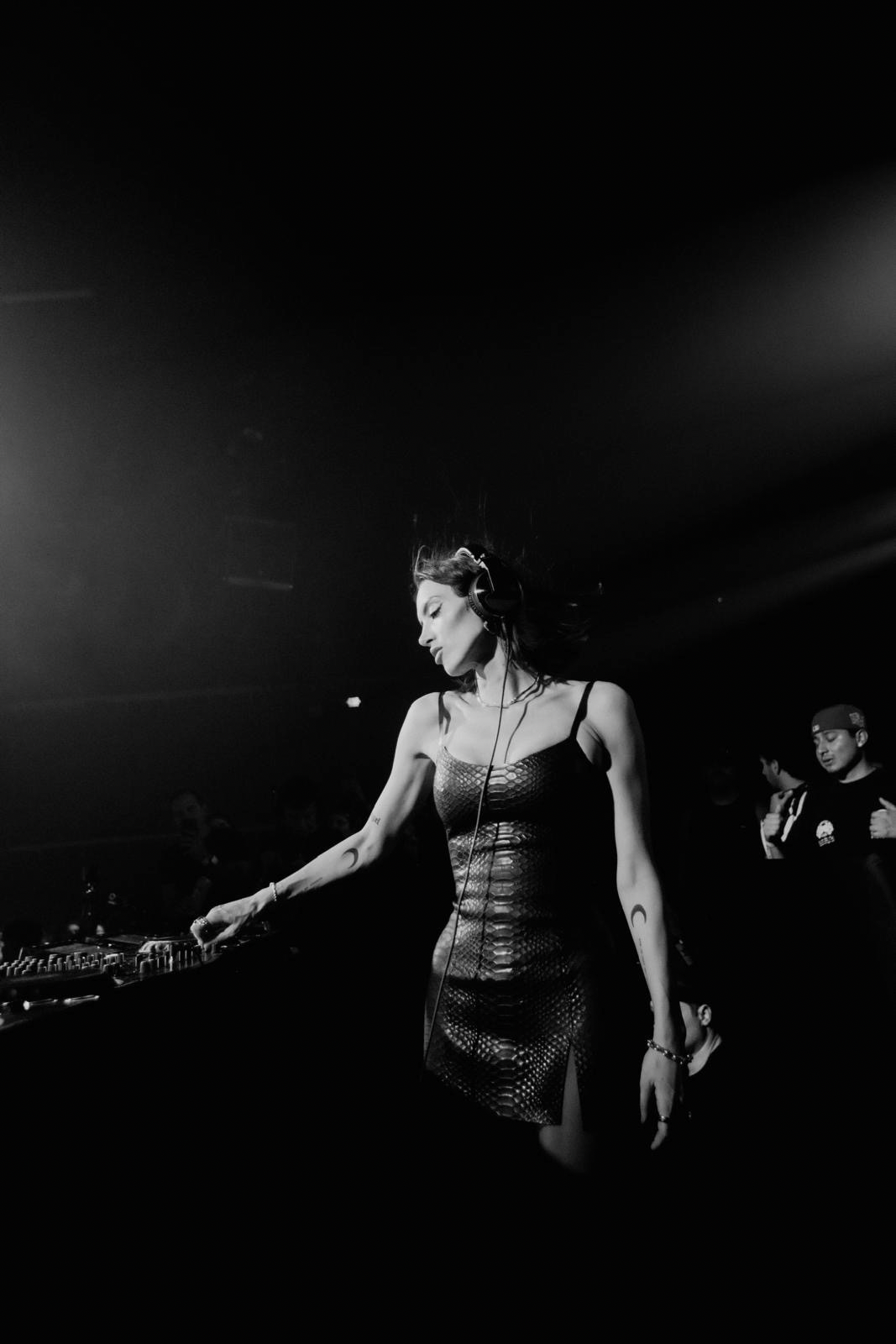
Purple lasers slice through the darkness, spotlights sweep across a sea of raised hands, and Landry moves between the decks and the audience with commanding ease. From beside the stage, the scale of her world becomes impossible to ignore.
The bass doesn’t simply fill the room; it moves through it. Beneath a wash of purple light, bodies surrender to the rhythm as Landry works the decks. At moments, she’s intensely focused on the controls; at others, her arms rise above her head, inviting the crowd into a collective release.
And then comes a particularly delicious curveball: Landry drops an edit of Adéla’s “Nicole Kidman,” injecting a dose of pop-cultural irreverence into her otherwise thunderous sonic universe.
It’s playful, unexpected, and a reminder that even techno’s reigning goddess appreciates a little camp.
The divine, apparently, has excellent taste in pop music.
Musically, Divine Intervention expands beyond the relentless kick drums that have become synonymous with Landry’s name. Psychedelic textures, hypnotic rhythms, and moments of atmospheric tension broaden the record’s sonic landscape without abandoning the physical intensity of hard techno.
Rather than reinventing herself entirely, Landry seems interested in expanding the possibilities of a world she’s already built. The album’s sonic experimentation mirrors the unpredictability of its creation, a reminder that artistic evolution doesn’t always arrive according to plan.
Her reflections on gratitude offer another glimpse into that philosophy. She speaks about protecting certain blessings, suggesting that not every intimate experience needs to become public property.
In an era when celebrity increasingly demands constant disclosure, a little mystery feels almost rebellious. As the night unfolds, the album’s spiritual language begins to feel less like mythology and more like an extension of Landry’s worldview. Hours of music, movement, and collective release later, it’s difficult not to think back to that sunset in Bel Air.
The same woman who moved quietly through a Pilates session now stands before a room of raised hands, commanding an entirely different kind of movement. The settings could hardly be further apart, yet the intention feels remarkably familiar. Perhaps Sara Landry was never two different people to begin with.
One ritual simply requires a Pilates mat. The other, a very good sound system.