

Story / Koko Ntuen
Photos / Lana Shaw
Styling / Branden Ruiz
Hair / Danni Bee
Makeup / Kimora Mulan
Fashion Assistant / Mikaela Alvarado
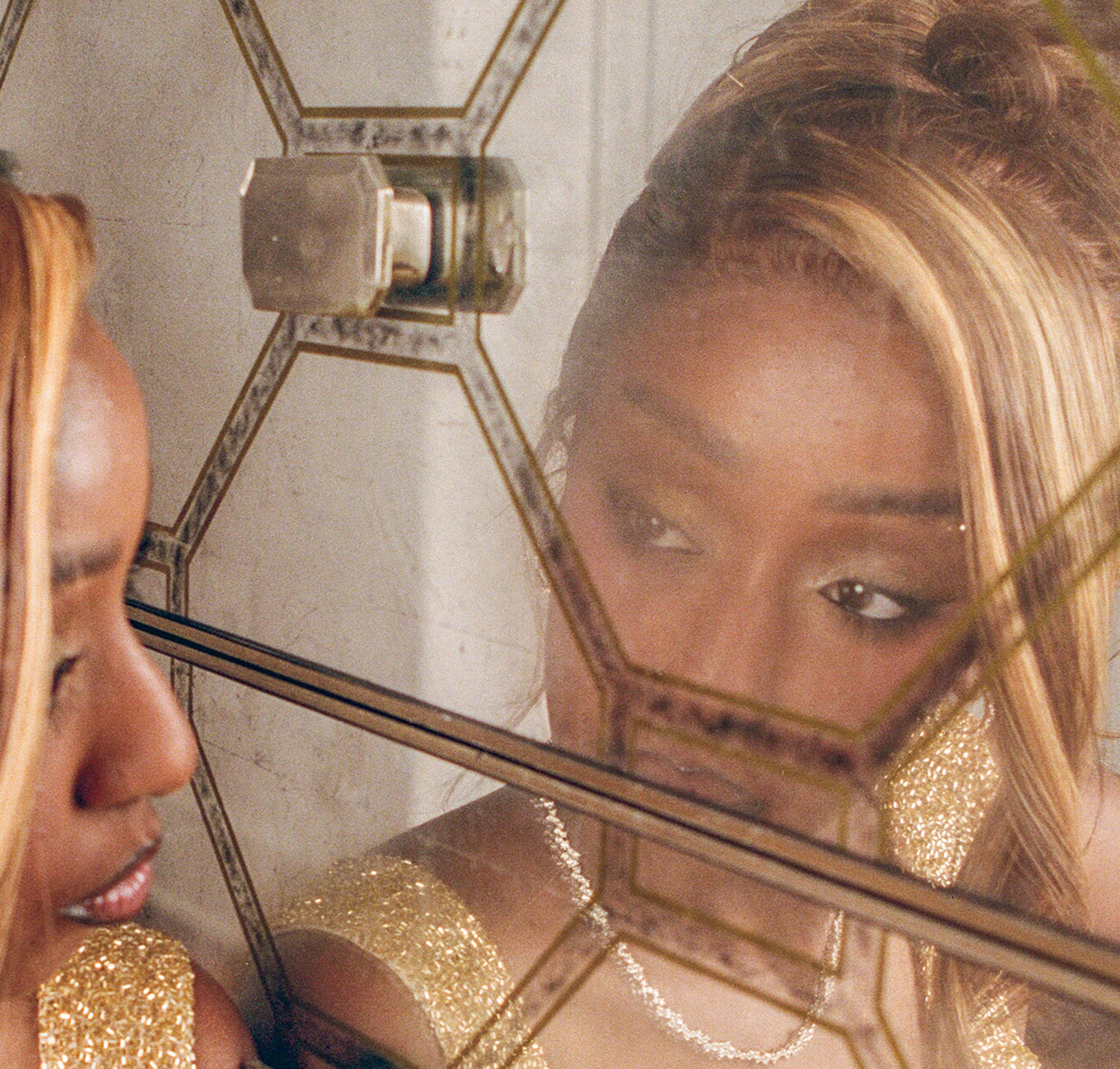
Dress: Songs of Siren Necklace, Earrings, Rings: Sydney Evan
Alemeda wakes up already mid-thought. There’s no warm-up, no performative ease. She’s honest immediately about exhaustion, ambition, fear, anger, and the strange pressure of being an artist people are watching, but not watching enough.
“I’m definitely on the hustle,” she admits. “Hustle, then sleep.”
That tension between momentum and burnout, visibility and invisibility runs through everything Alemeda does. It’s in her music, her posture, her voice, her dance. She’s a buzzy artist, booked, praised by critics and fans alike, yet still operating with the urgency of someone who knows how quickly attention disappears. In a culture obsessed with effortless success, Alemeda is refreshingly direct about the grind.
“Everything, especially right now, people’s attention spans are so short, and everything is so saturated. I feel like I have to constantly do something.”
That fear isn’t abstract. It’s structural. Alemeda speaks openly about what it means to be a Black woman making alternative, pop-leaning rock music in an industry that still wants to file Black artists under R&B—whether it fits or not.
“No matter how good your music is, how good your branding is, it’s harder,” she says plainly. “You have to work ten times as hard. That’s just the reality.”
She names it without bitterness, but also without apology. Alemeda knows the lineage she’s up against—and the one she’s part of. Artists like Santigold, Fefe Dobson, and other iconic women of color who have broken through into the mainstream rock-pop conversation didn’t do so easily. Even now, she points out, white artists making “Black music” are often fast-tracked in ways Black artists are not.
Alemeda recalls when she first leaned into garage pop, bedroom pop, “whatever label people wanted to attach to it”, the immediate pushback that followed. Before she had even given an interview, after releasing her first few songs, writers began defining her for her. Critics would label her “the next R&B artist,” citing influences she had never named and music she had never claimed.
“They’d say my song was inspired by someone I’d never even listened to,” she says. “They’d never spoken to me or asked.”
Instead of letting it slide, Alemeda pushed back directly. She tracked down writers, DM’d them, and corrected them for the record. “I’d tell them, respectfully, but that’s not what I was inspired by. These are the people I was inspired by to make that song. These are my favorite artists.” More often than not, they would change it.
“That shit does have to change,” she says. “If I have to be the aggressive one, the girl who puts her foot down, I’ll do it.”
Alemeda’s music already does.
Her songs “Stupid Little Bitch,” “Eat Me,” and others are loud, vulgar, tender, and diaristic. They feel like unfiltered thoughts you only admit to yourself, shouted into a microphone with full conviction. There’s anger, yes, but also intimacy. A softness beneath the chaos.
“I’m an openly negative person,” she laughs, only half joking. “People want you to be positive all the time, but that’s not real. That’s not my life.”
What she offers instead is honesty. Not prettified, not motivational, not palatable. Her music doesn’t resolve emotions; it acknowledges them. Each session, she says, is therapy. Once it’s written, she’s free.
“The moment I write about it, I’m good. I move on. The sharing part is actually the worst,” she admits. “There’s always someone who’s going to say it’s trash. I don’t even give that energy.”
What she does give energy to now is her debut album, one that leans even harder into rock. Not as a costume, but as reclamation.
“Rock was stolen from Black people,” she says. “What was considered rock back then would be called R&B now.”
Alemeda is building her album with that history in mind, pulling from across eras and definitions, from Paramore to Aretha Franklin—understanding rock not as a genre gatekept by whiteness, but as an emotional language rooted in Black expression.


Dress: Songs of Siren Necklace, Earrings, Rings: Sydney Evan Heels: Claudio Merazzi
“I want to touch all the variations,” she says. “This album I’m working on is me understanding myself more. I’m about to turn 26. It’s frontal-lobe development,” she laughs. “But I don’t want to lose the core parts of myself.”
Those core parts were shaped early. Alemeda is Ethiopian, raised by a deeply religious mother whose own life reads like a survival epic: born in a village without electricity, subjected to female genital mutilation, married at thirteen, later escaping through a refugee lottery to the U.S. That history is never far from Alemeda’s sense of purpose.
“When I got signed, it felt like I was living my mom’s experience—but my version,” she says. “She used to lie in a hut and tell people she’d go to America one day. They called her delusional.”
It’s in her blood and her smile…her delusion, she’s learned, is often just a vision ahead of its time.
Her path to TDE—Top Dawg Entertainment—was equally surreal. A DM. A friend who understood the industry before she did. A last-minute flight using airline benefits. Friends driving from Arizona. A studio meeting fueled by hope, not certainty.
“We had no idea what we were doing,” she laughs. “We were just like—let’s go.”
Four months later, she was signed.
Now, Alemeda stands as one of the few women on a label known for precision and patience. She doesn’t take that lightly, but she also doesn’t soften herself to fit it.
“I don’t want to change,” she says. “This is who I am.”
And that’s exactly what makes her dangerous—in the best way.
Alemeda isn’t trying to be digestible. She’s not here to be categorized, comforted, or corrected. She’s here to reclaim space, sound, and lineage—to be loud, tender, angry, funny, and deeply herself.
Rock and roll, after all, was never meant to be polite.

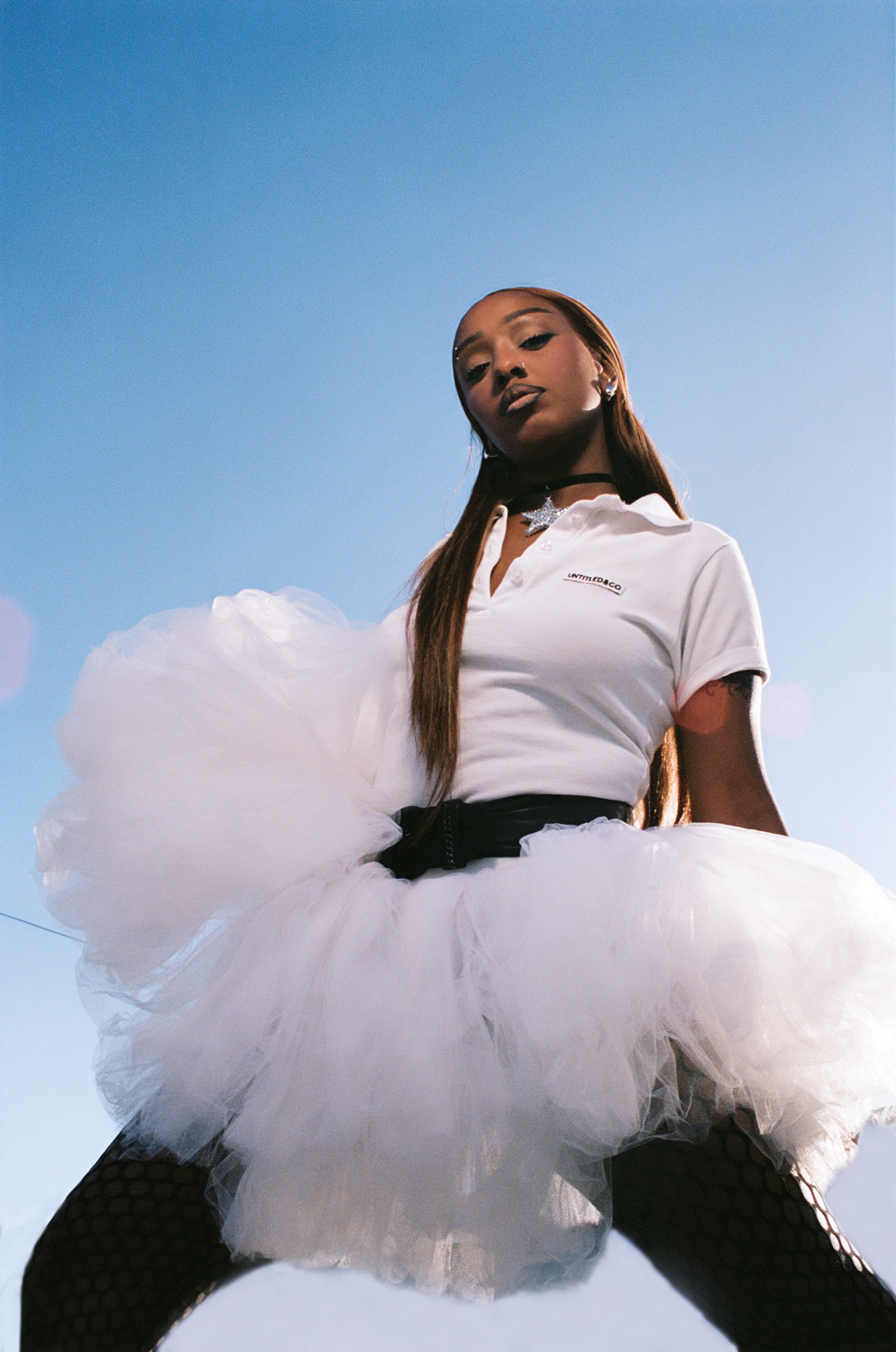
Tutu Dress: United and Co Tights: Falke Heels: Kurt Geiger Choker: Tarina Tarantino Belt and Bracelet: Streets Ahead Earrings: LAGOMIST
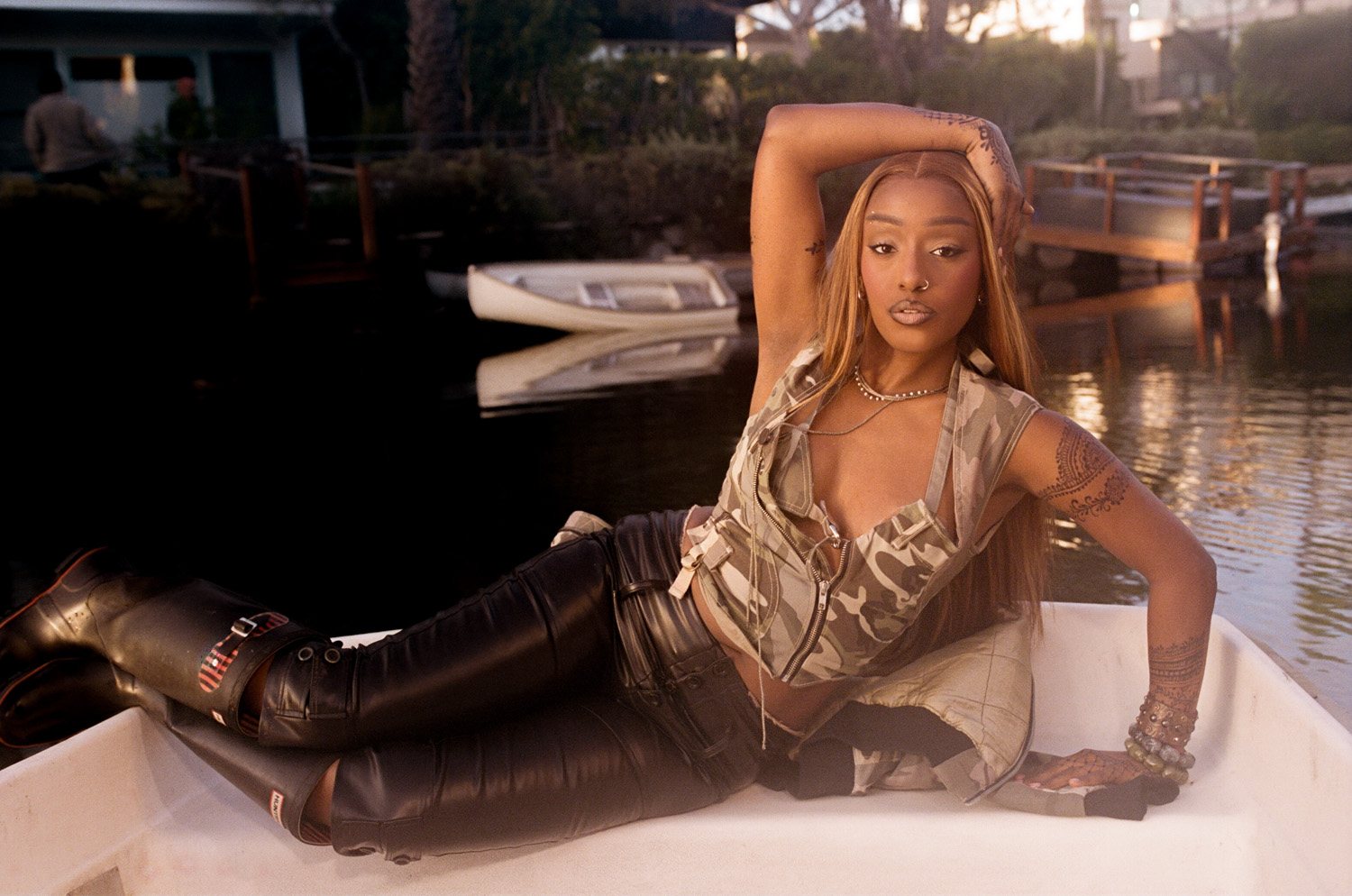
Corset and Bikini Top: Hardeman Bottoms: Sculptor Worldwide Bracelets: Streets Ahead Boots: Hunter

Dress: Issey Miyake Tights: Falke Bracelets & Earrings: 8 Other Reasons Heels: Claudio Merazzi
CONNECT WITH ALEMEDA