
Text: Luna Bacce.
Photos: Courtesy of Siri Dahl.
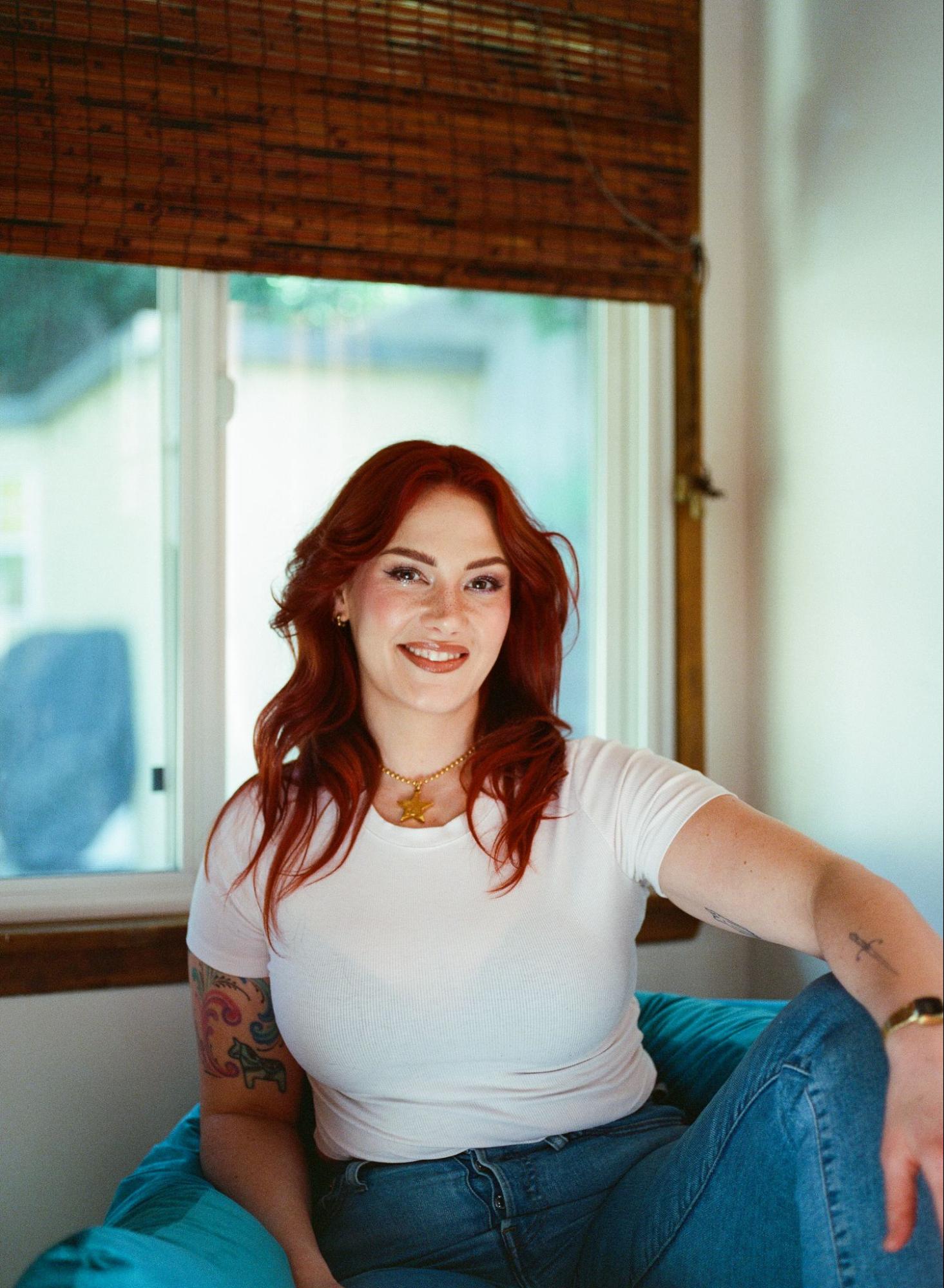
The award-winning adult performer stars in a new ‘Facts Over Fear’ campaign busting myths about her industry- and has a few things to say about the life strangers imagine for her.
Siri Dahl has heard plenty about how unhappy she must be.
Since her debut in 2012, the award-winning performer and creator has become a stalwart of the adult entertainment industry. An advocate for sex workers’ rights and frequent media commentator on censorship and issues affecting performers, she has amassed over a million followers across her online platforms. Yet Dahl says that recognition hasn’t stopped people from assuming the worst about her life: that she is damaged, her parents are ashamed, and her work has left her depressed or alone.
But when Dahl talks about work that took a toll on her mental health, she points to the five years she spent away from adult entertainment, working in offices and retail.
“Working in office jobs and retail had a far greater negative effect on my mental health than anything I’ve experienced in my career as an adult creator,” says Dahl.
“Working in retail, I constantly felt a lack of control around every facet of my job,” she says. The company’s talk of “family” felt manipulative; a yearly five-percent raise was dangled, then met with excuses to deny it. She remembers a manager boasting about never having taken a sick day in over a decade. Office work paid better, but left her bored and physically uncomfortable.
In Dahl’s view, stories like hers have had little room in the public conversation, which often casts sex workers as victims.
“There has historically been very little effort put into exploring the positive and empowering elements of this job,” she says.
Dahl challenges those perceptions in Prioritizing Wellness: Facts Over Fear, a new campaign confronting myths about sex workers’ mental health, relationships and self-worth. She stars alongside fellow adult performers Cade Maddox, Emma Rose, Isiah Maxwell and Erotic Medusa. Across the YouTube episodes, each draws on their own experiences to address the gap between how they are perceived versus how they understand their own lives.
The campaign is a collaboration between Aylo and Pineapple Support Society, a nonprofit that provides mental health support to people working in the online adult industry. It is part of the two organizations’ ongoing efforts to highlight resources for sex workers who want support.
The performers address assumptions that only desperation or mental illness could explain their career choices, or that their past must include trauma or abuse. They also push back against claims that all sex workers are mentally unwell, that the work itself causes mental illness, and that their profession is wholly incompatible with self-respect and healthy relationships.
In the series, Dahl recalls being asked in early interviews how she had “ended up” in porn-as though her career hadn’t been a conscious choice. She also describes setting limits on what she agrees to do at work.
“For me, self-respect is about understanding my own boundaries and sticking to them. I have been asked countless times by fans or directors in the industry to do things I’m not entirely comfortable with, and I’m well-practiced in establishing and reinforcing those boundaries.”
Assumptions about Dahl’s work have done more than misrepresent her life. She recalls an ex-boyfriend who was convinced that her adult career meant she must be cheating, despite having no evidence. She says he began stalking her when she went out alone, including while running errands or studying for an exam.
“It helped me realize that some people are capable of desiring my company, while pretending they understand or respect my career in the adult industry, when they really don’t.”
She says she now recognizes those attitudes more readily and steers clear. “Their attitude says way more about them than it does about me.”
As for her parents, whom strangers imagine must be ashamed of her, Dahl describes a relationship in which understanding has grown. “It has been a long road getting my parents to understand my perspective and my work, but we have a great relationship that is mutually respectful.”
Even with that understanding in her private life, Dahl feels pressure publicly to prove she is happy-knowing that any difficulty might be blamed on her profession. “I do feel that pressure, but I don’t give in to it, because frankly I think it’s bullshit.”
She is equally clear that speaking positively about her career doesn’t mean every performer’s experience resembles hers. “I also don’t think the message needs to be that ‘all sex work is always empowering,’ because we know that’s not true.”
In the series, she emphasizes that performers who have experienced trauma deserve resources to address it. Challenging assumptions about their lives shouldn’t mean denying the difficulties some have faced.
Dahl has spoken publicly about her own mental health struggles. But she avoids posting something vulnerable in the heat of the moment, when she may not be prepared for harassment or backlash. She knows there are people, particularly online, whom she describes as “looking to root for the demise of a sex worker.”
“But I think overall, there is value in being open about the issues that affect sex workers, because it’s one of our best tools to fight back against the popular narratives that seek to dehumanize us and flatten our experiences. If we don’t talk about these things ourselves, someone else will step in and speak for us, and unfortunately they are often doing so in bad faith,” she says.
CONNECT WITH SIRI:
INSTAGRAM