
Story / Luna Bacce
Photos Cheryl Fox
Eli Derby picked up drumsticks at two years old before moving through choirs, piano keys, and guitar frets, learning early that emotional gravity in music comes down to subtle details like touch, note bends, and the space/silence left between chords.
On his Warner Records debut EP “LOVESHY,” his well-honed, Gospel-inclined live instinct carries directly into modern R&B—as it often does—combining classic vocal plasticity with strongly contemporary atmospheric production. He explores attraction in its most unpolished form, where confidence and hesitation messily cohabit, giving his songwriting an all-too-genuine approach that eschews easy narratives.
Fresh off the release of his focus track “Fumble” and collaborative cuts like “Pretty Girl Dangerous” with fellow DMV artist Bri3, Eli Derby sits down to talk about his church roots, learning to embrace the word “no” in his personal life, and the beauty of writing songs with his armor completely off.
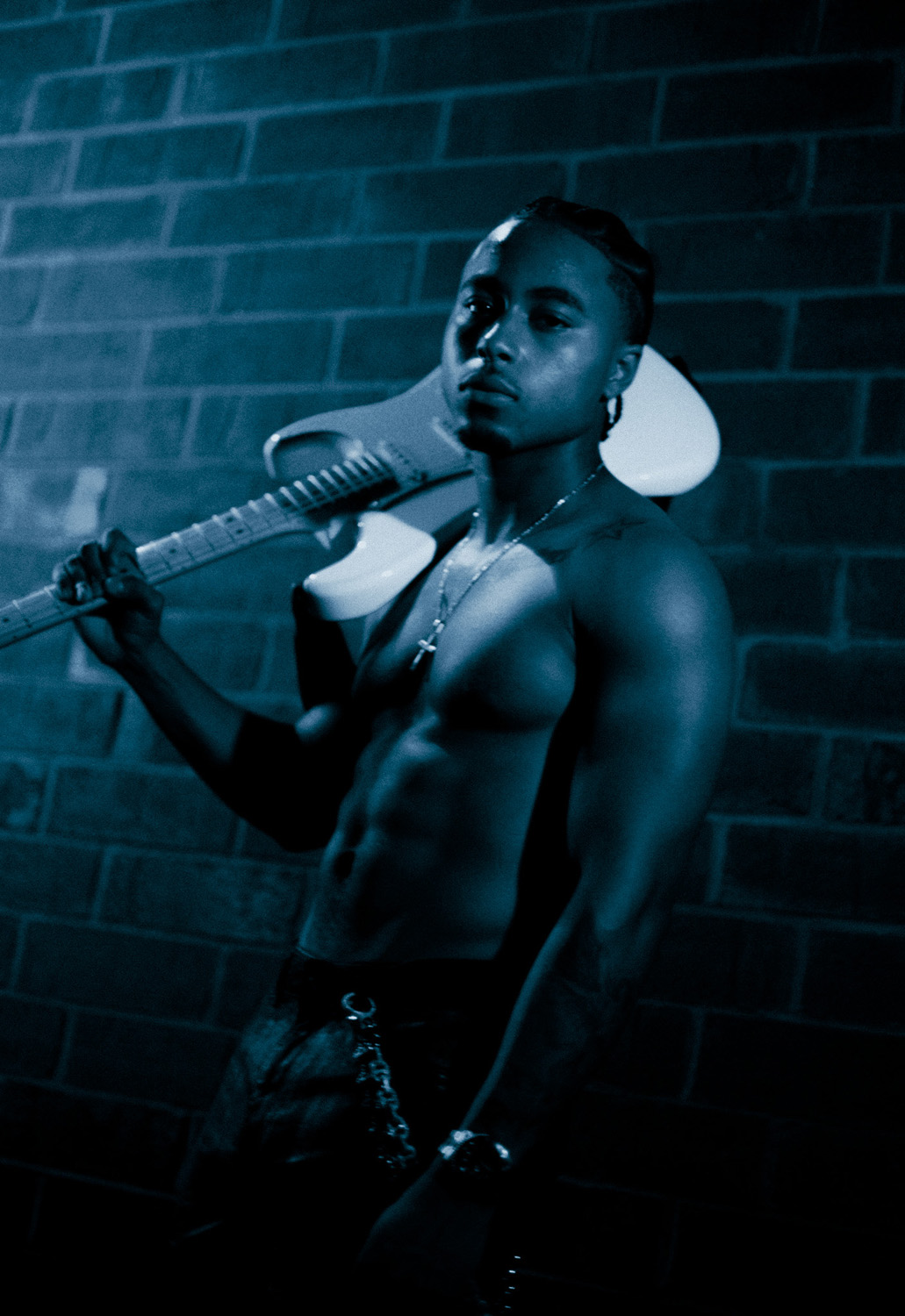
You’ve got a deep foundation in church music, live instrumentation, and classic R&B vocals. How did growing up in that environment shape the sound of “LOVESHY”?
Church is really where everything started for me. I was playing drums at two years old, then got into choir, piano, and eventually guitar, so I learned music by feeling it before I ever really understood the technical side of it. Being around live musicians every week also taught me how much emotion can come from the smallest things—the way somebody plays a chord, the way a singer bends a note, the space between things. I think you hear that all throughout LOVESHY. Even though it’s modern R&B, I always want the music to feel human. I want you to hear the musicianship and feel like there are real people behind the record.
So, what’s it actually like being in your “romantic era” while writing a project about the messiness of falling for someone?
It’s funny because I’ve always been a romantic, but I think I’m finally comfortable admitting how complicated that can be. Love isn’t just the perfect moments. It’s overthinking, fumbling something good, wanting somebody and not knowing if they want you the same way, being confident one day and completely unsure the next. LOVESHY lives in all of that. I wasn’t trying to make myself look like I had love figured out. I wanted to make something for people who are still willing to try even when they don’t.
Tell us a bit about “Fumble.” Why did it feel like the right song to anchor the project’s release?
“Fumble” felt like the center of the project because it captures what LOVESHY is really about. It’s that realization that you can genuinely care about somebody and still be the reason something doesn’t work. There’s accountability in it, but there’s also that feeling of wishing you could go back and handle things differently. Sonically, it also has a lot of what I want people to associate with Eli Derby—the vocals, guitar, live feeling, and emotion. It felt like the right record to introduce this chapter because you’re hearing me without a lot of armor on.
You brought Bri3 onto “Pretty Girl Dangerous.” What made her the right artist for this song, and what did she bring to the track that you didn’t anticipate?
The record already had this late-night DMV feel to me, which felt natural because I’m originally from the DMV, and Bri3 is too. I wanted somebody who could come into that world without changing what made the song special. She brought her own confidence and personality to it. What I really liked was that it stopped feeling like somebody was just ‘featured’ on my record—it became more of an interaction between two personalities. Her perspective gave the song another dimension and made that whole dangerous attraction idea feel more real.
When you sit down to create, which tool or instrument usually sets the pace for a given song?
It changes, but guitar is probably the instrument I reach for the most. Sometimes one chord or guitar tone can tell me what the entire record is supposed to feel like before I’ve written a word. Other times I’ll hear a melody first and build everything around the vocal. Because I grew up playing multiple instruments, I don’t really separate songwriting and production in my head. I’m always thinking about what each instrument is saying and whether it’s helping the emotion or getting in the way of it.
“LOVESHY” feels remarkably open about the uncertainty and vulnerability that come with wanting someone. Has that kind of emotional honesty always come naturally to you as a songwriter, or is it something you’ve become more comfortable with over time?
I think the honesty has always been there, but I’ve gotten more comfortable letting people actually see it. When you’re younger, sometimes you write around what you’re feeling. You make it sound cool or hide behind a line. Now I’m much more interested in saying the thing I might normally be uncomfortable saying out loud. That’s usually where the best songs are. With LOVESHY, I didn’t want to write from the perspective of somebody who always gets the girl or always knows what to do. Sometimes I’m confident, sometimes I’m nervous, sometimes I mess it up. That contradiction feels more honest to me.
Tell us about something you’ve fumbled!
Definitely relationships. [laughs] I’ve had moments where I cared about somebody but maybe didn’t communicate it the right way, waited too long, overthought something, or realized what I had after the moment had already passed. That’s part of why “Fumble” is so personal to me. I’m not singing from some imaginary situation. I know what it feels like to look back and think, damn, I probably could’ve handled that better.
Now that “LOVESHY” is out in the world, what’s up next for Eli Derby?
More music, more collaborations, and definitely more live shows. LOVESHY feels like the beginning of a much bigger chapter for me, not the end of one. I want people to really live with this project, but I’m already creating what comes next. I’m excited about pushing the musicianship even further, especially the guitar and live side of what I do, and continuing to collaborate with artists I genuinely connect with. More than anything, I want to keep building this world and give people more reasons to believe in Eli Derby.
By leaving the armor off, Eli Derby turns the uncertainty at the heart of “LOVESHY” into something more revealing than a polished love story. What comes next is already taking shape through the same honesty, musicianship, and willingness to fumble his way forward.
CONNECT WITH ELI DERBY
INSTAGRAM – FACEBOOK