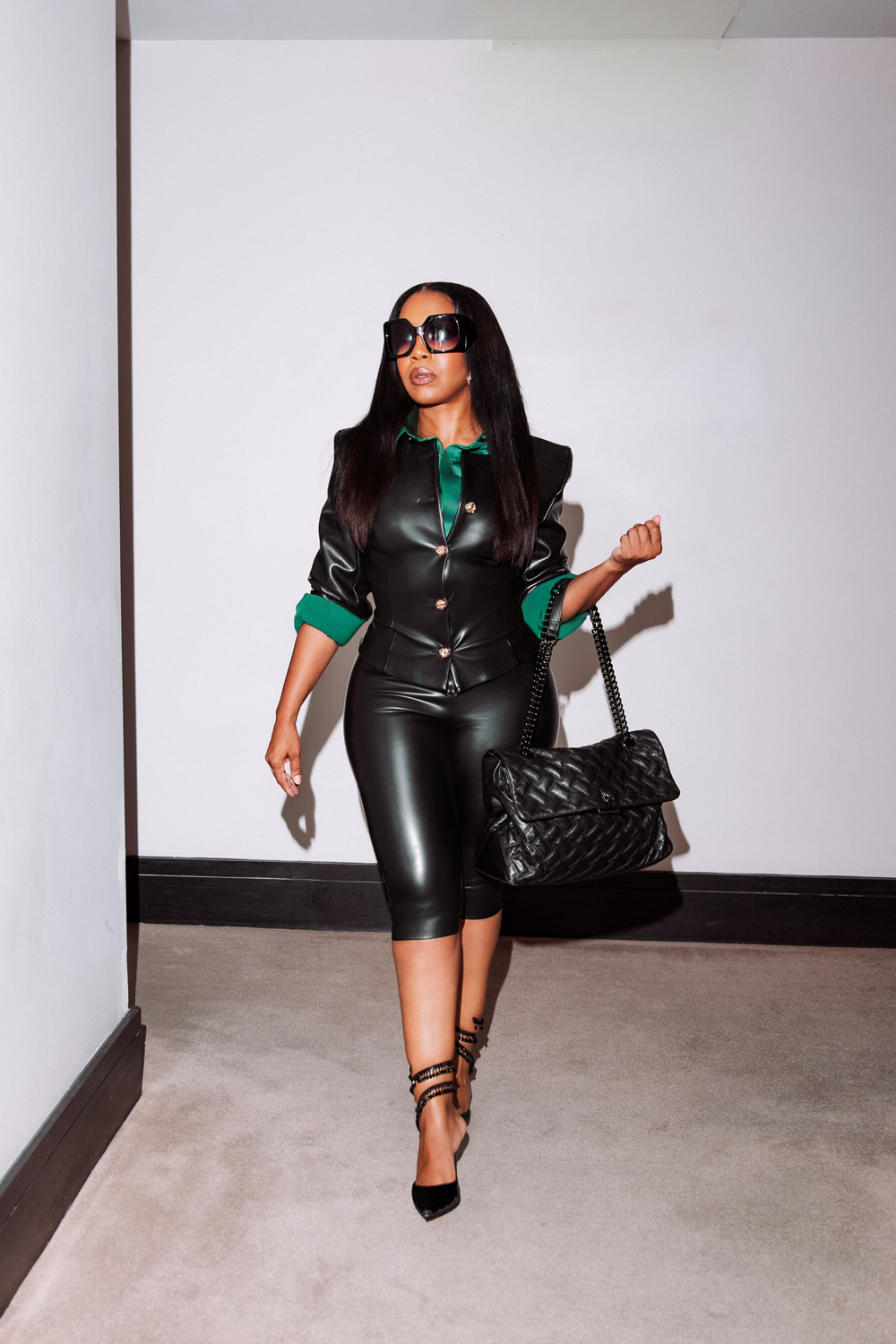
Story / Luna Bacce
Photos / Angela Marie (@angela.marie.photo)
Styling / Wilford Lenov (@wilfordlenov)
Hair / Coco (@kicknitwitcoco)
Makeup / Dey Rose (@dey.aloe.rose)
Shot in New York City, NY
Whether she’s playing Maya Miller in Netflix’s Ozark or bringing elegance and complexity to Athena Trumbo in HBO’s The Gilded Age, Jessica Frances Dukes has a way of making every character feel like she existed long before the camera arrived.
Now, Dukes is stepping into another carefully constructed chapter of American history. In MGM+’s The Westies, she plays Birdie Polk, a fictional Black FBI agent navigating early-1980s New York and a world shaped by organized crime. The series draws from real people and events, but Birdie exists beyond the confines of any single historical record.
For Dukes, that tension creates something she calls “pressurized freedom.” There is the responsibility of honoring the real agents who fought organized crime, alongside the creative freedom to imagine a woman whose story was never written down.
That space between history and invention is where Dukes seems most at home.
From Birdie’s quiet authority to Athena Trumbo’s place within the world of The Gilded Age, her characters occupy spaces where power, identity, and history collide. And rather than simply recreating the past, Dukes brings her own perspective to it—asking what happens when stories that have traditionally been left at the margins are finally allowed to take up space.
We caught up with Dukes to talk about The Westies, building Birdie Polk, the creative chemistry behind her scenes with Titus Welliver, returning to The Gilded Age, and what it means to share the screen with an icon like Phylicia Rashad.
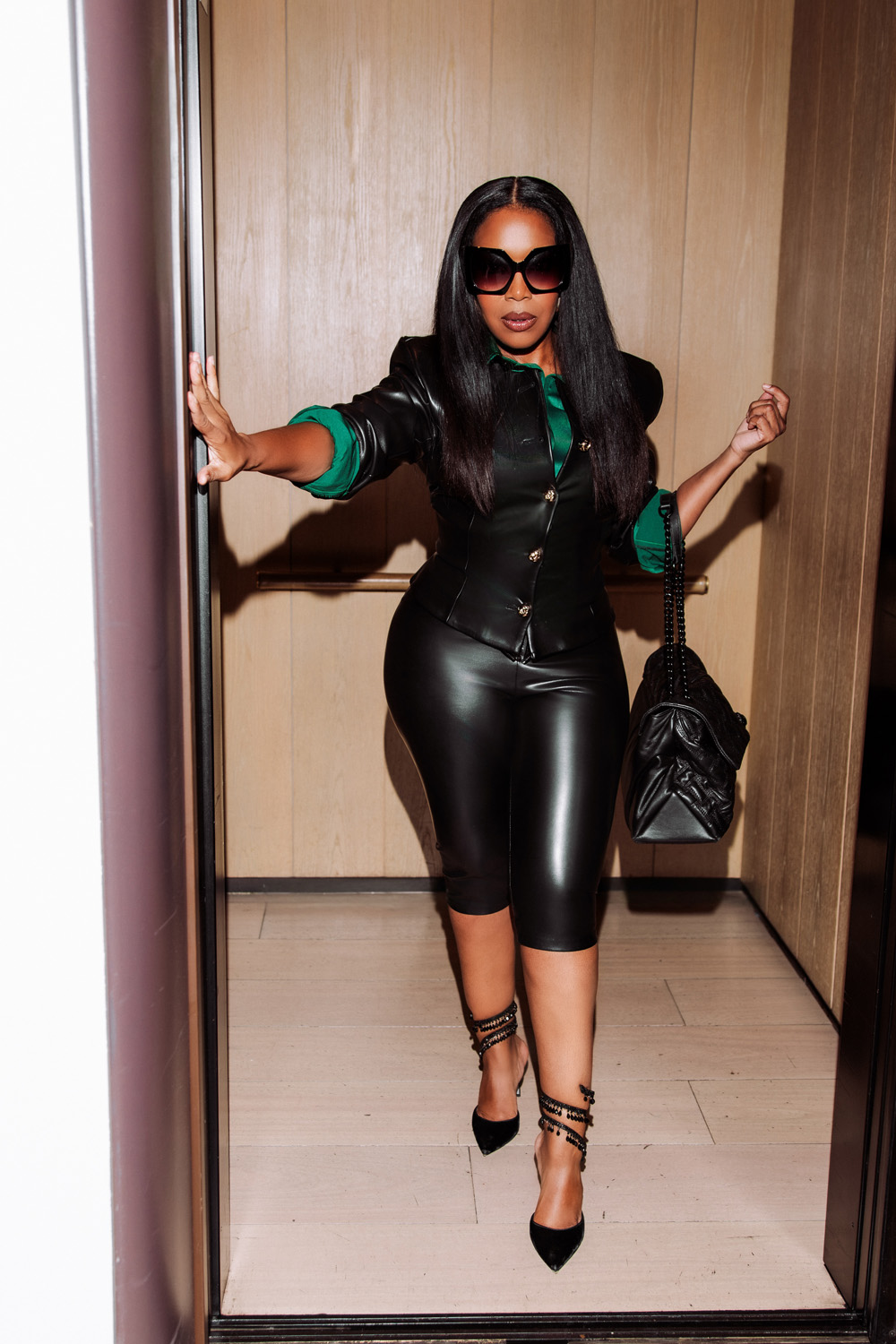
Your character Birdie Polk on The Westies seems incredibly controlled. Is there anything that genuinely scares her or makes her lose that control?
I don’t think Birdie has time to process fear at work, and losing control is not an option for her. She’s got a job to do. There’s a sort of mandatory desensitization with Birdie that I felt she needed in order to do her job. But Birdie is from the streets; this is her home too, so who knows what kind of life awaits her outside of that FBI office.
There’s almost a chess-match quality to Birdie and Keenan. When you and Titus were filming, did anything surprise each other during a scene?
Every day there was a beautiful artistic surprise working with Titus and this team. I never knew what move he was going to make, and he never knew mine. We had a wonderful match every scene, a dance as he would call it. Titus is excellent at what he does, and most of what you see in our scenes is two people who genuinely click. It felt effortless to create with him.
When you realized you were playing a fictional FBI agent inside a story inspired by real people and events, did that make you feel more pressure or give you more freedom?
I think it’s pressurized freedom, lol! I definitely put pressure on myself to best represent the real agents who led multiple task forces attempting to take down organized crime. The freedom is being able to explore my own version of them all. Being a Black woman in this position of power in 1980 was an exciting choice by this team. Not being tied to a specific story gives them and me artistic freedom to make Birdie her own person. We have freedom to take her story wherever we want.
What surprised you most when you started researching New York in the early 1980s?
Nothing surprises me about New York City. It is one of the most famous cities in the world! Organized crime is something the world has grown up with and still deals with to this day, and once you live in New York, you know anything is possible. The news at that time was big. I did enjoy digging deeper into the burning of the Bronx by landlords and so much more as I built Birdie’s possible landscape.
Do you think Birdie would have behaved differently if she were a man?
The beauty of art is that we get to tell the story our way, and the audience gets to have their experience with it. I’d be curious to see what the audience thinks.
Was there a scene you were nervous about before filming that ended up being one of your favorites?
I wouldn’t say I was nervous about any specific moment. I just wanted to do my best and swing for the fences. She had to be bold and in charge! I wanted to represent New York properly; I wanted to represent the men and women who risk their lives daily to save others, and I wanted to bring life to the amazing character that Chris Brancato and Michael Panes wrote.
The Gilded Age is returning for Season 4 in November. The show gives us Black characters who aren’t simply defined by their relationship to white society. How important was that distinction to you?
It’s very important to me to be a part of this beautiful depiction of Black history inside this amazing story. It’s wonderful to be a part of a story that brings you into the world of the Black elite in the 1800s. Our stories as Black people are all so different and layered, and they all deserve to be shown to the world. I just love what The Gilded Age has done with this.
Phylicia Rashad plays Elizabeth Kirkland, whose worldview is such a sharp contrast with your character Athena. What was it like playing opposite her?
Phylicia Rashad is a force and has been for quite some time. I would watch her performances on repeat growing up. Her class and poise are unmatched and absolutely inimitable. She has influenced generations of artists, and being able to create art in the same space as her is a dream. I look forward to more opportunities to be across from the icons who’ve shaped me as an artist. It’s a fabulous cast to be in the room with, and she is just absolutely amazing.
For Jessica Frances Dukes, period drama is about making room for stories and perspectives that have too often been left out of it. From Birdie Polk’s authority in The Westies to Athena Trumbo’s place within The Gilded Age, her work continues to bring complexity to characters who refuse to be confined by the worlds they inhabit. As she puts it, “Our stories as Black people are all so different and layered, and they all deserve to be shown to the world.”