
Words + Photos / Bri Ng Schwartz
Year after year, Newport Folk Festival is infamous for selling out before its first headliner is even announced. I can’t name another festival with that kind of blind trust. This past weekend brought together legends across genres to Fort Adams Park for a celebratory weekend of the art of songwriting and live instrumentals. What truly makes the festival unique is the community: legends bringing rising artists out during their sets, a hard-working festival team ensuring a smooth experience for both artists and guests alike, and a strong message of anti-hate and inclusivity throughout the festival grounds. LADYGUNN had the pleasure of connecting with festival artists and industry change-makers. Each conversation echoed the importance of collaboration, accessibility, and how unique Newport Folk Festival really is.
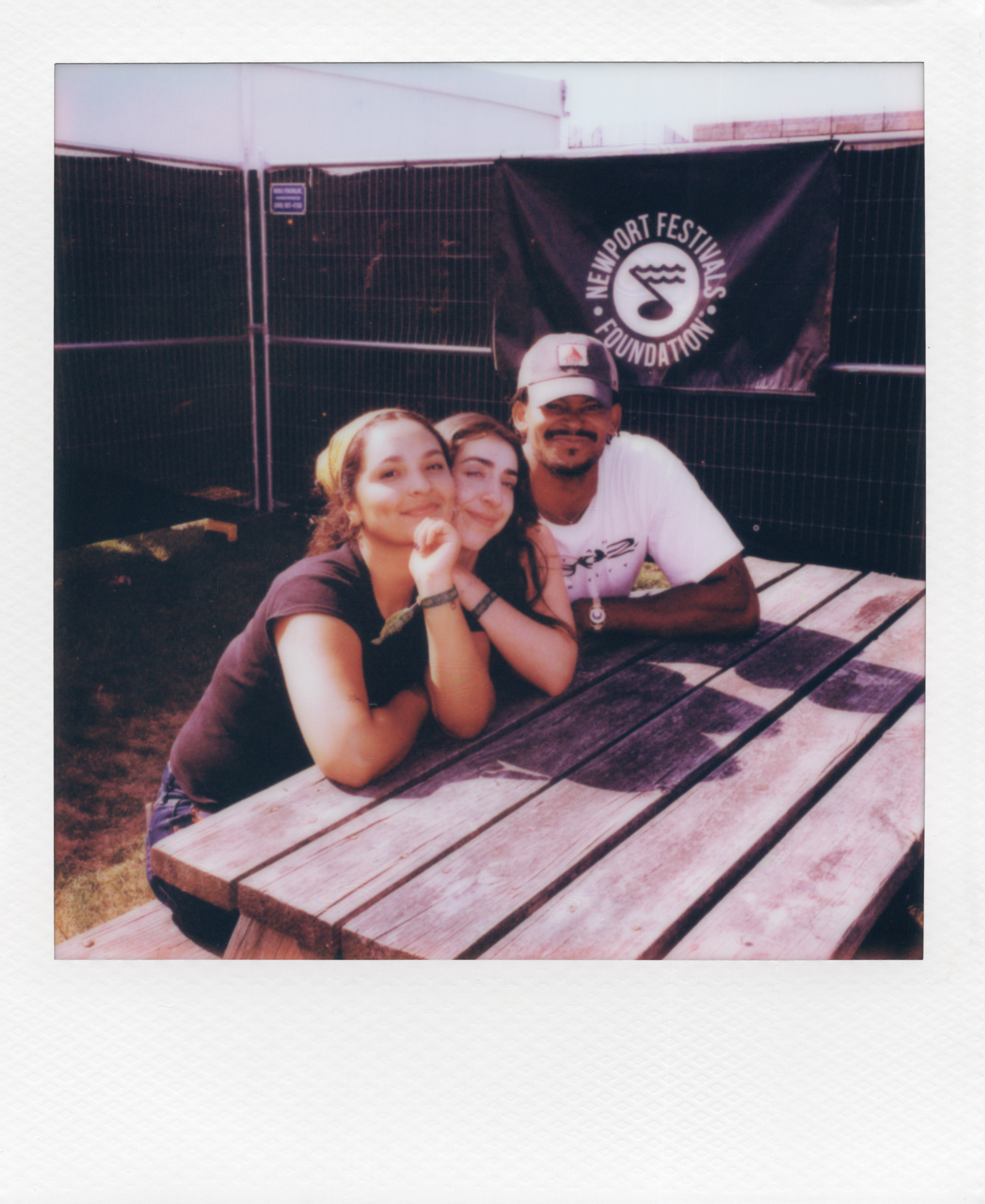
Kicking off the weekend were Tiny Habits, rising indie-folk darlings and Berklee alums. The trio, made up of Cinya Khan, Maya Rae, and Judah Mayowa have been on the rise, joining Lizzy McAlpine on backing vocals for her Tiny Desk and were joined by The 1975’s Matty Healy for their all too relatable single Anything He Was. With their angelic harmonies and charming camaraderie that can only be found between friends, Tiny Habits set the tone for the weekend with their career-defining set.
Congratulations on kicking off the weekend! What were some highlights of the set for you guys?
Judah: It was so fun. Definitely when Medium Build came up and sang with us. That was really fun and precious.
Cinya: We did a new Fleetwood Mac cover today. We did “Everywhere” instead of “Landslide,” which is what we’ve done for a while. That was really fun. We’re trying to spice things up, make them a little more upbeat, and it seems to be working well.
Maya: It’s always fun. Anything we do together is fun.
What is your favorite thing about your collaboration with one another, and what have you learned about your collaboration in festival environments specifically?
Cinya: In festival settings, in places that can get a little scary, a little spooky, it’s really nice to not be by yourself. I have two other people that are experiencing the exact same thing at the same time with the same pressure and the same people watching. I feel like that’s really special.
Judah: Yeah. It definitely is a relief to know that there are two people that are also dealing with the same thing.
Having gone to Berklee College of Music, what do you think makes music that comes out of New England so distinct and special?
Cinya: There is a really strong loyalty to this area of the country. If you say the word Boston or you’re wearing a Red Sox hat, they’ll freak out. There’s a familial thing in the Northeast that is very special, and it bleeds into the music.
This is your third time at Newport Folk Festival. What do you think makes this festival so infamous?
Maya: It’s really nice because I feel like every year we see a lot of the same faces, but also a lot of new faces. It’s a continuous building on relationships. It’s a beautiful community. Everyone has been saying it feels like summer camp. It’s beautiful.
“Anything He Was” has really blown up. What has been your favorite part about bringing that song to life?
Your album Keepers is on the way. What can you share about it?
Cinya: Keepers is every color in the rainbow. We had the intention of expanding in a lot of different ways. The biggest thing being genre, because for a long time we’ve been known to sing quietly with acoustic guitars and do our harmonies, which we still love. It’s the core of who we are, but we have so much music that we love and we haven’t tapped into yet, so we thought this was the perfect time to express those ideas in new ways.
Judah: Expect some saturation, some vibrance.
Maya: A little sexy, a little crazy. Grown Habits! We’re a little grown up.
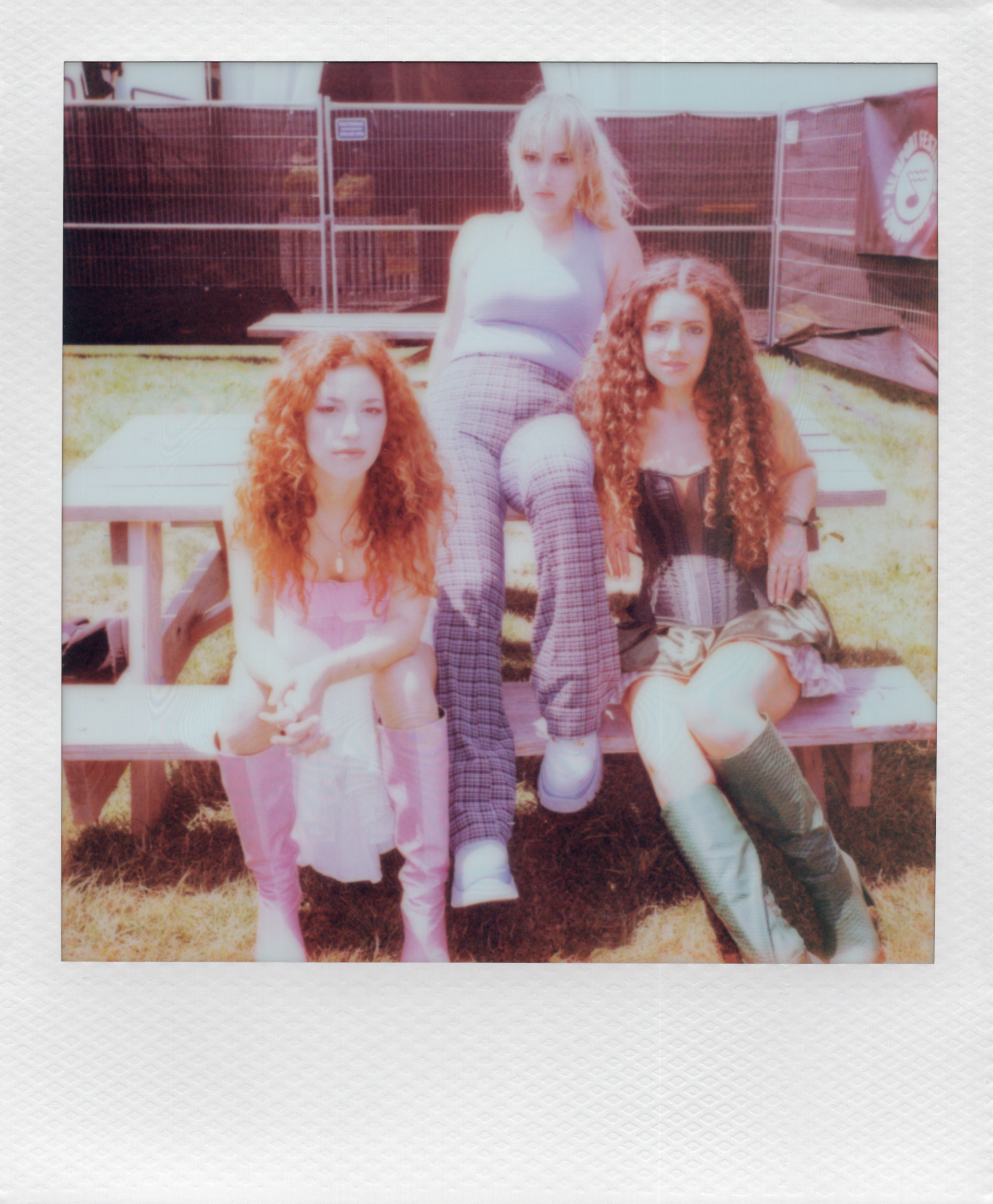
Indie-folk pop trio Trousdale have a magnetic energy between them that radiates onto any crowd lucky enough to experience a set. Saturday’s Newport Folk crowd was no exception. With their high-energy presence and punchy synchronized vocals, members Quinn D’Andrea, Georgia Greene, and Lauren Jones had audience members with their opening performance on the Harbor Stage. It’s hard not to project the joy that I feel when I’m around my own girlfriends onto these three, especially witnessing the camaraderie between them during our time together.
I have to ask about your color scheme. Did the Power Puff Girls come into play with that inspiration or was it random and something you realized later?
Lauren: It was a total accident. We got these jumpsuits that were really expensive and we said we got to wear these because we spent a lot of money on them. And then people just started associating us with the color and we kind of just kept rolling with it from there.
Are there any other women in pop culture that influence your vibe as a band?
Georgia: Josie and the Pussycats.
Lauren: We definitely took a lot of inspiration from superhero comic books for this last album. I grew up loving Teen Titans and Marvel and all that stuff. So I feel like we were definitely leaning into it.
Quinn: Also, The Beatles, Sargent Pepper, that album cover. We were inspired by that for a while.
Growing Pains Deluxe is here and you’ve recently been touring the album! How has that been going?
Georgia: When we went on the first tour for Growing Pains it was right when we released the album, so nobody knew the music as well as they did when we recently went on tour. So going on tour once people knew the songs was really, really fun. Everybody was screaming the lyrics, and we got to really get a sense of how it was living with people. And that felt really gratifying for it to be connecting in the way we hoped it would.
What does the rest of the year have in store for Trousdale?
Lauren: We are doing a lot of festivals, and we are working on some new music. Those are the two headlines!
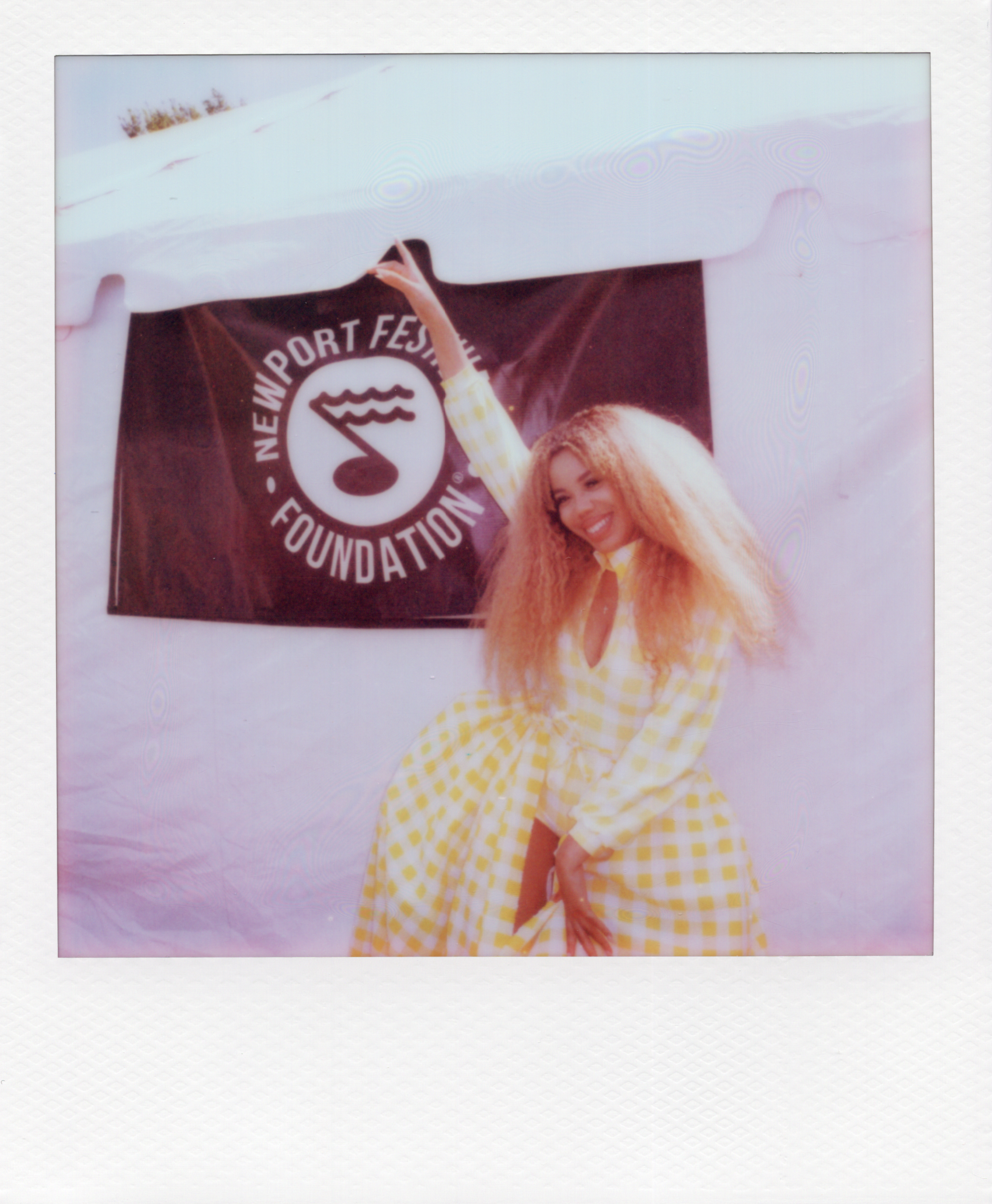
Kirby is a once-in-a-generation talent. While she is widely known as the writer behind mainstream hits FourFiveSeconds and Tell Me You Love Me, her solo work brings Mississippi realness and booming vocals to any crowd fortunate enough to witness a performance. Her 2025 album, Miss Black America, speaks to the current state of living in a Black body in this country while balancing spirituality and a higher power. She opened up Saturday’s festivities decked out in yellow and white gingham, an added layer of sunshine for her showstopping set.
Do you feel any sort of artistic inspiration when performing on the coast like this?
I just feel so much peace. I don’t know if it’s the people or just the environment, but I really feel like you don’t have to come here and prove anything. You can just be, and this festival has welcomed me and my band with such open arms. It really set the bar high. Usually there’s so much anxiety around a festival, but this one, it’s just been so peaceful, and the water helps.
How did today’s crowd compare to past performances of yours?
Here, they come to listen. If you’re here, you love the music. You’re not here distracted by your phone. You’re not here to get a clip for TikTok. You can tell that the people really are here because they care. I think that’s why even yesterday, Lauryn Hill was out signing merch and not charging for a meet and greet. I think that speaks to the high level of respect for musicianship here that I think you can’t get in many places. They value the musicians here. You can tell even in the green rooms, it’s just thoughtfulness. They have just gone above and beyond. So this has been a dream.
It’s been a year since the release of Miss Black America. What has the past year taught you about your artistry?
That I really do love to tour. That to me has been the icing on the cake. People were telling me I wasn’t even going to really be able to do these kinds of shows because it’s so expensive, but I was like, “I’ve just got to figure this out.” It has fed my soul in a way that I just was not prepared for. As musicians, sometimes a lot of us can feel a little bit like outcasts, but there’s something about playing to a crowd that you feel like connects with you that really kind of makes up for how isolating and strange sometimes the musician pathway can be.
You have such political messaging in your music. How do you balance that with the more joyous celebratory elements of your art?
I’ve told myself, “Kirby, use your voice and the inflections of your voice to put you in a better mood when you feel like things are feeling very heavy.” I learned that I’m tricking my brain. With the album Miss Black America, you know what’s going on in Mississippi right now. We got two open cases about two black guys who have been unalived and we’re trying to figure out why.
The heaviness is real. But our ancestors had juke joints on the plantation. They figured out a way to cultivate their joy. So I have a responsibility to not just deliver the heaviness, but to deliver the radicalness of choosing love and choosing to laugh and choosing to inflect thy voice in a way that’s bright in the midst of the darkness. Joy is revolution as well.
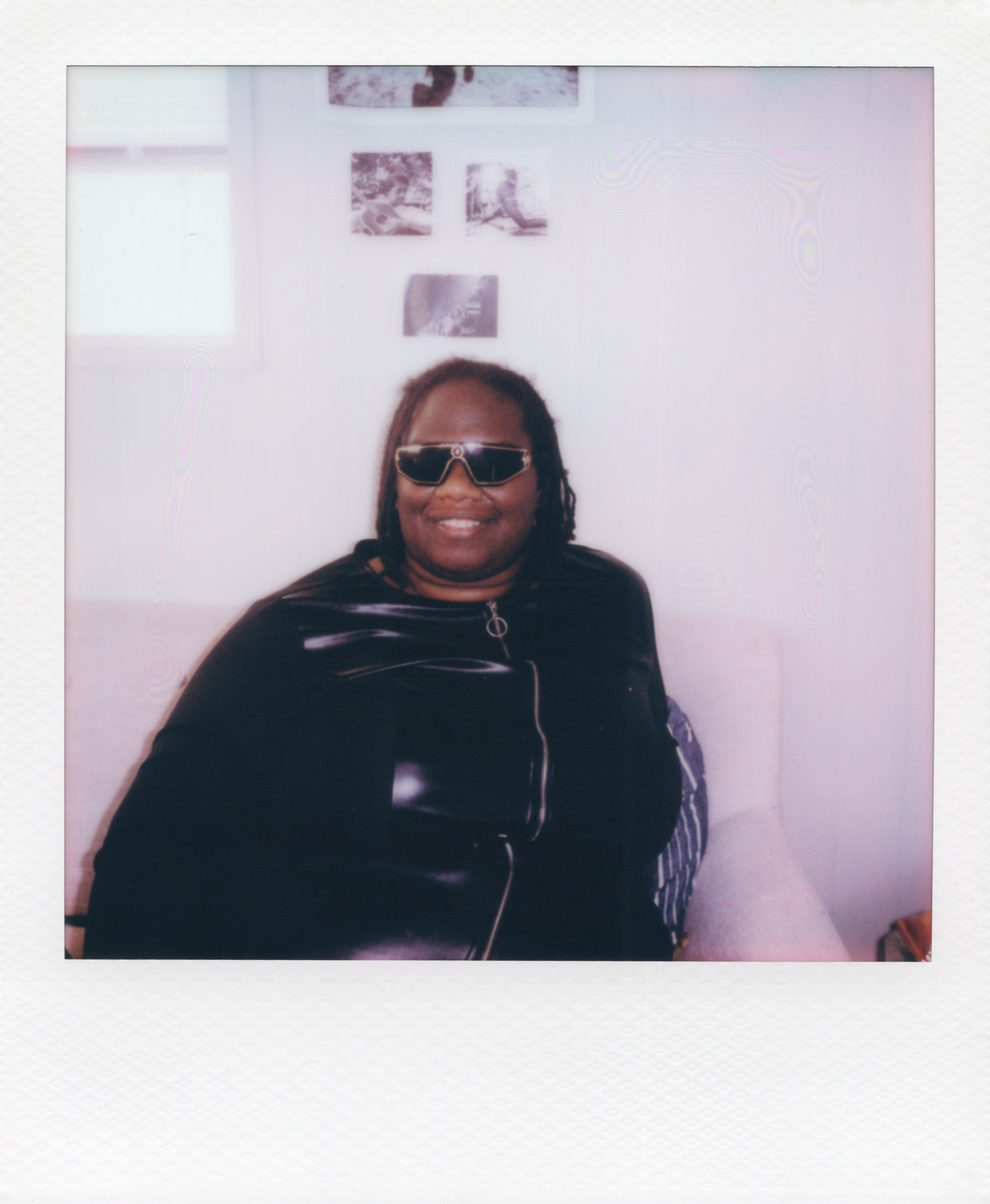
Creating an improvised album in 72 hours sounds impossible to the average music enthusiast. Not to the sensational Jazz extraordinaire Brittany Davis, who has created not only one, but two albums in this amount of time. The Seattle talent pulled a huge crowd with her opening Sunday set. With the release of her latest album Black Thunder, Brittany has set the bar high for her creative collaborations and wider community. She offers a unique perspective on musicianship as a blind artist, and our conversation stirred more questions in me about the importance of access in the arts.
It’s been a little over a year since you released Black Thunder. How does it feel to bring the album to life with live performances like this?
It’s been quite a journey to bring it to the public. I’ve had some local shows in Seattle, but there’s something powerful about bringing it to people live and in an open setting and with nature all around us. It’s a natural infrastructure that I really like, and it gives way more context for me sonically and energetically as to what the people are expecting and what they’re getting and what I’m able to give. It’s an evolutionary experience because now I see why Black Thunder came out the way it did. It was made to be performed like this.
Improvised work requires great collaboration. What do you think makes a good collaborator? And what do you look for in a collaborator?
When I look for a collaborator, I want to know their musical language, and if they’re willing to experience how I speak and follow it or direct it. I like to see how people flip, change, and direct traffic. I see where you’re going, and then if I follow them, I know we’re going to do something even greater. It’s really about finding balance and integrity in all that we say musically. The minute I find that, I stick with
What do you make of a festival like Newport Folk that is so focused on uplifting songwriters and musicians? What do you think is special about this community specifically?
I really think what’s special is that there’s a lot of time and space for people. I appreciate how people give to one another musically, and how they support each other. This is my first time here, and just in the little time I’m here, I hear how they reach up for people, how they stand up for people, how they look out for the musicians and staff. It’s powerful. It’s all common ground.
What do you wish the bigger music festivals, and the industry at large, better understood about working with artists with different access needs?
That’s a really powerful question. We could have a whole other interview about that. One of the things that has to be considered about artists with different accessibility needs is that clutter is the enemy. I mean that sonically, physically, emotionally. The minute that a blind person, or a person with any kind of needs enters a space, everything should be made available at the start. Accessibility first starts with innovation and then it evolves to flexibility. Don’t question, just be present.
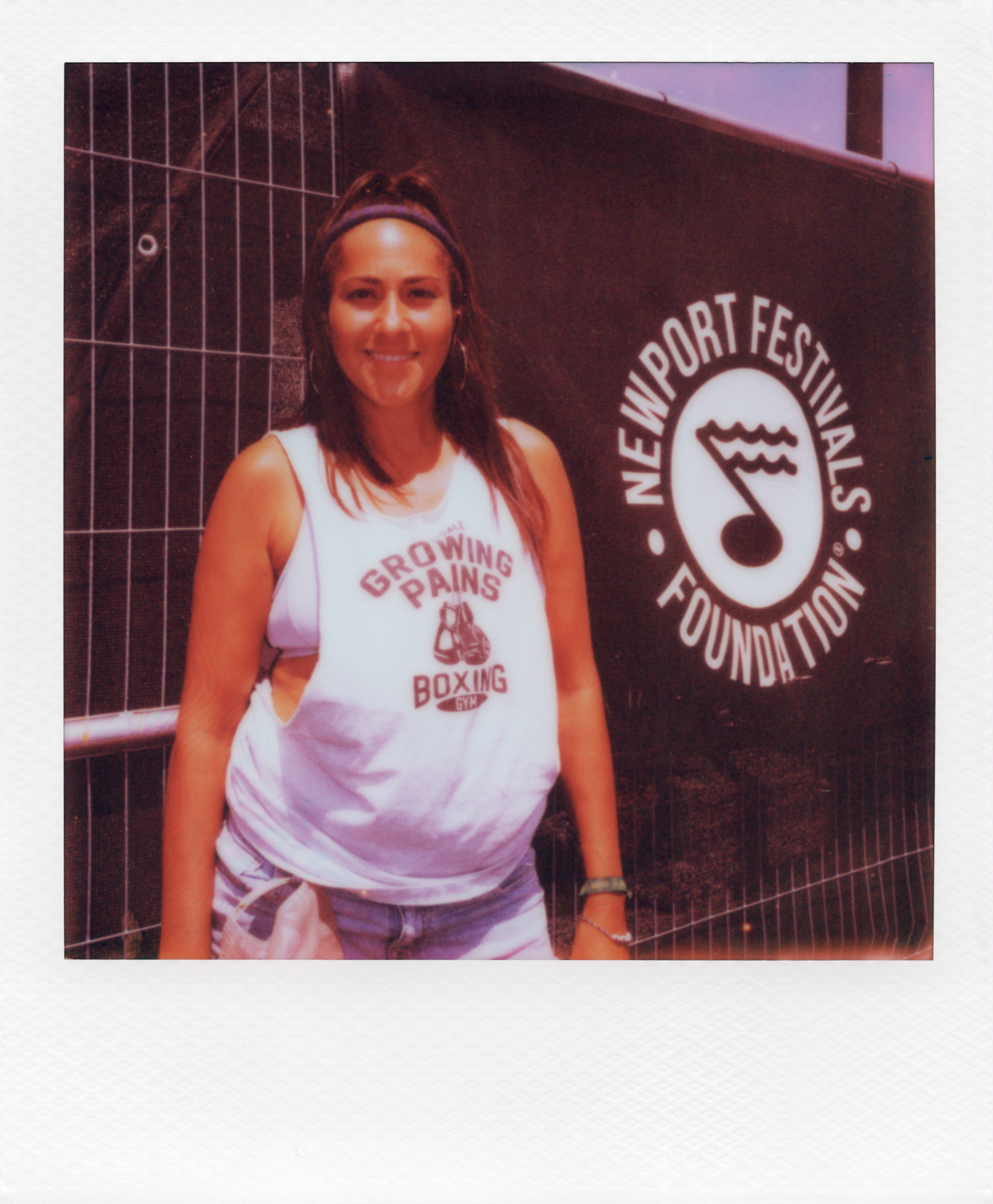
Liza Levy is the mind behind the Salt Lick Incubator, a nonprofit organization dedicated to the development of rising artists and redefining the American Songbook. With their Tiny-Desk-esque series, the Salt Lick Sessions, artists like Tiny Habits and Trousdale are placed front and center for recorded performances of reinterpreted covers of songs that have defined the cultural identity of the country. In lieu of America 250, Liza’s passion for diversifying the standards is an inspiring one that industry leaders could take a lesson from.
How did you get into the music industry?
I was in school studying drama and child development and dance, and I was hired to work with some young performers. They ended up getting picked up by this record label called Rounder Records. It was around the time when Hannah Montana and Kids Bop was at its prime. I eventually ended up working with more Rounder’s adult artists, but I really missed working with emerging artists. I missed the hunger of “Let’s make this work. Let’s get creative. Let’s get in the weeds.”
I moved to Boston and took a job at Berkeley College of Music doing industry liaisons and artist development. That’s where I met Roger Brown, who was the president of the school. He saw these really talented people that he thought would go off and have huge careers. flounder or get into exploitative relationships. He was like, “How can I be part of the solution? How can I create a space where artists can continue to grow and can have community and feel safe?” And so that’s where the idea for Salt Lick Incubator and Salt Lick Sessions came about.
What do you think the role of festivals is in lifting up new artists?
To have a built-in audience of people that are there to listen and are really interested in discovering new artists, that’s just irreplaceable. In the age of AI, live music becomes even more important. They give artists those opportunities to showcase in front of these massive audiences and really crowd test the material.
We got to chat with Trousdale and Tiny Habits. What would you say are unique about those two groups?
Tiny Habits I’ve known since before they were a band, when they were students. They started as friends singing in a stairwell because they loved to sing together. You feel that through every thread of what they do as artists. It always comes back to that friendship. For Trousdale, I think they have built that brick by brick, step by step. They have not cut any corners. They produce and co-produce their own music. They run their own business. I think for young girls growing up, just seeing what they’ve done is just really inspiring and admirable.
Both bands obviously have incredible harmonies, incredible vocalists, but to see the way they move and the way they work makes them special. It makes everyone root for them even more because you know the heart behind it.
What would you say to traditionalists and folks who have a certain idea of what the American songbook is?
It’s a very narrow scope, right? It was Tin Pan Alley, Jazz Standards, and Broadway. When you have gatekeepers with a very narrow view of what is out there, then you come up with a narrow view of what’s included in that canon. It’s not to say that those songs aren’t incredible. They are everlasting and timeless, but there’s more to discover from that period. That’s what Songs of Us was really about: Looking at American identity and voices of our past; the voices were maybe those who weren’t as uplifted as they should have been. Then the second piece of Songs of Us, which is our in-studio performance series on Salt Lake Sessions, is really about making the artists gatekeepers for once. Let’s give the microphone to them and say, if you were to create the next iteration of the Great American Songbook, who would be included in that canon?
After a weekend under the sun along the sea, it is clear why audiences and artists gravitate toward Newport Folk Festival year after year. The weekend gives opportunity for all ages to connect with music, discover new artists, and bask in the glory of renowned favorites. From Lauryn Hill to Hayley Williams, CMAT to SNACKTIME, the grounds are a space for all artists to thrive, without hierarchy. We cannot wait to see what next year holds.