
Restless curiosity has long defined Sylvia Black’s path, and with “Shadowtime” now out in the world, that instinct feels fully realized. The album arrives as her most interesting project to date, including goth rock, post-punk tension, and new wave elegance into a body of work shaped by memory, place, and self-determination. At its center is the featured single “Talking in Tongues,” a dark, hypnotic track that distills many of the record’s core ideas around control, surrender, and temptation.
Accompanied by a stark, intriguing visualizer, “Talking in Tongues” sets the tone for “Shadowtime” with its sense of irresistible danger. Written, produced, and largely performed by Black herself, the album reflects her return to California and a renewed engagement with her past, filtered through years of genre-spanning experience.
In this interview, Black discusses the ideas that guided “Shadowtime,” the evolution of its featured single and visual, her bass-driven songwriting approach, and how decades of collaboration across underground, pop, and experimental scenes continue to inform her work today.

What was the core idea you wanted to explore with “Shadowtime,” and how did it shape the writing and production process?
The core idea I wanted to explore in “Shadowtime” was my place and time in Los Angeles and California overall. I also intended to make this album much simpler than what it is or what I’ve done before. I wanted to do just a simple track act so I could be the most mobile and free. Somehow, it became a little more complicated. Now the album can be played with a full live band or just certain stems of the tracks, and I can simplify or complicate it as much as needed. Coming from a jazz background, being musically flexible is something I can’t escape. Or maybe that’s ADHD. Don’t know. Trying new instrument combos for the same song is pretty common for me. So I feel like a live show will always be a surprise for the audience as well as myself.
“Talking in Tongues” is the first release from the record. Why did you choose this song to introduce the album, and what does it represent within the larger body of work?
“Talking in Tongues” was the lead single and a last-minute addition to the album. I think it was actually recommended to me to be the lead single. I’ve written that song in so many ways over the years, and I was just itching to get it out. I still don’t think it’s come into its full bloom. So perhaps we’ll get another version as an alt single. Lyrically, “Talking in Tongues” is about allowing outside forces into your body and giving up agency for the promise of feeling good for a moment. But those spirits have their way of tricking you and usually causing damage.
You described “Talking in Tongues” as being about losing agency to outside forces. How did that theme influence the mood of the song and the accompanying visualizer?
The darkness, the witchiness, and the stern warning in a stark black background gave the basic mood of foreboding for the one who plays freely with spirits, be they from another dimension or from a bottle.
You’ve worked across many genres and scenes over the years. How do you see “Shadowtime” fitting into your broader catalog, and what sets it apart from your previous releases?
“Shadowtime” is approaching something closer to what I’m reaching for. To meld all of my influences seamlessly, giving birth to a sound that would be identifiable as my own, is the goal. It’s a never-ending goal. Unfortunately, life might not be long enough for that. But for now, “Shadowtime” sets a good groundwork and informs me of what’s still missing. Working with a great producer would be ideal. But that’s money, and we’re trying to eat over here too.
You often approach songwriting from the bass up. How did that method influence the sound and structure of this album in particular?
The bass lines on this album are so basic. Pun intended. As I said, I wanted to do an electronic track act where I wouldn’t even have to use a real bass. So I was being informed by all of the trendy, synthy, post-punk tracks on TikTok. Lots and lots of 16th notes. So everything is pretty straight and blocky and easy to build off of. I have an affection for headbanger music. And to me, that driving, repetitive, non-swinging sound can just carry you and be hypnotic as well.
The album was largely written, produced, and performed by you, with longtime collaborator Ruddy Lee Cullers involved in the mix. How did that collaboration evolve on this project?
I produced the album. Meaning I made all of the tracks, arranged, edited, shaped, added effects, clipped breaths, did all the fades, levels, etc. But then other instruments that I don’t play started creeping in and complicating it all. Ruddy has been there for me for a decade and a half as I learn from him. So by now I’m pretty self-sufficient, minus not wanting to bother learning much about carving out EQs. And I definitely can’t record and get a good sound out of things like live drums. So Ruddy is the recording specialist, does the final mix, and makes it sound pro. And of course, he’s there if I have any odd questions about pro tools or his gear.
Your career includes collaborations with artists from the post-punk, electronic, pop, and experimental worlds. How have those experiences shaped your confidence and decision-making as a solo artist today?
When you go out on your own terms and don’t do things people expect you should, it can become isolating and give way to self-doubt as you struggle to grow into this uncharted territory. When someone like Lydia Lunch comes along, an outsider who tours the world constantly, has this huge body of work, has seen so much, and has lifelong die-hard fans, when someone like that comes along and stands by you, collaborates with you, recognizes you, and celebrates you, it helps you move forward. She has introduced me to a bunch of wonderful characters and inspired me to keep pushing and reawaken the literary writer in me.
You’ve lived and worked in many different places. Did returning to California have a specific impact on the themes or energy of “Shadowtime”?
Coming back to California after spending my entire adult life on the East Coast was confronting. I spent some of my grade school years in SoCal and my high school years up north in the Bay Area. A lot of memories came flooding back. California is like its own country and definitely has its own soul. From the 60s, discovering new drug forms and experimentation, melding with technological innovation in the South Bay, and a strong presence of ‘alternative’ spiritualities from light to dark are all part of the fabric here. And I felt like it was rubbing off on me again. As a teen, I explored all of these interests to a degree. My whole family is in tech; psychedelics were simply part of the curriculum in the Bay Area, and inevitably, you ran into the effects of opening those doors in your mind. So I just let whatever had been buried in the back of my mind come out without much scrutiny.
Looking ahead, now that “Shadowtime” is out in the world, what creative directions or challenges are you most interested in pursuing next?
I’m already making tracks for whatever may come next. I loved it when I did my lounge act in New York at the Roxy Hotel, covering old punk and new wave songs in a dark lounge style. I love some horns; I love some big band swing. So who knows? Maybe that’ll be more the focus. But with a Sylvia spin on it. Siouxsie Sioux’s ‘Peek-A-Boo’ probably encompasses this direction well.
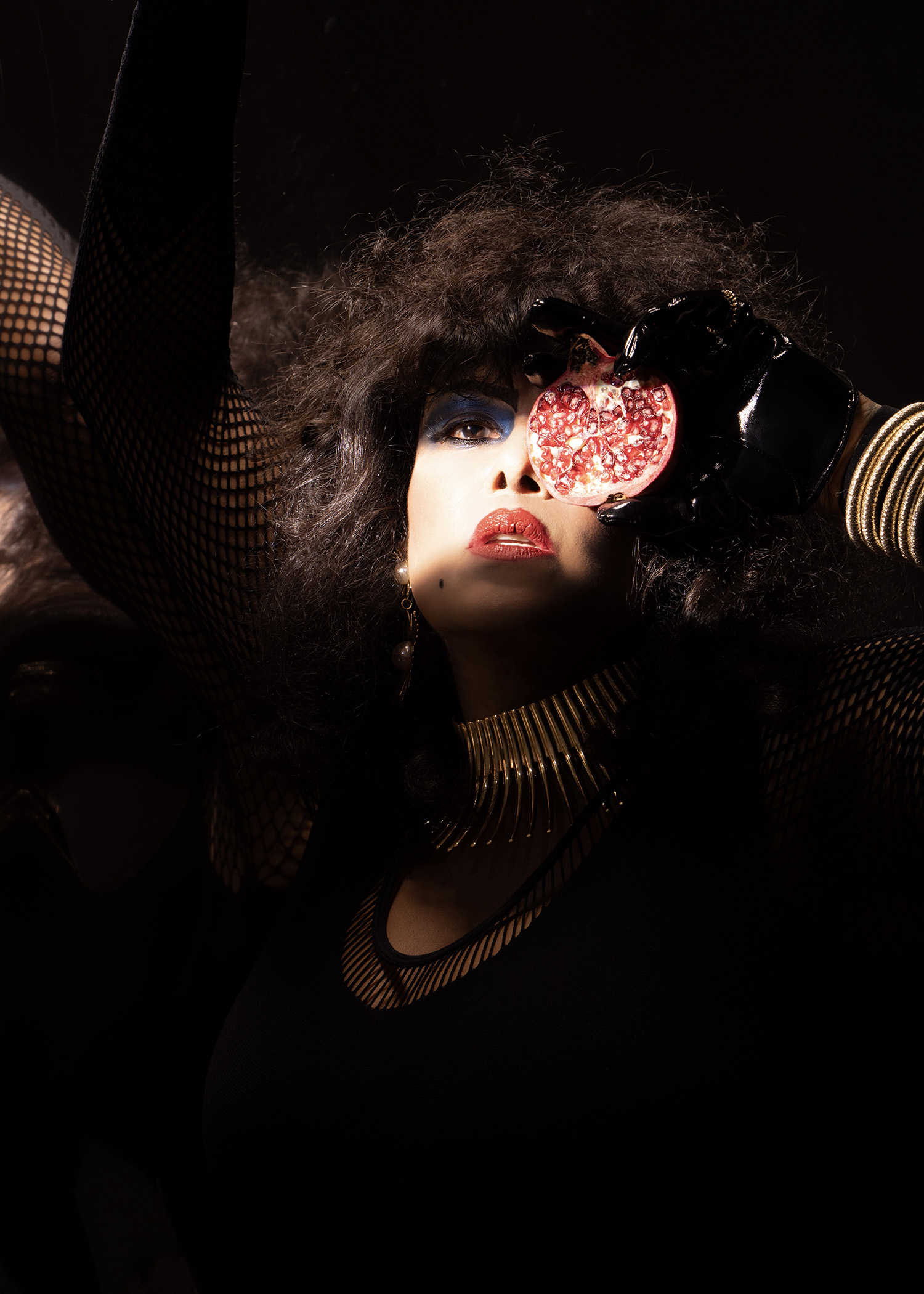
Photos Zander Fieschko
CONNECT WITH SYLVIA BLACK
INSTA | TIKTOK |