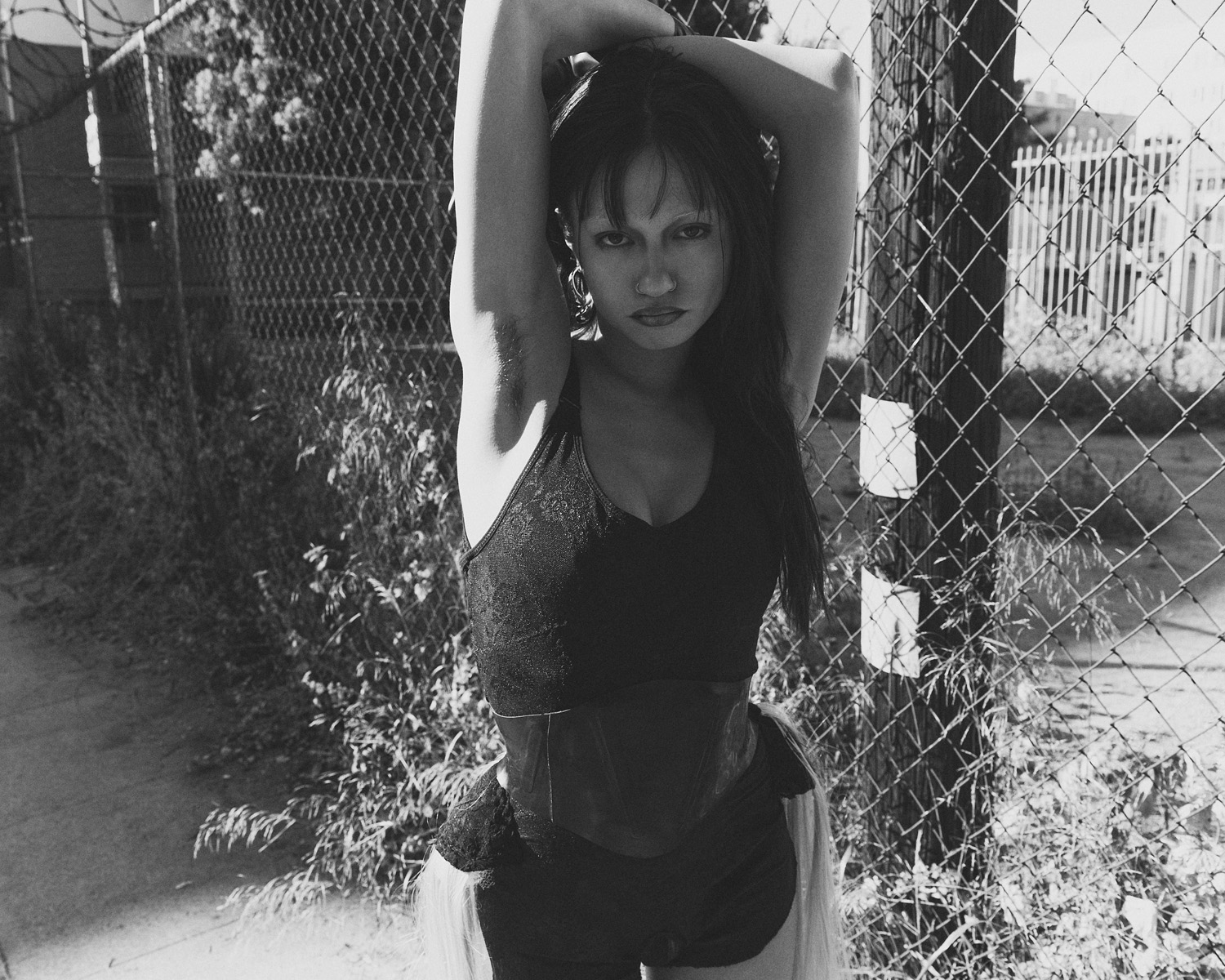
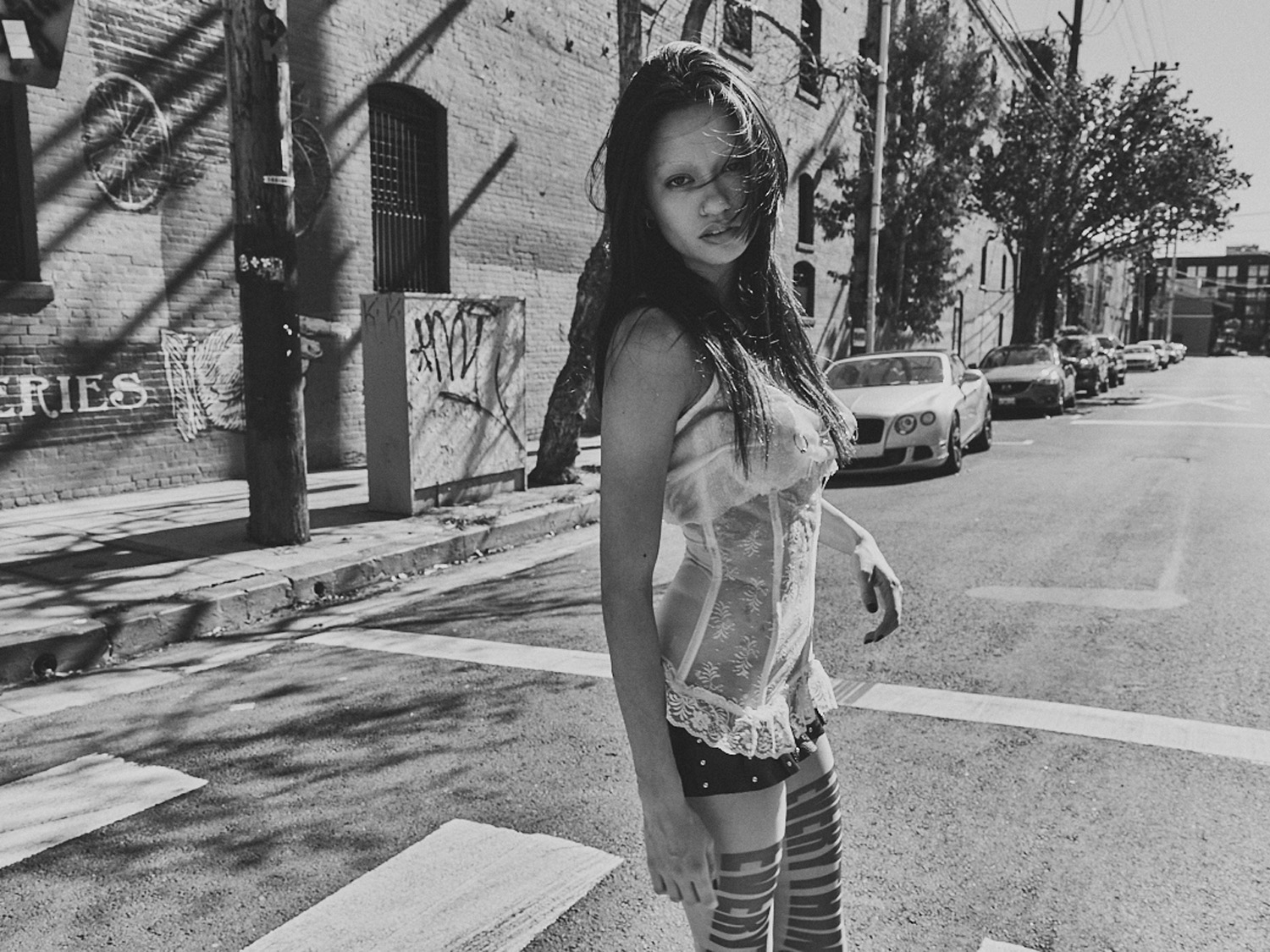
Photo /@brunomcg
Styling /@itslandonr
Styling Assistance / @_leahgarcia
Hair and Makeup / @facesbyfaithhhhh
Words / Rachel Kim @raeraekims
Few artists can tap into the weight behind that word quite like SNOW WIFE, who is reclaiming it as the title of her boldest and most personal work yet. The Houston-born, Los Angeles-based Gen Z artist is a genre-blurring shapeshifter who first emerged with the viral rebellion of Queen Degenerate, followed by Bodyology and its extended edition, Bodyology II. Her background as a trained dancer influenced both projects, which explored sensuality, duality, identity, and fantasy.
The next chapter of her career: a daring pivot toward something sharper, rawer, and unmistakably her own.
It marks a deliberate departure from the hyperpop club-girl persona on which she built her name, revealing a grittier, more unfiltered self—a defiantly human counterpunch to an industry increasingly saturated by algorithms and synthetic creation.
For the rising star music is the cathartic release of a voice she has held back her entire life. In her own words, it is less a reinvention than a dam finally giving way. Two decades in the making, the emotionally charged track represents both her creative evolution and her full embrace of self.
LADYGUNN spoke with SNOW WIFE about breaking through, letting go, and finally allowing the water to flow.
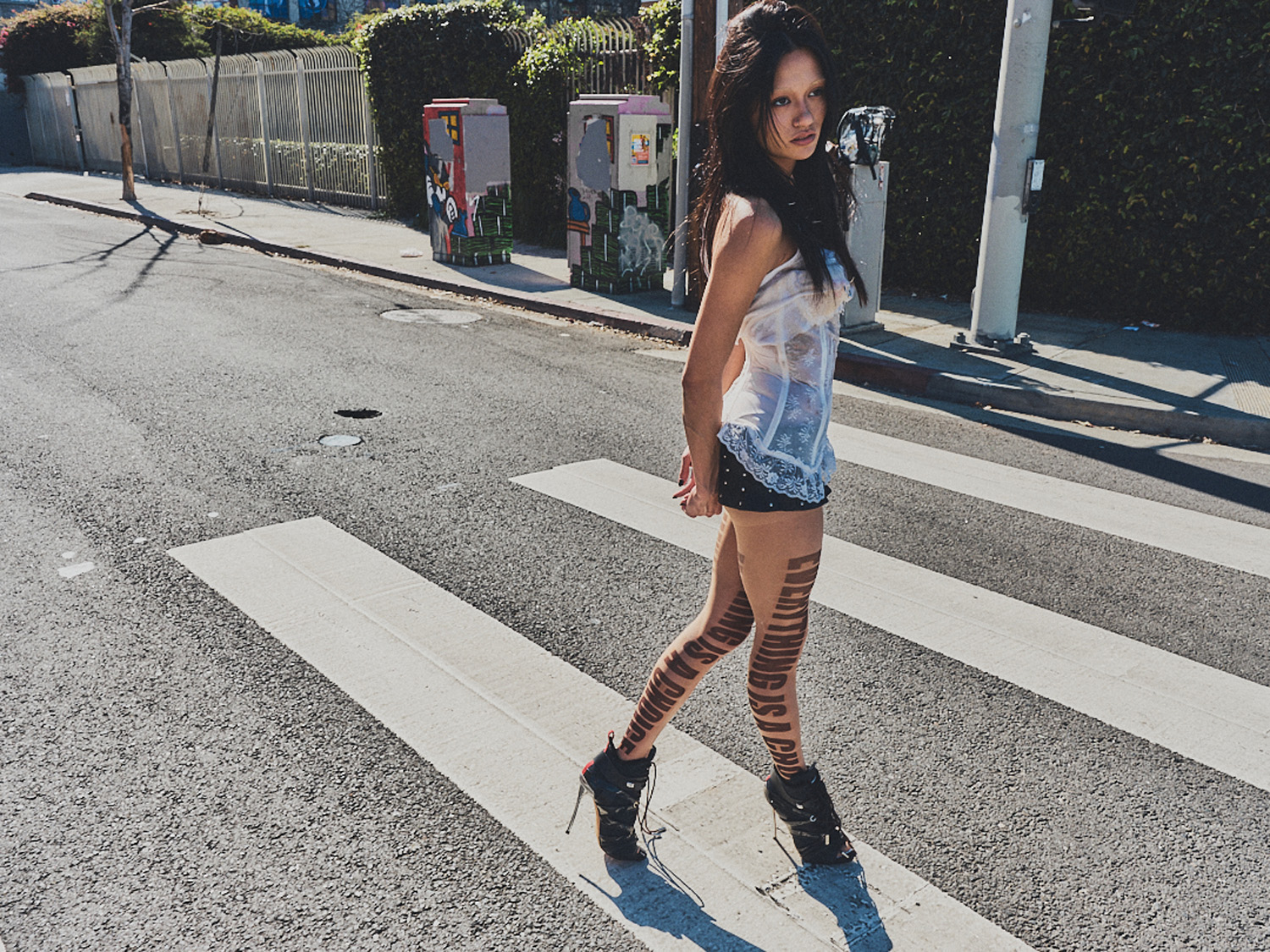
Dress: Dilara Findikoglu @Dilarafindikoglu Tights:Phantasy @PhantasywrldwideShoes: Dolce and Gabbana @Dolcegabbana
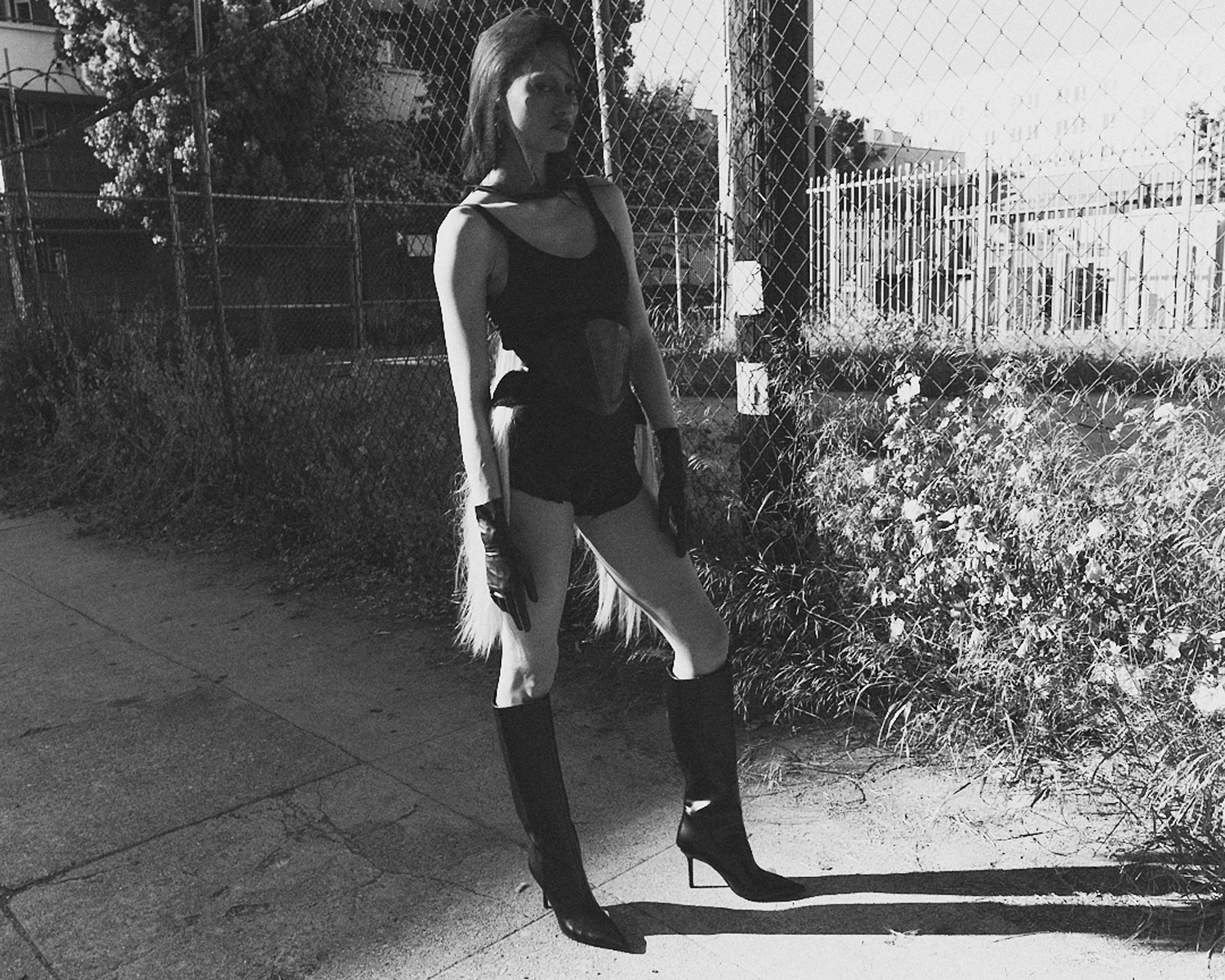
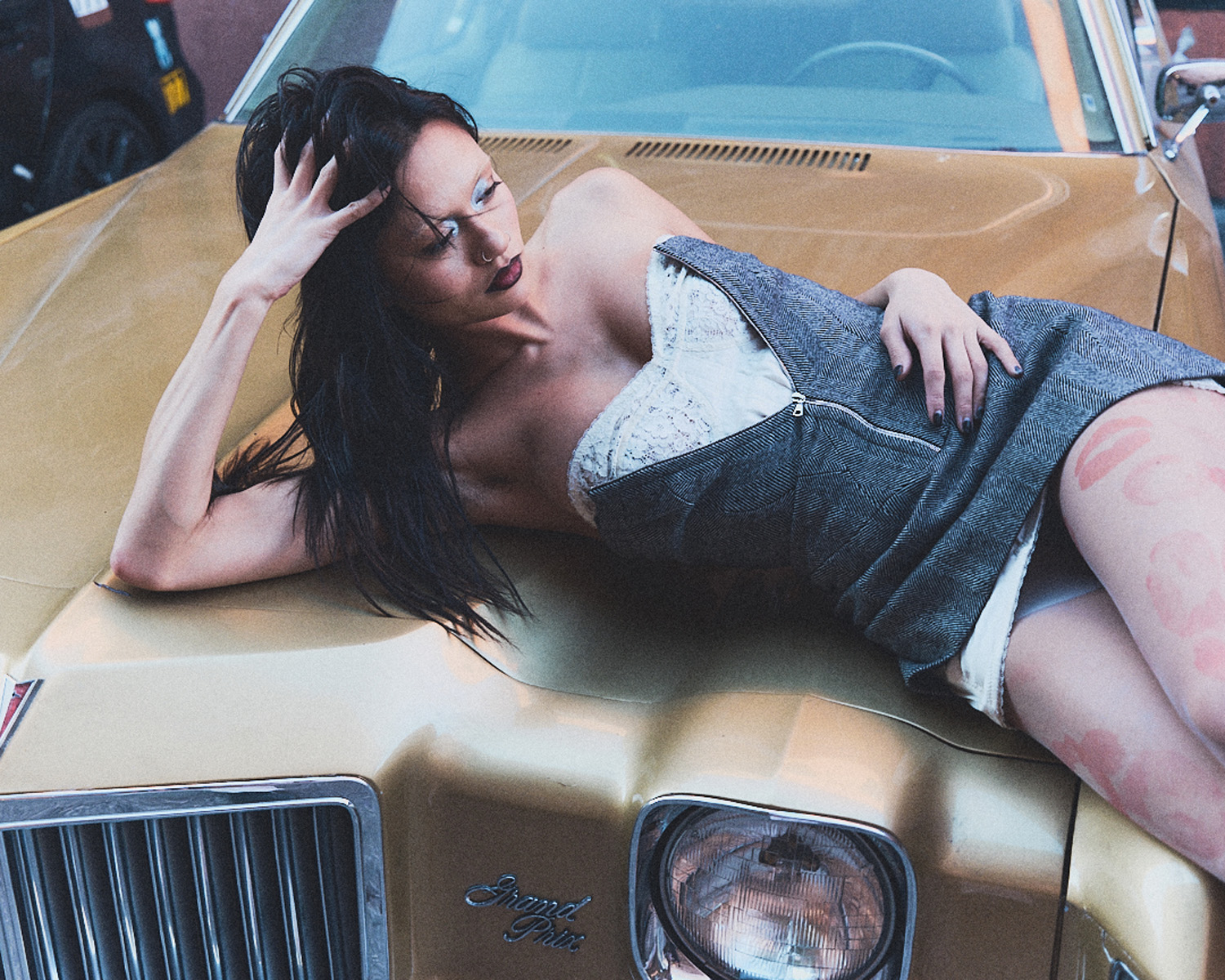
Dress: Teodoremata @Teodoremata Corset: Busted Brand @Bustedbrand Gloves: Busted Brand @Bustedbrand Earrings: Alexis Bittar @AlexisBittar Shoes: Inez @Inez
We saw that Courtney Love is a fan of yours! What was that moment like, and what did it mean to the version of you who first moved to Los Angeles?
Oh my goodness. I cried and cried and cried like a baby. It was all very existential because, a few weeks earlier, I had done a three-hour meditation and bath ritual where I played Live Through This by Hole into Heaven or Las Vegas by Cocteau Twins. One represented the life I’ve lived and can let go of; the other represented travel and the future. It felt meaningful—like the biggest sign from God to keep fighting.
“Hysteria” is a word that has historically been weaponized against women and used to dismiss their experiences. Why choose that title, and what does the word mean in your hands?
It’s true that the world has been weaponized against us for so long. I feel like I have always been made to feel delusional about my own experience. It’s a loaded concept, but, in short, the language in the song highlights the delusion of the post-feminist world we live in today—and how blatant it is can almost be comical. I use a lot of this humor throughout the album to create a dialogue around things that should seem like “common sense.”
You were a dancer before you became a singer. Does your body ever still write the song before your brain does?
With these next works, I’ve decided to shake that crutch. I actually tried to write these songs specifically without dance in mind. I love dance so much, and it will always be part of my expression, but I don’t think it defines me as an artist or songwriter.
For a while, it felt difficult for listeners to look beyond that part of me. So I accepted the challenge, and I’m so happy I did.
You’ve gone from hyperpop club girl to the internet’s newest obsession in what feels like an instant. How much of that shift was intentional, and how much simply happened?
It honestly all just happened, I feel. Obviously, I work very, very hard because my body only knows how to create, and I always feel so existentially inspired by one wind or another. But I’m happy to be pivoting away from that persona.
It doesn’t belong to me anymore, and I don’t know if it ever truly did. I think that one day, a few years from now, I may reconcile with that portion of my life. But for now, I will tell stories in my truest voice as it exists today.