
Words / Bri Ng Schwartz
Photos / Dallas Thomley
I fight the Canal Street hustle and bustle on an early Autumn afternoon to join the artist known as oktehya for a conversation in the Walker Street Hotel lobby. The minute we sit down, we find ourselves settling into a casual back and forth that I often find when I connect with other young mixed AAPI artists of my age group.
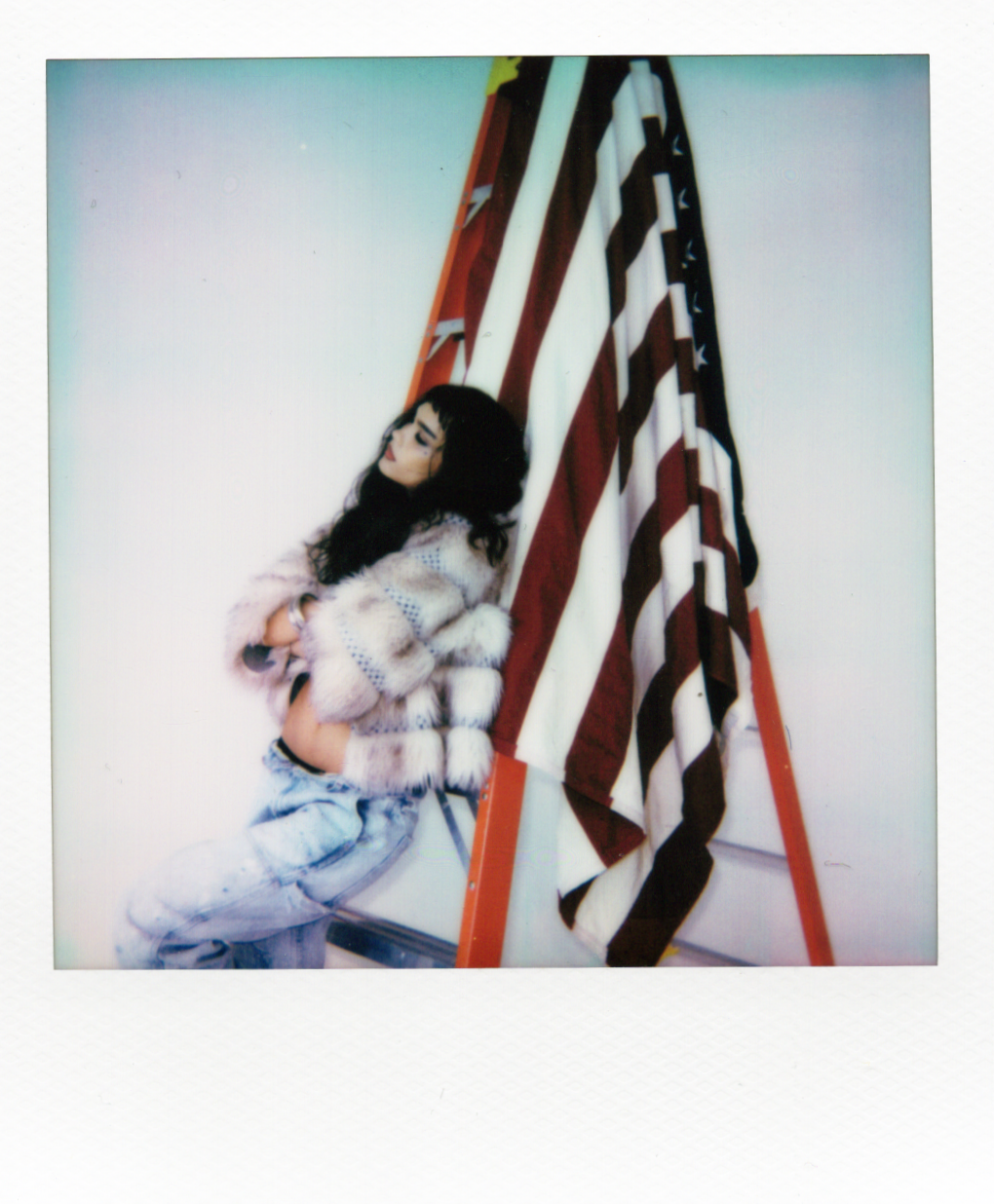
The Neon Gold signed artist is basking in the recent release of her EP, a changeable feast. The five song project chronicles oktehya’s ever evolving take on the inner-workings of the relationships in her life, from romantic to familial. Having come up in the Pacific Northwest underground music scene at the young age of 16, her journey from behind the scenes collaborator to finding her voice as a solo artist is still in its early stages. We discuss all of this in more while sporadically finding ourselves distracted from the purse sales and tourist shenanigans happening next to us outside of the hotel.
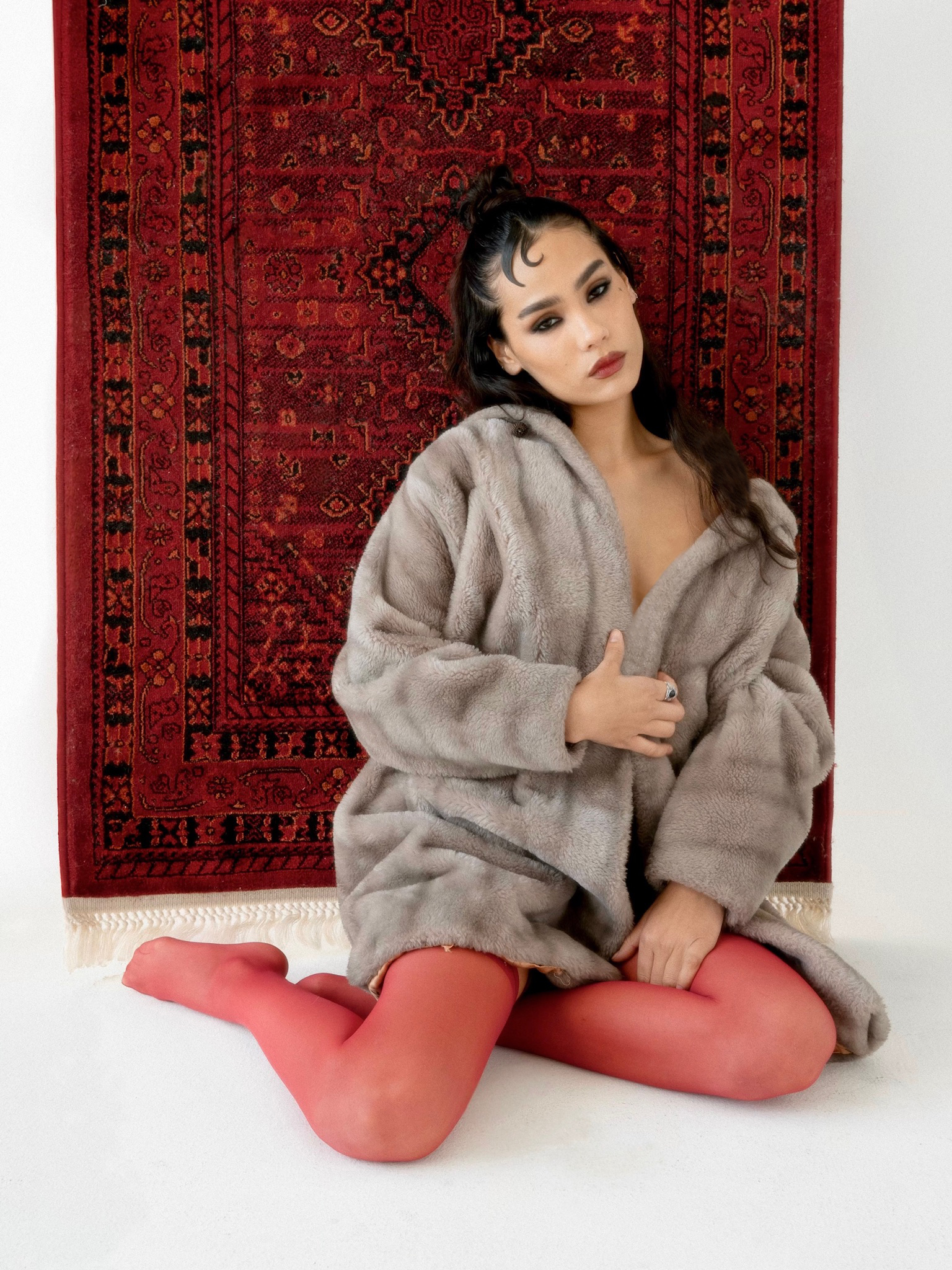
Congratulations on the release of a changeable feast. What has it been like having this EP out in the world?
It’s pretty nice. It’s my second EP ever, and I feel more confident with this one than I did the first. So that’s exciting to just feel personal growth.
Compared to your first EP, SORRY FOR THE WAIT, it feels like a continuation sonically and lyrically, but also more mature. How would you say you’ve evolved as an artist since that release to now?
So much in such a short amount of time. I feel like with this EP, I’ve been able to explore a bit more, try new things, and experiment which isn’t something I really allowed myself to do in the first EP. I just felt so immensely pressured to not suck. That’s a very debilitating metric to go by as an artist sometimes. I think I’ve matured because I’ve allowed myself the time to explore, I’m more secure in what I’m doing for a living. And I think that shows in the music as well.
What can you share about the development of this EP?
We compiled the songs together after the fact. In the future I want to do more preconceived concept albums. I want to go into it with a theme and then write according to [the theme.] But this one was just stockpiling songs and sifting through them. Finding the ones that I would want to go back and listen to. So it started with catch//release, and that’s one of my favorite songs ever.
Even though it’s not a concept album, I feel like there is the through line of dealing with relationships. Could you share more about that?
I’m learning so much and I feel so baby green. I have no idea what I’m doing. But when I was listening back to the songs and breaking them all down one by one, I started to realize that there was a consistency in talking through my relationships with friends or exes and my family. I realized that the moral of the story was learning. I learn everything about myself through my reflection and other people.
In putting those puzzle pieces together, what did you learn about yourself in relationships?
It was sort of like watching a super cut of my life, audibly. When I’m writing, it’s sort of an instinctive autopilot scenario where I have to get this stuff out because I’m feeling it currently and living through it. It’s very cathartic and satisfying to be able to make sense of what’s happening to me with noise. But then listening back after the fact, and I didn’t realize I hold [relationships] in such a high value, just subliminally.
Do you kind of know what direction you’re going in musically in the near future?
More concept albums in the future. Whatever first album I show up with will harbor most of my experimentation, like stretching through all genres and all styles.
It was cool to see you being featured in the last Love Spells music video “Keep It To Yourself.” How did you two first connect?
I love my baby Taegen. We met at Tenets of the Trees in Los Angeles and bonded over our cats and our love of music. He just asked me to be in the video. I don’t know how to act, but it was really fun and we bonded through that experience.
Coming up as an artist in the Pacific Northwest, what would you say makes music and the music community there unique?
We have the whole creation of grunge and that era of band culture, and then that sort of dwindled out and now we’ve got Macklemore. I feel like the community itself is quite cult-like, just in that not everyone is doing it. So it’s like if you’re an artist in that space, you’re known. I never really got very familiar with the scene just because I took kind of a back route through it. I was 16 and a wallflower just trying to survive at that time in my life.
Tell me more about your 16 year old self and discovering your voice.
I always had a curiosity about making music a career in some facet, but at the time it wasn’t something overtaking me. I would just sit and watch my friends make music or learn from them quietly, take notes quietly. The very few times that I did try to write for some of my friends at the time, it was met with “Oh, you’re a girl, you don’t rap. You’re a girl, you can’t do this.” You’re just looking straight through me to the next person.
At what point then do you feel like you found your power and confidence in it?
Not until I moved to Los Angeles. I’d put this voice memo up on SoundCloud when I was 18, and this management group had found me and asked if I wanted to move to Los Angeles and write for some of their artists. I really just thought I was going to be a writer. Being on a stage, that is gross to me. It freaks me out. I’ll get used to it, but it freaks me out. But just seeing other people have faith in me and see a talent that I had sort of snuffed out in myself because of how people had treated me in the scene that I was in, it reawakened that curiosity.
Do you ever feel like there’s code switching that you have to do when working with men or working with people in different positions of power?
Every time I’m in the room working with women, I do feel more myself in such a subtle way. I think it’s because it’s so permanently ingrained in us to have a guard up or be a certain way that I don’t even notice that I’m doing, it because I’ve just done it my whole life. I’m quicker to be vulnerable with a woman than I am a man.
Do you feel like your mixed racial identity shows up in your work at all?
I don’t really, but it has been really interesting in music. There’s a certain level of it that upsets me in that I’m very proud of my heritage and I’m very proud of who I am. Where I come from, my family, my background, my culture. But I don’t like the idea of it being monetized or exploited. Oftentimes it feels like a slippery slope.
Charli has that lyric in “SS26” from Music, Fashion, Film: “My heritage could give me quite the USP.”
Retweet a million times. I wish I wrote that. It’s odd, because it almost feels at times sort of microaggressive. When I heard Charlie’s song, I was like, “Okay, so it’s not in my head.This Is a real thing.” Everybody’s different. Everybody’s journey in their art is different. There are times when I have a pull, because I am proud of where I come from. I want indigenous peoples to have visibility, and if I can help with that, I would love to. But my art does exist past that as well, just as something I use as a tool to make sense of the world.
What advice would you give to younger artists kind of dealing with this conversation and navigating the industry?
As cheesy as it might sound, I just feel like you have to do the work internally to find a pillar or two that you feel the utmost secure standing on, and don’t let anybody take you down from that or try and get you to shift to something else. It’s very dangerous to be out here without a sense of self-security. People will take advantage of that from start to finish and you will never get to know yourself.
How does your inner child relate to your creative process?
She’s a sneaky little gal, I tell you. I feel like she creeps up everywhere. The older I get, the softer I’ve become, which is so interesting to me because as a child and a young adult, I would have conversations about how I was cutthroat. I couldn’t be a soft bitch, not for shit. Now I’m in such a place where I’m pretty zen, all things considered. When I write music and have to tap into the more passionate edges of my emotional range, I see her again because she exists purely in extremes. So I meet her every single time I’m writing
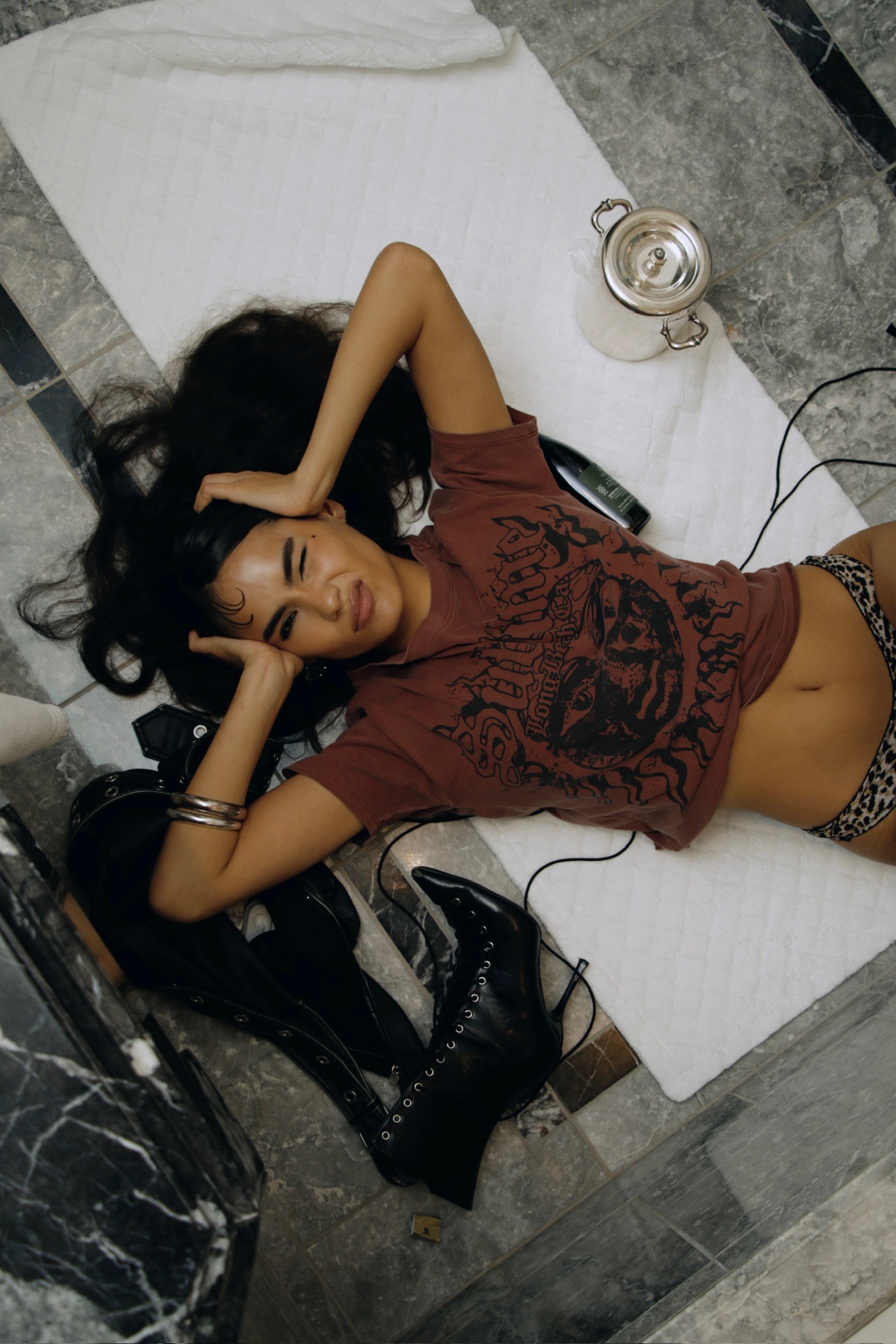
Live performance is something that you’re building your confidence with. What is your relationship to it?
When I started, half of the reason it took me so long to come to the table was because the idea of having to be perceived live and make mistakes live in front of people is scary. I never thought that I’d have to face other people’s interpretations of me. Music was always a device I used to feel better and therapise myself. And if my parents weren’t getting something that I was trying to say and I wanted to tell them how I felt, but I was too angry, I’d write it in a song and they’d listen and hear it.
You come from a family of artists. Do you feel like you learned anything watching them and their artistry?
My biological father has a “real job” and he only plays music on the weekends. He had the opportunity to go on tour and take it full time with a band that he was in in college, but he didn’t. That’s a beautiful decision because now he has a family. On the other hand, I don’t want to do it as a hobby. I feel as though I wouldn’t feel fulfilled as a human being if I did it that way. So I’m going full fledged with it and I’m making it my serious career with a bit of friction on his side and accepting that.
On my stepdad’s side, he’s the archetype of an artist that’s living in the extremes. It’s done with so much passion that you really can’t bottle it or control it and it envelops him, which is a stunning thing to witness, but sometimes it’s really scary. I wanted to be sure in my music, my art, my career, that I didn’t do that to myself. Just find a way to have the logical mind of my biological dad and sort of detach from it when I need to, and then the passionate mind of my stepdad where I can tap into it and live in it for as long as I need to make the best art, but then come back out.
That’s how we break generational curses.
Dude, I’m in the trenches with that, and I’m thankful to be doing it. Eldest daughter things. So much responsibility on us.
I’d love to hear you explore that in your art.
Oh yeah, girl. It’s coming.
END OF INTERVIEW.
A week ago, oktehya casually teased new music coming soon via lyric video by way of a recording of an old-model iPhone display. We are sure to be blessed with more catchy verses and relatable lyricism with what comes next, and highly anticipate seeing her blossom on stage in the near future.
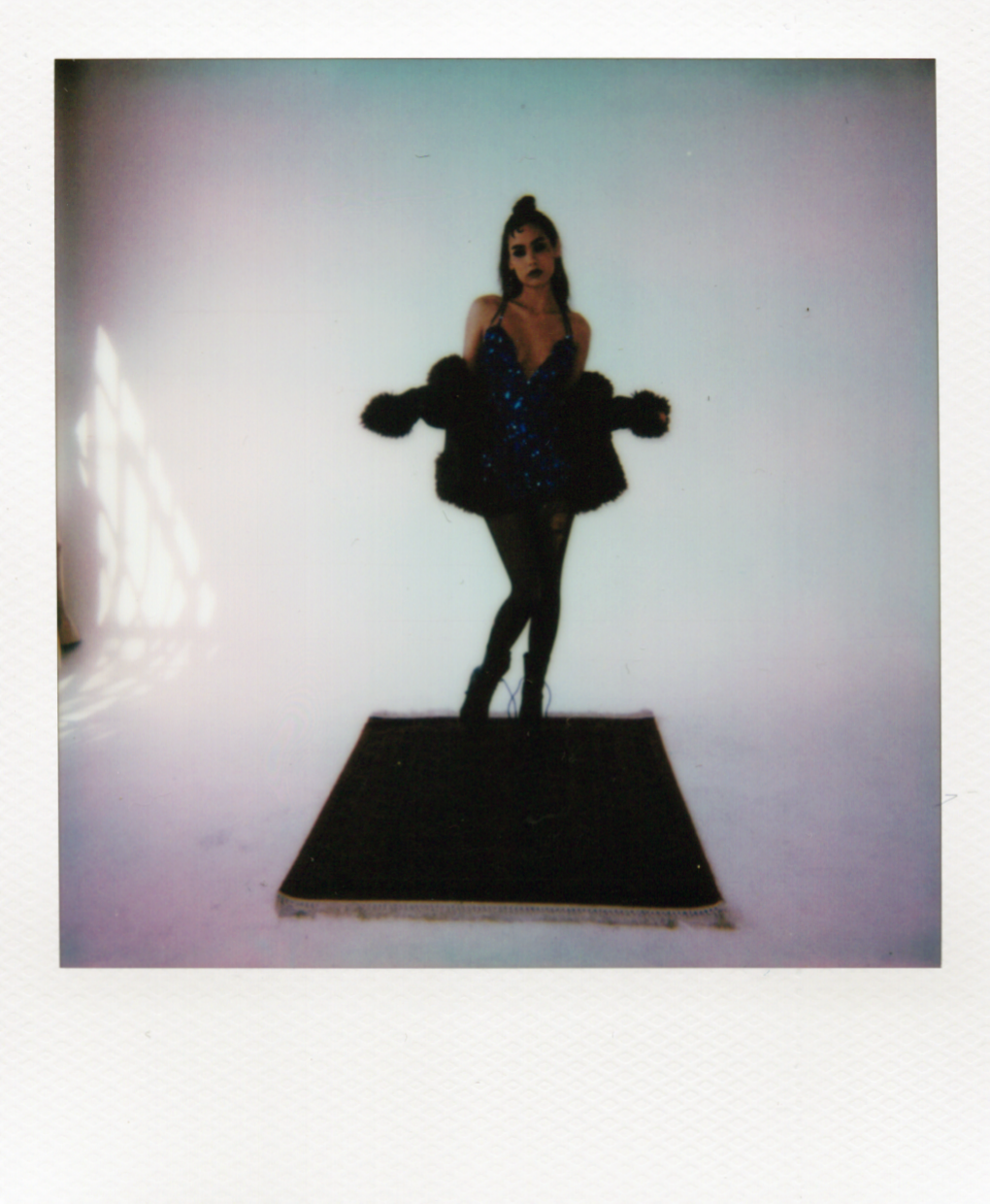
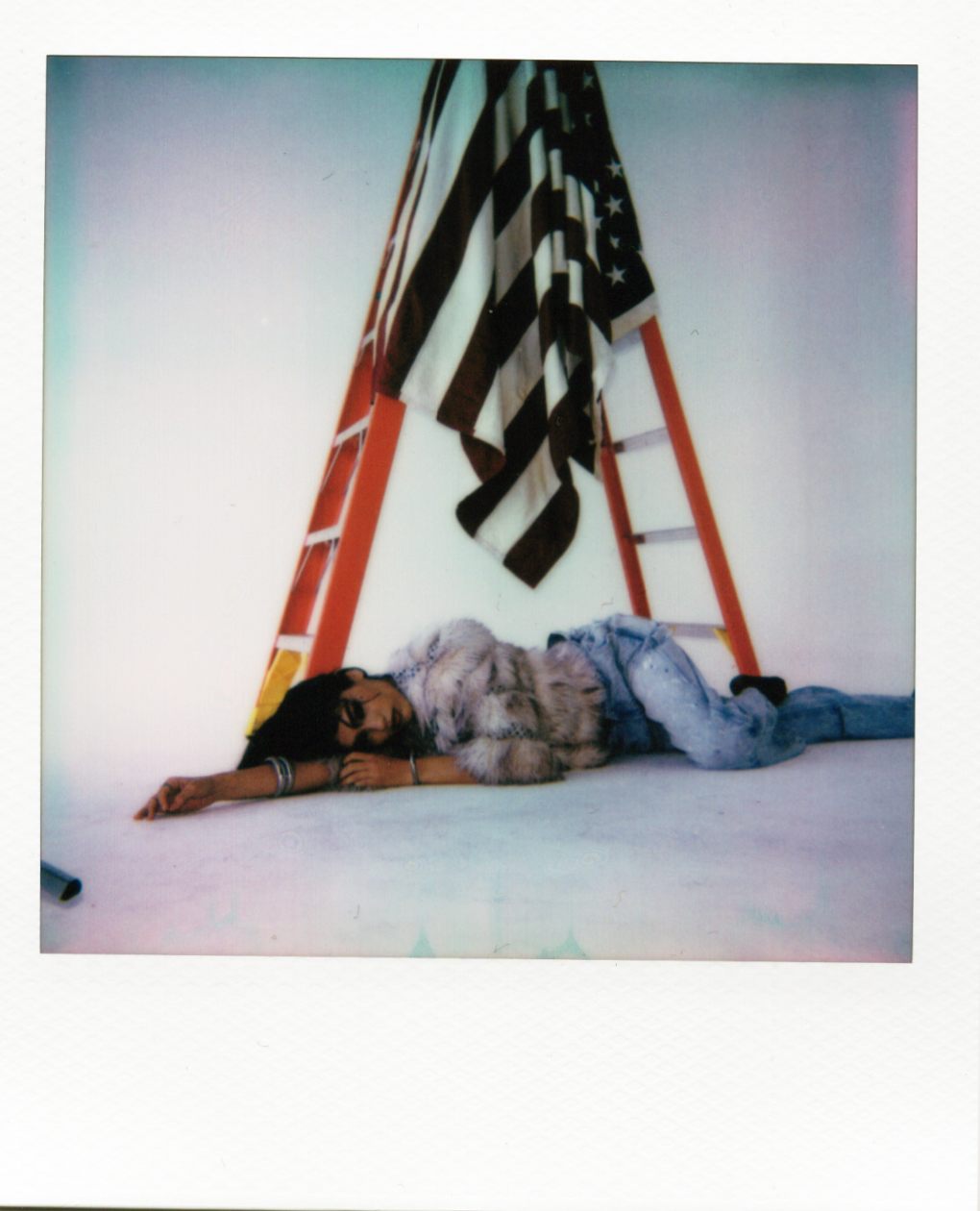
 CONNECT WITH OKTEHYA
INSTAGRAM // SPOTIFY // APPLE MUSIC