
Story / Chelsea Volpe
There is the New York Fashion Week you see online: black SUVs, celebrity front rows, step-and-repeats and the names everyone already knows.
Then there is the version I’m always more interested in — the designers building complete worlds from instinct, obsession, cultural memory and a highly specific point of view.
As a stylist, I’m naturally looking beyond the spectacle. What silhouette am I still thinking about the next morning? What tiny styling decision transformed a look? What references actually felt considered rather than copied?
This season, three SS27 collections stayed with me: CICAEDIA, JASPER and Renée New York. Their aesthetics could not be more different, but all three possessed the thing fashion desperately needs: identity.
CICAEDIA: ’90s MINIMALISM MEETS FEMME FATALE
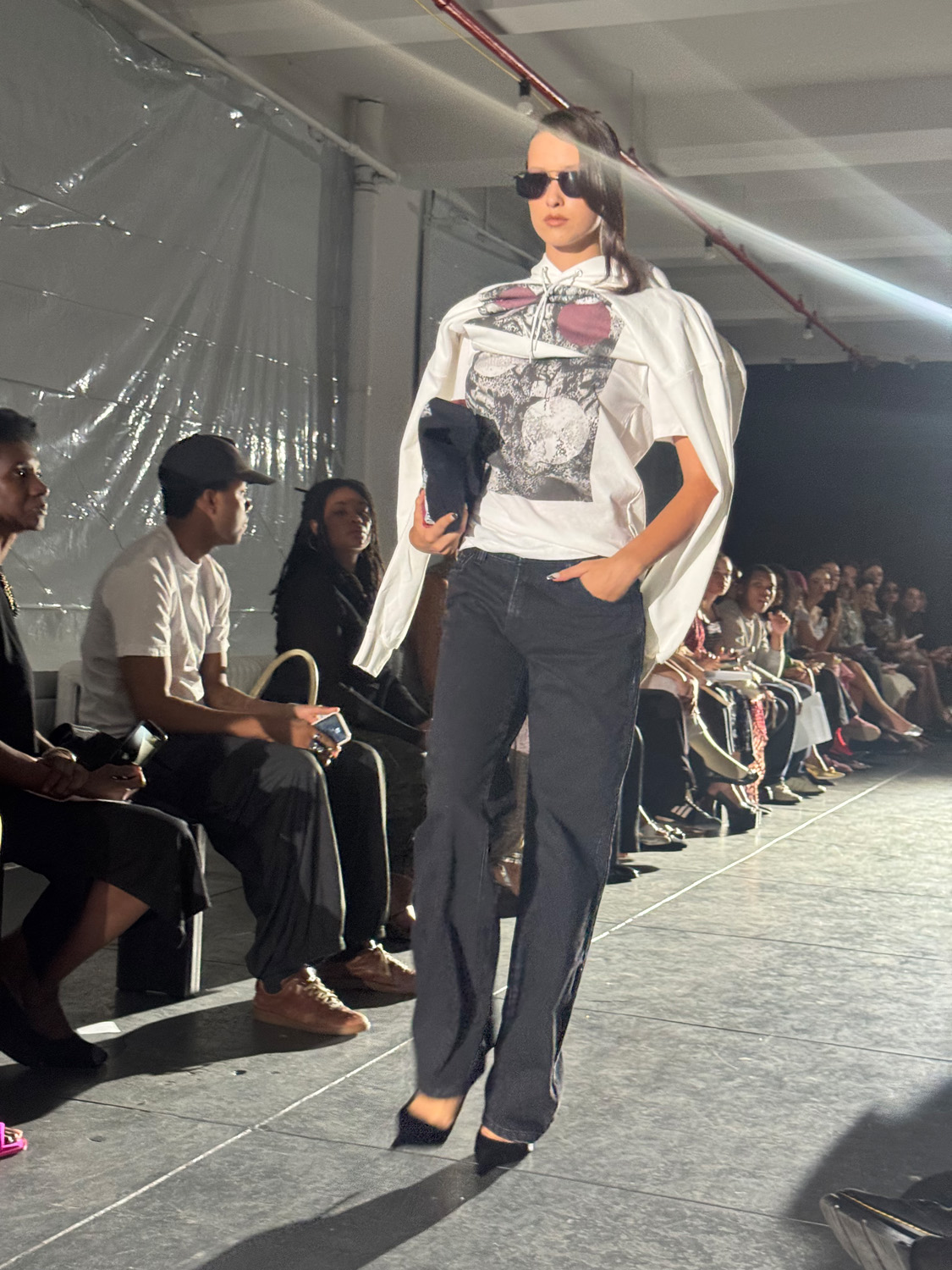
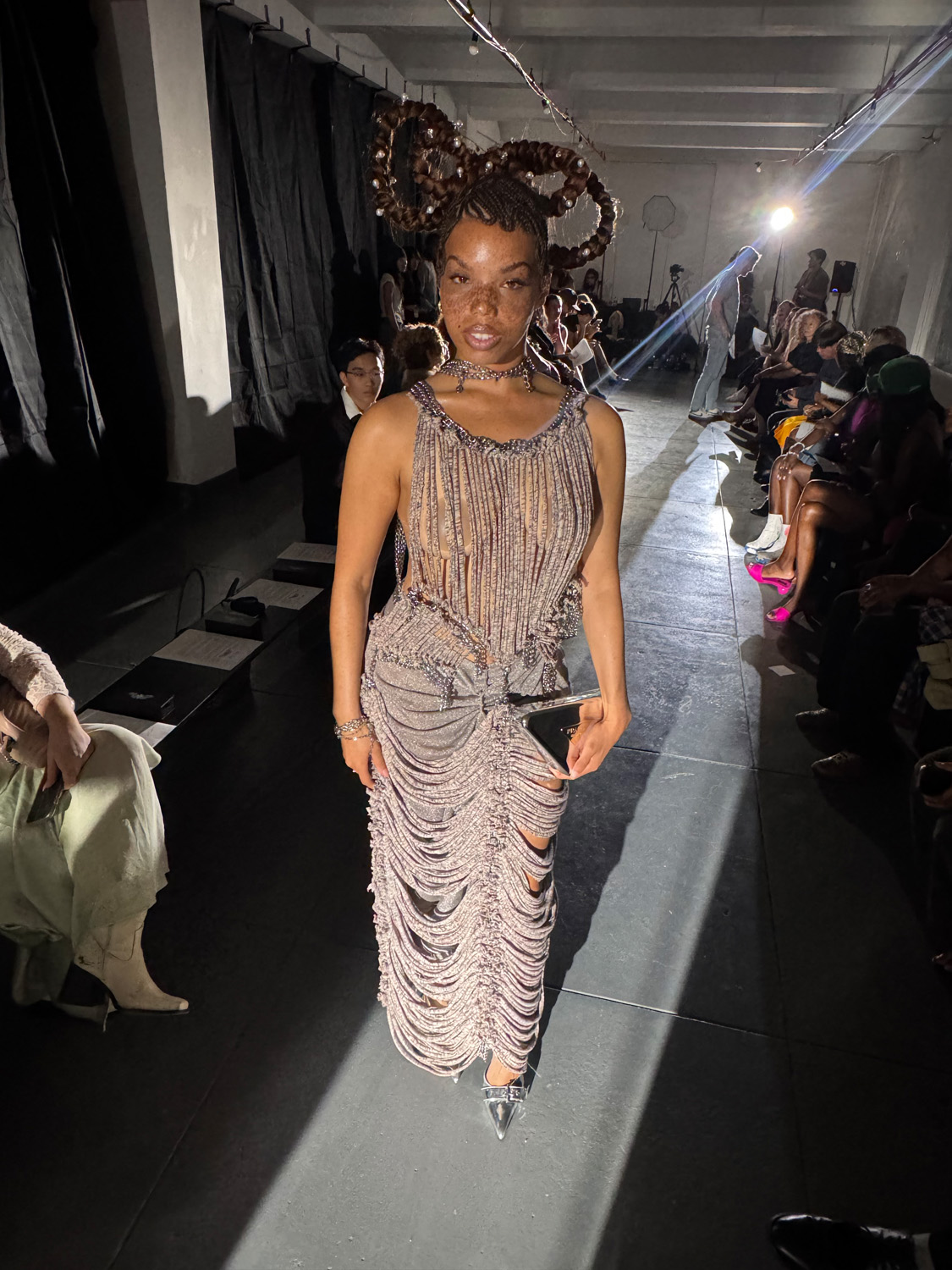
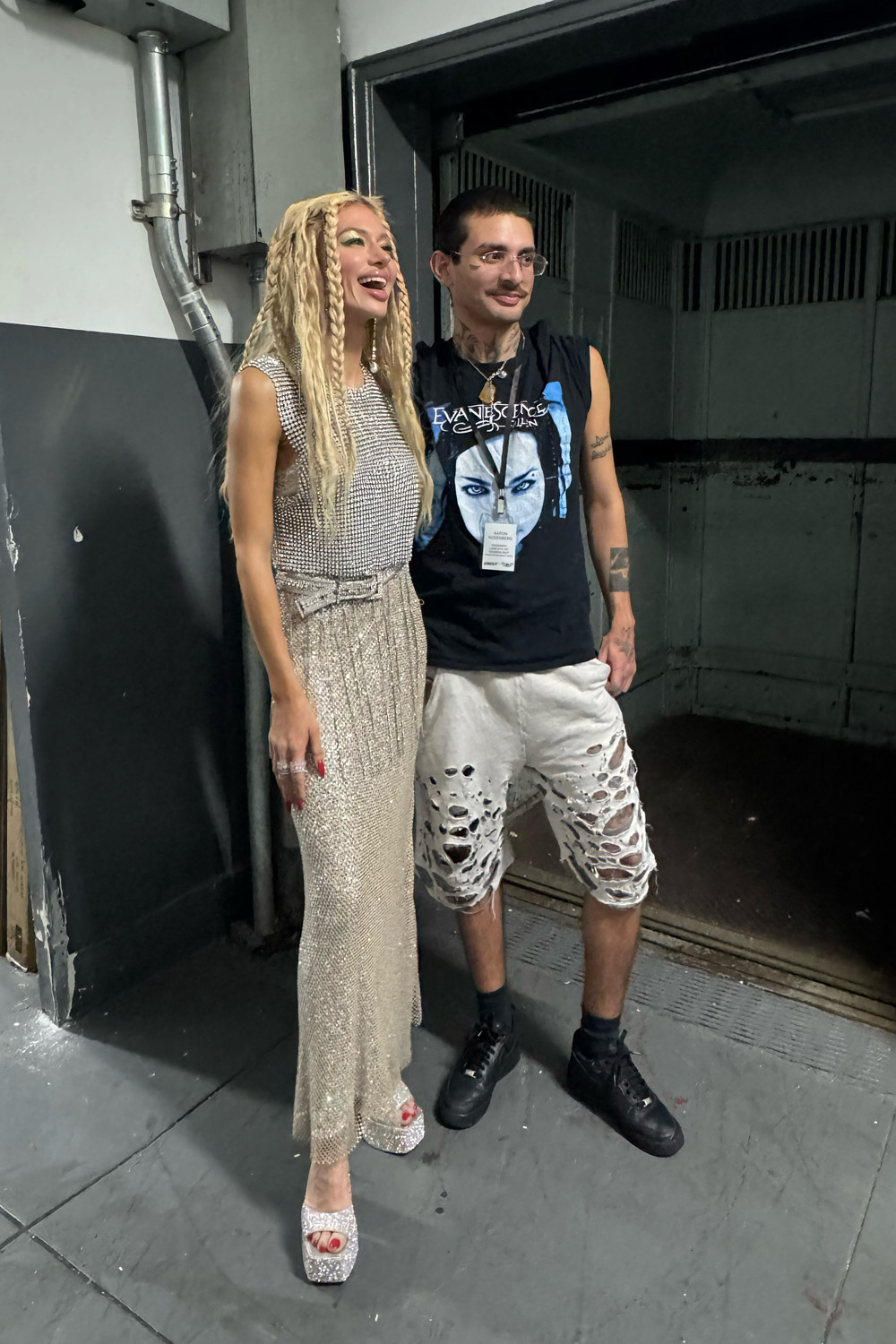
CICAEDIA’s Spring/Summer 2027 collection, “Will You Meet Me?”, begins with a woman you immediately want to know more about.
Designer Yitzhak Rosenberg imagined her as glamorous, elusive and cinematic — equally believable in New York, Paris, Monaco or disappearing into a top-floor hotel suite somewhere you weren’t invited.
The collection married the intrigue of Hitman: Agent 47 with the seductive restraint of 1990s runway fashion, particularly Gianni Versace’s final couture collection for Fall 1997.
Rather than leaning into costume, Rosenberg translated those references into streamlined tailoring, cocktail dressing and eveningwear in a largely neutral, desaturated palette.
A fully draped silver chainmail dress demonstrated serious technical ability, while a white evening jacket adorned with beaded mesh pushed the collection toward couture excess.
The result? Minimal yet decadent, sexy without trying too hard, and glamorous with just enough danger underneath.
Very femme fatale. Very 1997. Very “don’t ask where I was last night.”
Rosenberg himself is a delight to talk fashion with. He emphasized the importance of creating a collection that feels both aspirational and wearable, envisioning women from all walks of New York City life making his designs their own.
His vision? A wardrobe that allows women to move effortlessly through the city with an innate sense of sophistication, confidence and glamour — looking impeccably chic without ever appearing to have tried too hard.
JASPER: MEMORY, DECONSTRUCTED
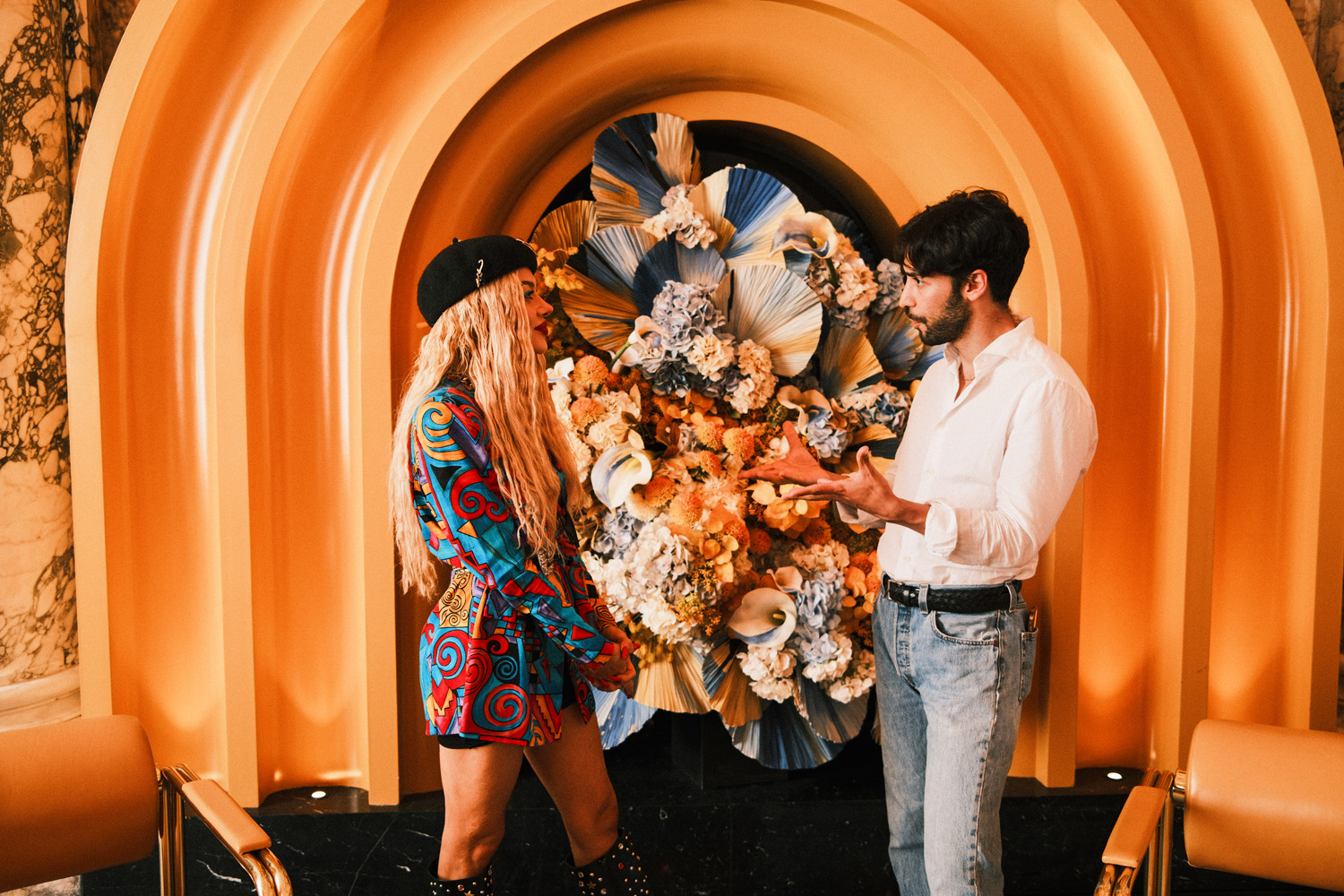
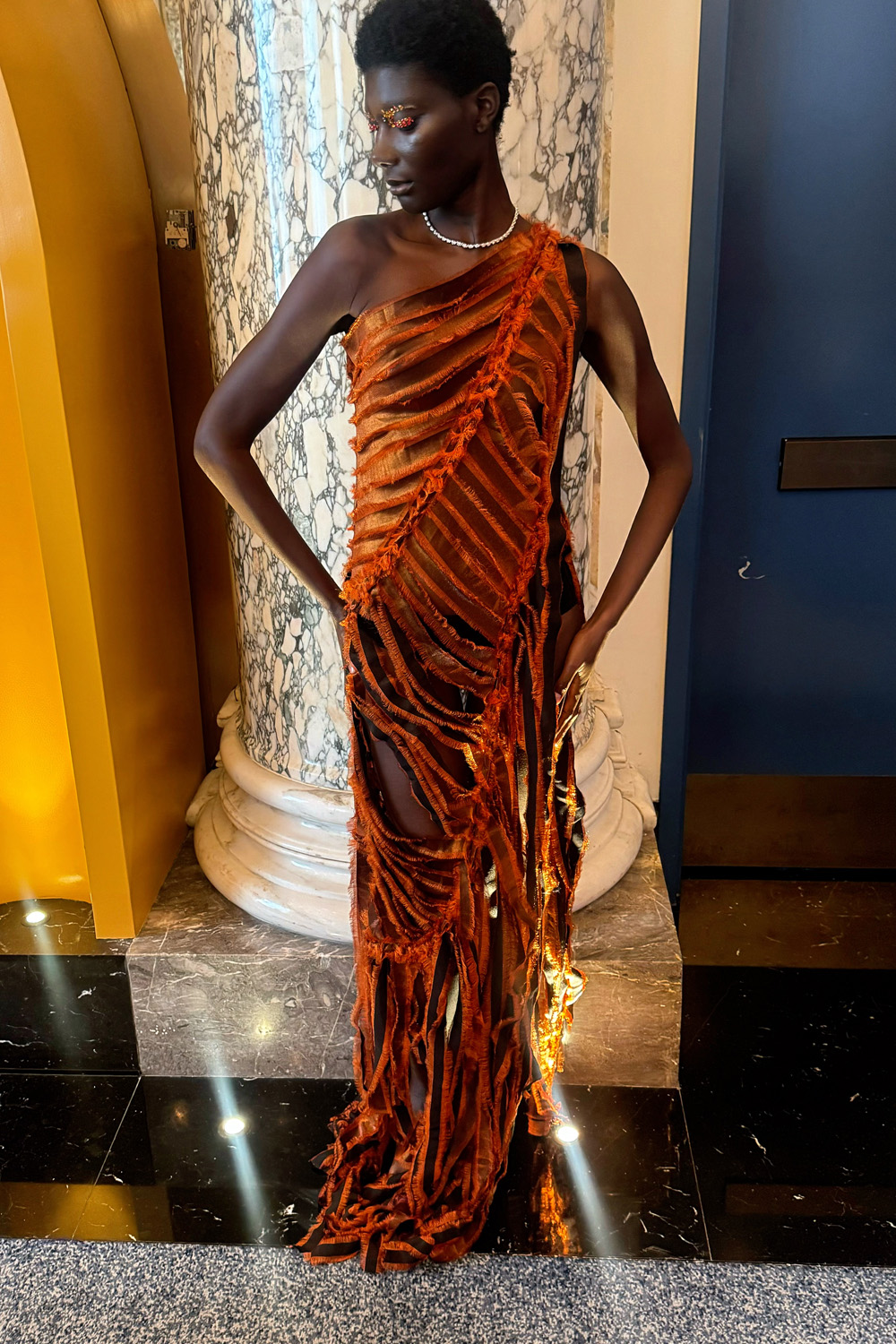
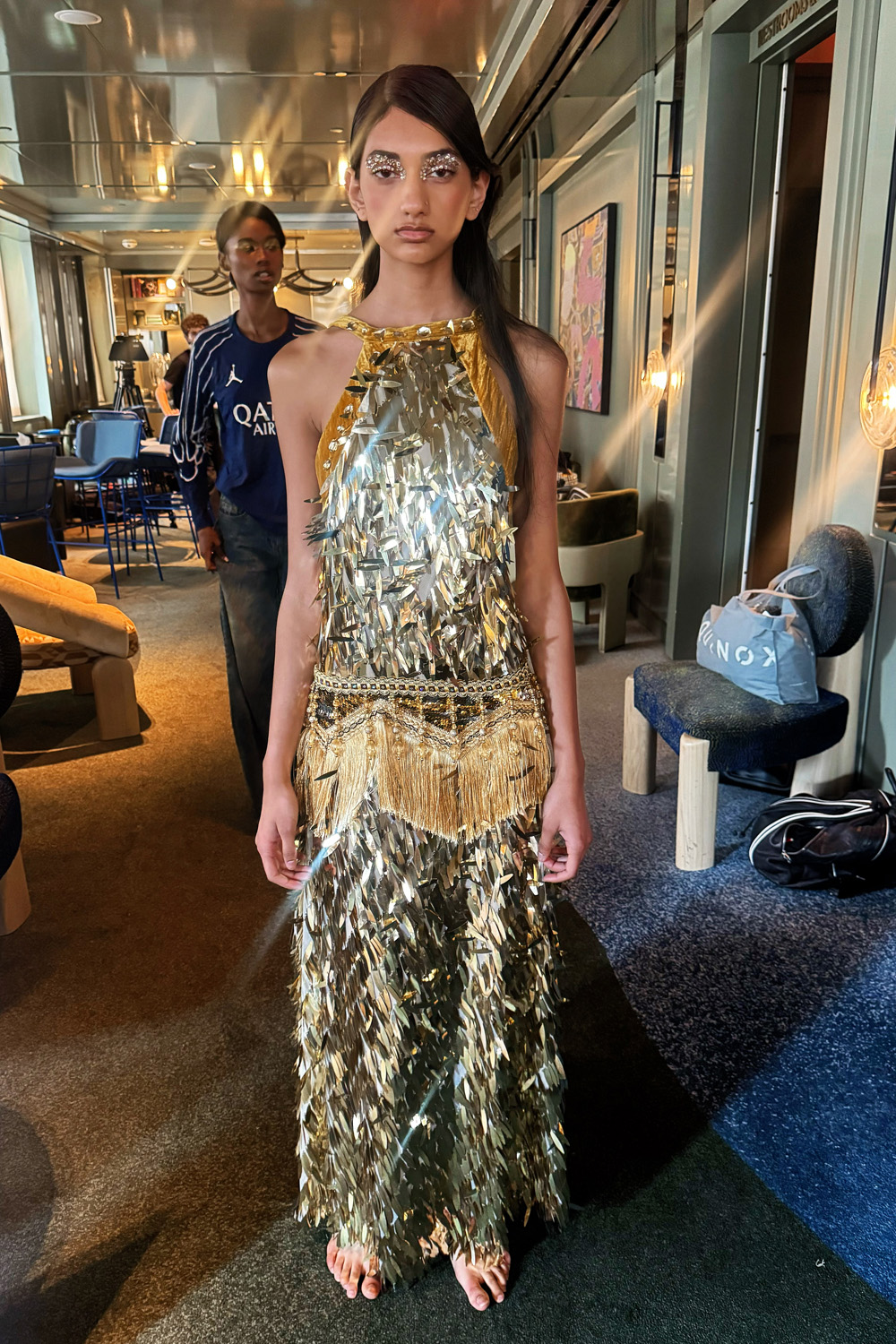
JASPER designer Kooshan Dunn went somewhere much more personal with “The Stories We Wear.”
The collection explored cultural memory, sentimentality and heirlooms, with Dunn revisiting traditional Persian rugs from his childhood and reimagining their language through contemporary ready-to-wear.
What could have become nostalgic instead felt immediate.
Rich jewel tones and warm metallics were paired with sculptural silhouettes, abstracted prints by Sophia Belkin, fluid ribbon fringe inspired by artist Faig Ahmed, and raw, unraveling textures.
From a stylist’s perspective, the texture was the story.
Fringe, dimensional surfaces and imperfect edges gave the pieces movement and depth — the kind of clothing that makes you want to step closer rather than simply photograph it from across the room.
There was something especially beautiful about using heirloom objects as a starting point and then pulling them apart, abstracting them and giving them a new life.
It was sentimental without ever becoming precious.
Dunn himself was a pleasure to talk fashion with, arriving in a look that felt reminiscent of a young Ralph Lauren — a crisp, impeccably tailored white button-down paired with straight-leg, light-wash denim.
His approach to design is equally considered: seamlessly weaving his Persian heritage into the language of American fashion in a way that feels elevated, contemporary and accessible. He emphasized the versatility of the JASPER woman, envisioning his designs on women with distinct personal styles, moving effortlessly between different settings, occasions and lifestyles.
For Dunn, the beauty of the collection lies in its adaptability — pieces that feel equally at home in an editorial setting as they do in the everyday wardrobes of the women wearing them.
RENÉE NEW YORK: POP GIRLS AFTER DARK
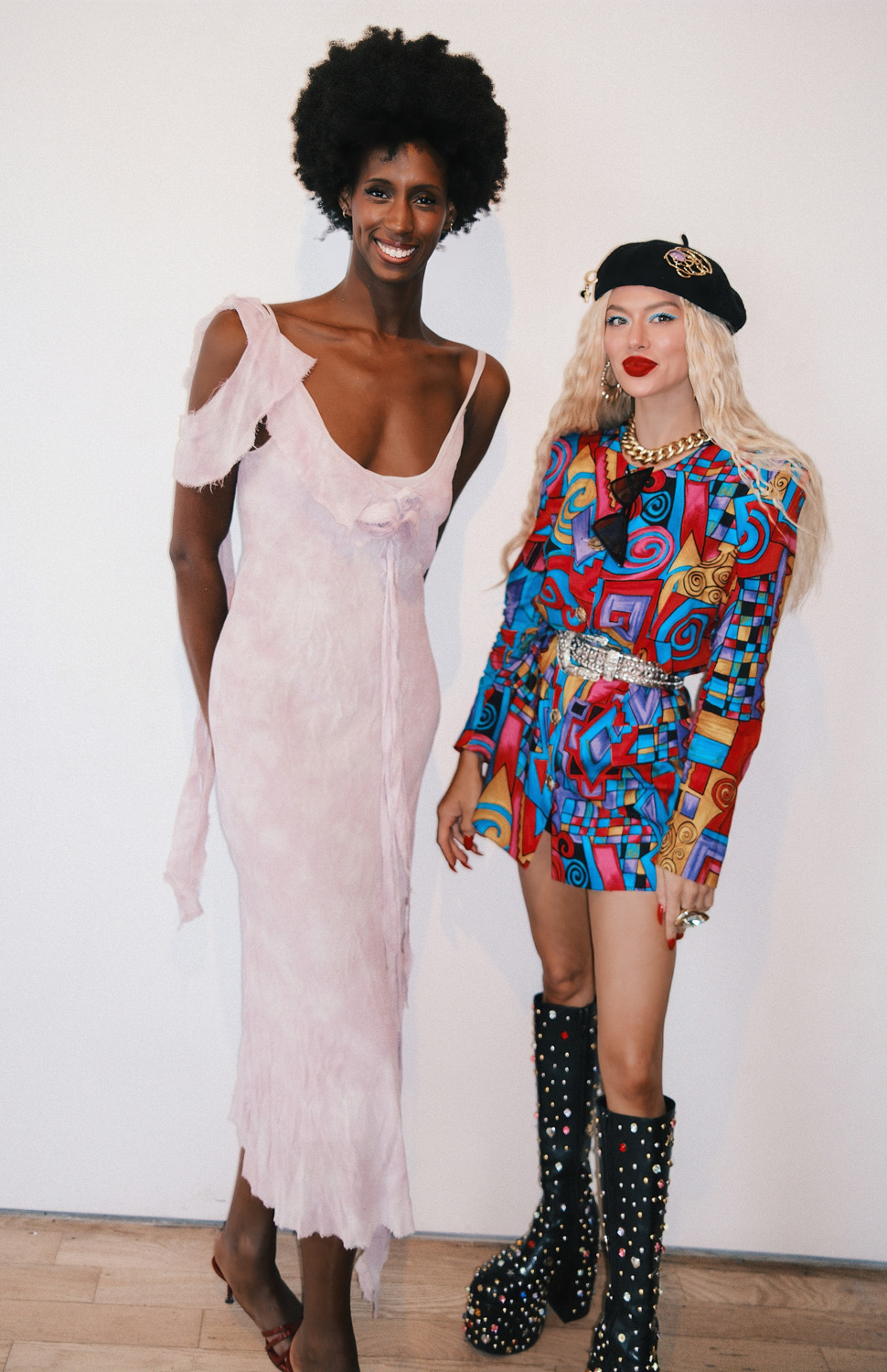
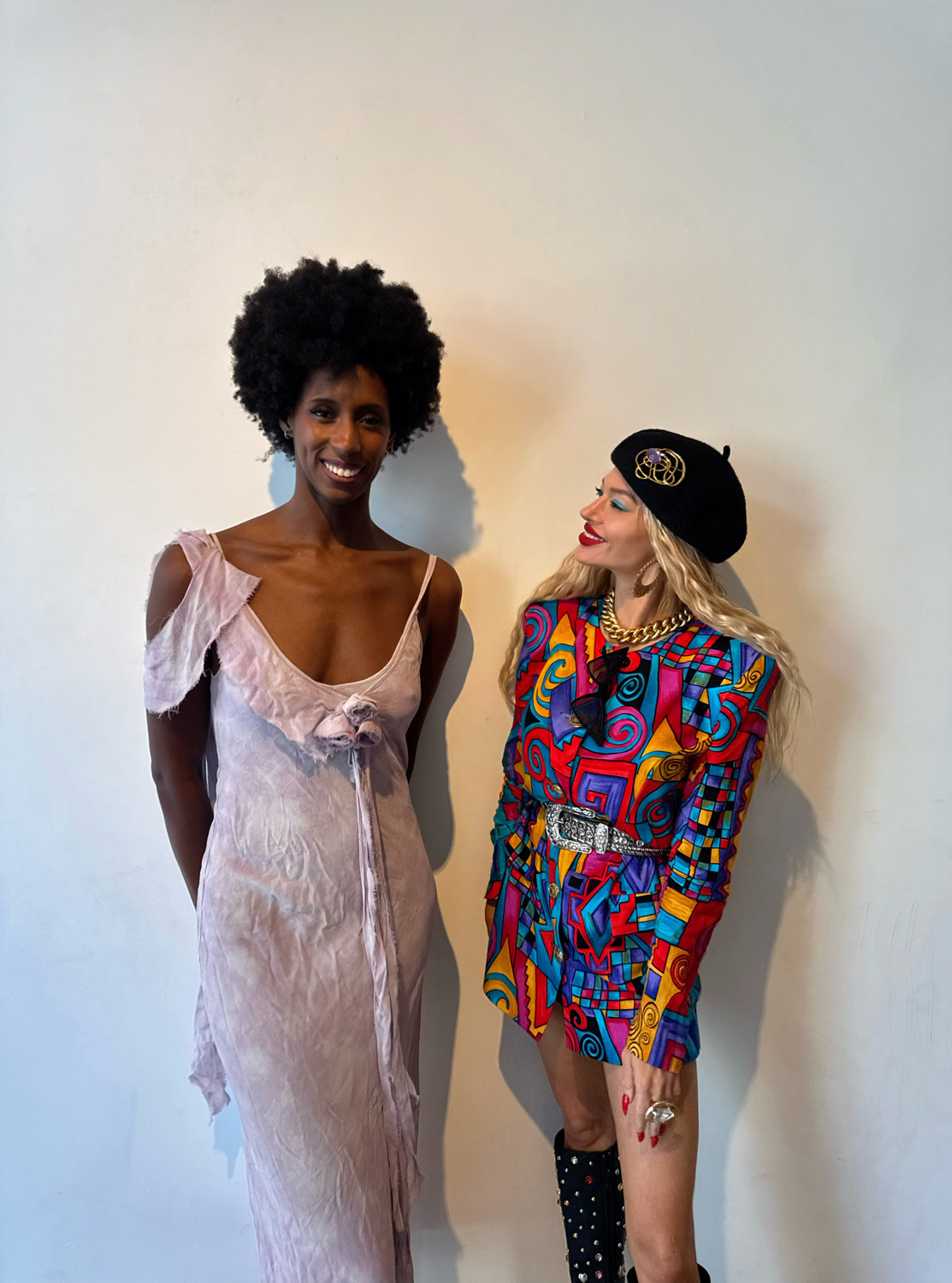
Then came Renée New York’s Blue 47, which threw Fashion Week directly into nightlife.
Presented at Space LES, the 20-look collection played with futurism, music, beauty culture and the collision between past and future — all centered around the unmistakable electric blue of Barbicide.
Yes, Barbicide.
And somehow, it completely works.
Designer Camryn Renée pulled from the visual worlds of pop and music icons including CHXRRRY and Tyla, injecting the collection with the confidence, sensuality and heightened performance energy of contemporary pop culture.
Another major reference was artist and animator Robert Valley, whose elongated figures, sharp linework and kinetic visual style helped shape the collection’s futuristic attitude. His work, including projects associated with Gorillaz, made perfect sense translated through Renée’s downtown lens.
What struck me as a stylist was how the collection used exaggerated proportions and theatrical styling to create character. Rather than simply putting together looks, Renée seemed to be building personalities. That distinction is everything. Great styling should communicate an attitude before the person wearing it even enters the room.
The result felt like New York after midnight: electric light, beauty experimentation, hyper-stylized characters and people you meet once at 2 a.m. and somehow remember forever.
Renée herself was a refreshing contrast to the high-voltage world she’d created — soft-spoken, relaxed, genuinely humble, and the kind of person you’d want to grab a drink with long after Fashion Week was over.
But don’t mistake her understated demeanor for a lack of influence. She’s cultivated an almost cult-like following of downtown club kids, emerging creatives and fashion influencers, who turned out in droves dressed in hyper-saturated colors, experimental silhouettes and some of the most unapologetically cool Gen Z fashion I’d seen all week.
The energy was almost impossible to articulate. It felt less like a traditional Fashion Week presentation and more like being welcomed into a wildly creative, beautifully eccentric New York nightlife family — one where everyone seemed to know each other, everyone had incredible personal style, and absolutely nobody was trying to fit in.
I caught myself staying until the very end, not because I had to, but because I genuinely didn’t want to leave. The clothes, the crowd, the atmosphere — everything felt so fucking cool, so authentic, and so distinctly New York.
In an industry where so much can feel manufactured, Renée has created something you simply can’t fake: a real community, a recognizable point of view, and a world people genuinely want to be part of.
WHAT’S NEXT
The connection between these three designers isn’t aesthetic. It’s conviction.
None felt like they were designing by algorithm or chasing whatever micro-trend won social media that morning.
Each collection started with an actual idea and committed to it.
After more than fifteen years working in fashion, that’s still what excites me most.
Because sometimes the most important thing you see at Fashion Week isn’t the biggest show.
It’s the designer who makes you stop, lean forward and think: Wait. Who is this?