
Photos / Louis Quantrille & Yafah Vera Story / Samuel Aponte
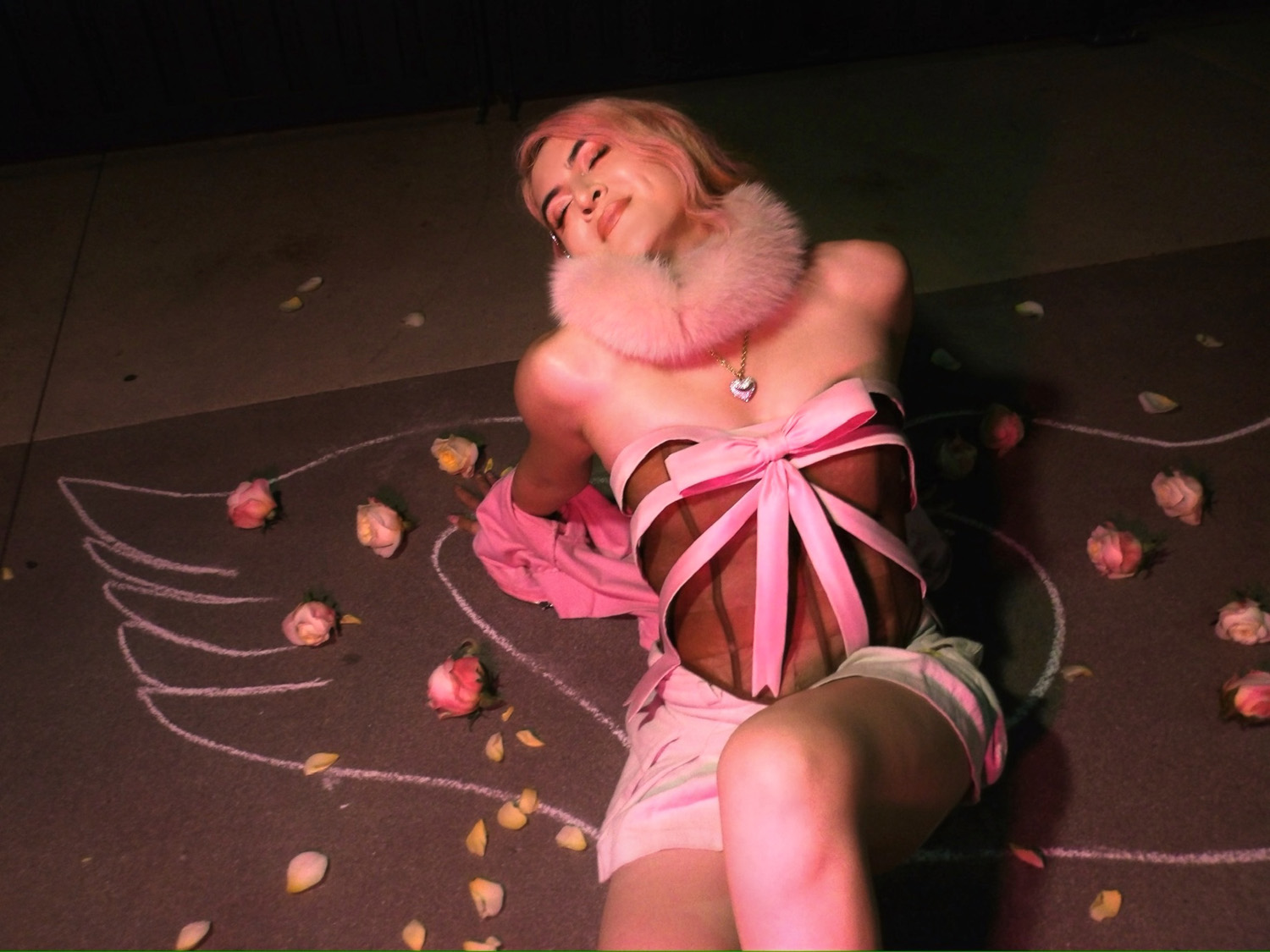
“Being in a mental prison really illustrates the incapacity of autonomy for the person inside it, and the sheer frustration of watching it from the outside,” says Bay Area pop icon Marxoxo.
Her latest track, “Mental Prison Baby,” responds directly to that isolation. Stepping into the role of a motherly guardian, she offers an angelic, trip-hop lifeline to anyone stuck in the brutalist maze of their own mind.
Producer Ienne constructs this protective space through atmospheric synth-pop beats, balancing Marxoxo’s signature falsetto with a sharp, protective edge. She intentionally positions the track within a heritage of musical solace. By borrowing the iconic line “Ooh child, things are gonna get easier” from The Five Stairsteps and channeling the internal, intimate dialogues found in classic records by Janet Jackson and Tupac, she ties her Filipina heritage to a long tradition of songs meant to sustain communities through hardship.
This focus on accessible care shapes the visual direction as well. Co-directed alongside Alex Cao at a liminal, washed-out BART station, the video marks a cinematic turning point for Marxoxo. Staging the project in daily transit infrastructure brings internal emotional work into public space, establishing “IDOLL” as an album rooted in real community connection. That bridge between personal healing and public space frames our conversation with Marxoxo below, where she opens up about tapping into motherly wisdom, honoring her Filipina heritage, and turning everyday transit hubs into stages for transformation.
That line, “I hate your mental prison,” is so sharp. Was this song born of wanting to comfort someone or of pure frustration at watching them burn themselves out?
Being in your ‘mental prison’ is something my best friend, Noni, and I describe as being like being ‘stuck in your ways,’ not seeing clearly, and just not taking the actions you need to fix your situation. So it’s definitely out of frustration; a ‘mental prison’ really illustrates the incapacity for autonomy for the person in one and the frustration of someone who’s observing it from the outside.
You deliberately reference “Ooh Child,” a lyric that has carried hope across generations, from The Five Stairsteps to Janet Jackson and Tupac. How did you approach weaving such a recognizable line into a song that feels so deeply personal?
In therapy, they’ll often ask you to talk to your ‘inner child’ as a way to understand and soothe your core wounds. I’m not a therapist, but that angle inspired writing for that first verse because I was literally talking to my inner child. That, and I was listening to a lot of Janet Jackson’s ‘All For You’ album, and Tupac’s ‘Keep Ya Head Up’ is my favorite song of his, and both of their songs referencing The Five Stairsteps also have this intimate internal dialogue as well.
What does the “Ooh Child” lyric mean to you personally, and how did it help shape the emotional message of “Mental Prison Baby”?
It makes me think of my mom! While she doesn’t say ‘child,’ she calls me ‘Anak’ (child in Tagalog), so functionally the same. My mom’s my #1 angel of all time, so sometimes when I’m by myself, stressed out, and anxious, I ask myself, “What would my mom say?”
What was it like tapping into motherly protective energy during the writing process for this song? Is this something you’ve experimented with before?
Yeah, it’s not really an energy I’ve tapped into before! But assuming the role of mother and taking on that angelic, protective perspective was perfect for this! A lot of trans women model our femininity after our mothers, and I definitely idolize my mom and her energy, so that was a great writing exercise. Also, in a meta way, I love the gay slang ‘mother’ to refer to someone iconic and influential, so I guess I took it literally! Whenever I’ve felt really hopeless and distraught, I’ve found some motherly wisdom and inspiration from unexpected people, so it really makes me think it’s an innate trait and perspective that we all have in our hearts.
You’ve spoken candidly about how going through periods of hopelessness completely transformed the way you view and feel about people. How does that experience change the way you connect with your audience today?
I’m more aware of how everyone’s inner child affects how they show up in the world, so it’s important to care for my own so inner baby Mar doesn’t show up acting crazy. Like a star, I want to shine bright so I don’t burn out.
You mention how the current system tries to gray us out, zone us out, and tune us out. What do you think it takes to resist that?
Definitely breaking out of our individual mental prisons! The system operates in a way that basically installs our own mental prisons and narratives that limit our potential and imaginations of what’s possible. So taking the key, freeing yourself, and inspiring people around you is the way to build a happier and healthier world.
Your work with Trans March involves organizing, chanting, and performing on the ground. Tell us a bit about how you came to be involved with it and what it means to you.
Even though the San Francisco Bay Area is a major metropolis, the trans community is pretty small and tight-knit. A couple of my friends, Niko Storment, a country singer, and Rosa Astra, a socialist organizer, were working for Trans March for hella years already, and they wanted some fresh blood, new voices, so they put me on the mic to lead the chants, and it was game over from there! Seeing the tens of thousands continue to show up AGAINST the BS going on in the world, like ICE terrorizing communities, our taxes going to fund genocide, AND CHANT BACK what I say? It’s super symbiotic and electric!
You called the relationship between your community’s resilience and your art super symbiotic. How does that work?
It makes me feel like a commander! Like I already write songs in a way that speaks to the heart, obviously in ‘Mental Prison Baby,’ but even in songs like ‘Like This,’ I’m singing and commanding to “wake it up… now that I have you, can I move you? When I shine you reflect mine, and it opens my mind.”
The music video drops right alongside the single. What visual narrative or imagery did you want to bring to life to accompany this specific trip-hop serenade?
The choice of filming the video at the train station was very intentional because the core concept of a ‘mental prison’ really lends itself to liminal spaces. The washed-out and brutalist architecture brings the feeling of being stuck between staying and going to life.
What’s up next for Marxoxo?
I’m prepping a new live show with a band and my album IDOLL for November release!
Marxoxo’s music is a blueprint for survival in a world that constantly pushes us to isolate, tune out, and surrender to our worst anxieties; Mar chooses to lead with radical, motherly warmth and fierce accountability. She reminds us that breaking out of our personal mental prisons can be a radical new form of collective responsibility we owe to everyone around us. If “Mental Prison Baby” is proof of anything, it is that we have to carry a light for each other as much as ourselves in these dark times.
CONNECT WITH MARXOXO
TWITTER// INSTA // TIKTOK // YOUTUBE // SPOTIFY